How to Dispose of Oily Rags Safely in an Apartment
How to dispose of oily rags safely after staining or oiling wood: the sealed water-filled metal can, what to avoid, and apartment-specific options.

Short answer: how to dispose of oily rags safely starts the moment you stop wiping. Rags, paper towels and steel wool used with oil-based stains, oils and varnishes can heat up and catch fire on their own, with no spark or flame. Put them straight into a metal container filled with water, close it tightly, and keep it away from heat. Then take the sealed container to household hazardous waste disposal, or follow your local fire department's or waste authority's directions. Never leave them in a pile, a plastic bag, a cardboard box or the kitchen trash.
This is not a rare edge case printed in small type. It is a standard warning on finishing products. The label on Minwax's Wipe-On Poly product page (read on October 2, 2026) reads: "DANGER: Rags, steel wool, other waste soaked with this product, and sanding residue may spontaneously catch fire if improperly discarded. Immediately place rags, steel wool, other waste soaked with this product, and sanding residue in a sealed, water-filled, metal container." The same warning appears on Minwax's Gel Stain page.
Why finishing rags catch fire on their own
The Freetown, Massachusetts Fire Department's oily rag guidance (read on October 2, 2026) explains it plainly: "The oils in paints, stains, and varnishes release heat as they dry. If oily rags are left piled up, in a box, or in the trash, this heat can become trapped and ignite."
A rag spreads the finish into a very thin layer over a lot of fabric, so a great deal of it is exposed to air at once. Spread flat, that heat can escape. Bunched up, folded or piled, the inner layers hold the heat in. Nobody needs to be in the room for this to happen, which is why it matters so much in a home where people sleep.
The warning also extends to things people tend not to think of as rags:
- Paper towels used to wipe off stain or oil
- Steel wool used with an oil-based product
- Sanding residue from a finish, as Minwax's label specifically names it
- Old T-shirts or socks pressed into service as applicators
- Brushes or foam pads that are soaked and set aside
How to tell whether your product carries the risk
Do not guess from the product type. Read the can. If the label carries a warning that soaked rags or waste "may spontaneously catch fire," treat every rag from that job as a fire risk. In 1996, OSHA stated in a letter of interpretation about linseed oil products that "the hazard of autoignition / spontaneous combustion should be included" in the label information, which is why the label is the right place to look.
| If you used... | What to do |
|---|---|
| A product whose label carries the spontaneous combustion warning | Follow that label's disposal directions exactly |
| An oil finish such as linseed or tung oil, or a blend containing them | Check the label; treat rags as a fire risk unless the label clearly says otherwise |
| An oil-based stain, varnish or polyurethane | Check the label; the oil-based Minwax stain and polyurethane pages checked for this guide both carry the warning |
| A water-based product | Check the label rather than assuming it is safe |
| Mineral spirits or another solvent for cleanup | Follow that product's label; a rag used to wipe an oil finish carries the finish's risk too |
| You are not sure | Treat the rags as a fire risk |
How to dispose of oily rags safely: step by step
Step 1: Set up the container before you open the can
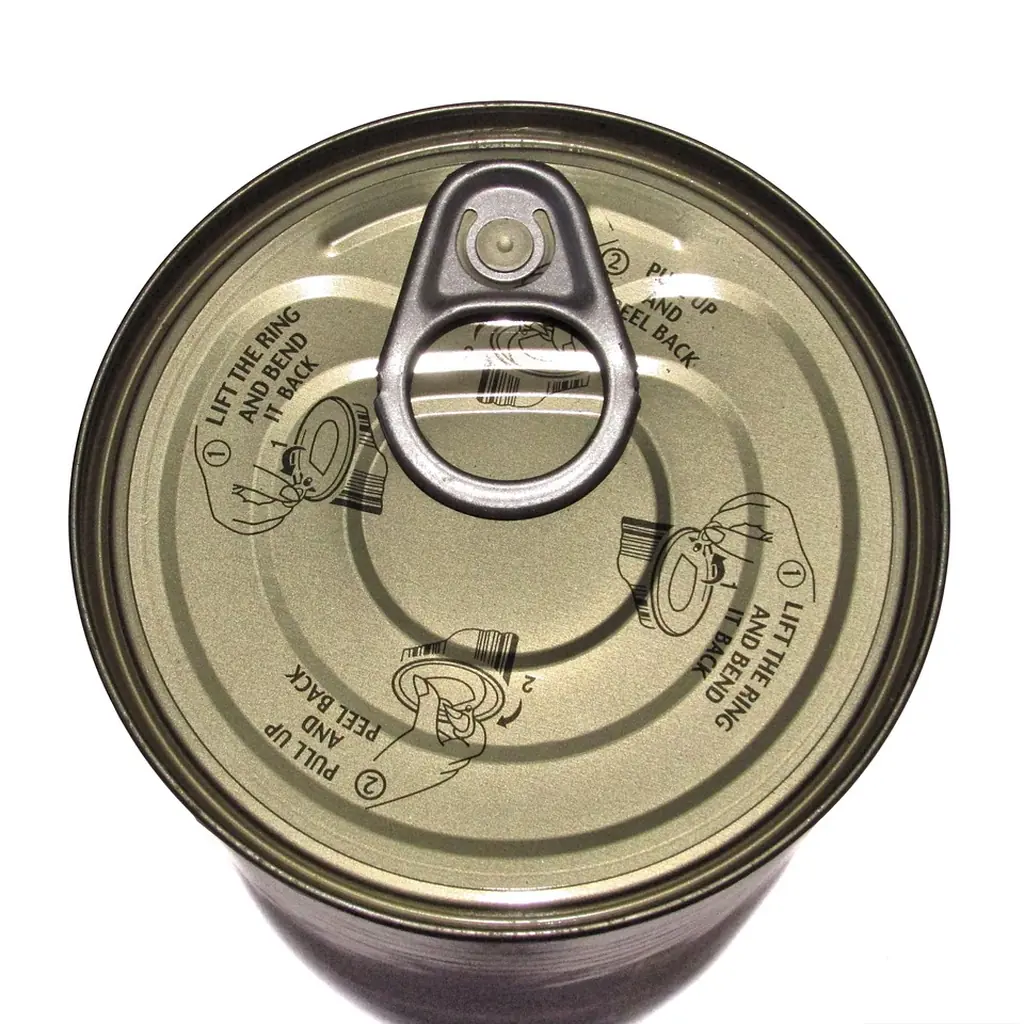
You do not want to find out how long you have between finishing and a rag fire, so the container comes first. You need a metal container with a tight-fitting lid. An empty, clean metal paint can is a common choice; the Freetown Fire Department mentions that "an old metal paint can works well." Fill it partway with water and keep it within reach of where you are working.
Avoid plastic tubs, glass jars and cardboard. The warnings call for metal, and for a sealed container.
Step 2: Put each rag in the moment you finish with it

Do not let used rags collect on the table while you finish a session. As each one becomes saturated, push it fully under the water in the container. Add steel wool, paper towels and any other soaked waste the same way. When the job is over, check the surface you worked on, the floor, and your pockets for strays.
Step 3: Seal it and keep it cool
Close the lid tightly. The U.S. Fire Administration's pictograph on oily and solvent-wet rags (read on October 2, 2026) gives the short version: "Store oily and solvent-wet rags in a tightly sealed metal container and then discard them." Keep the closed container away from heaters, radiators, sunny windows and anything else warm, and out of reach of children and pets.
For workplaces, OSHA's construction standard 1926.252(e) (read on October 2, 2026) requires that "all solvent waste, oily rags, and flammable liquids shall be kept in fire resistant covered containers until removed from worksite." Your apartment is not a construction site, but the same principle applies.
Step 4: Dispose of the container the way your area requires
Rules differ by town and by country, so check before anything goes in the trash. The Freetown Fire Department's guidance is to "cover rags completely with a mixture of water and an oil-breakdown detergent" and to "dispose of the sealed container during a local household hazardous waste collection event." Whether rags can ever go in household trash, and in what state, depends on where you live. Your local fire department, your city's waste or recycling office, or your building management can tell you which rules apply to you.
For the rest of your project waste, our guide to what to do with sawdust and scraps in an apartment covers shared bins, chutes and what building staff usually expect.
What about drying rags flat outdoors?
The other method fire services describe is drying rags spread out in the open, so heat can escape. The Freetown Fire Department's version: "Hang rags outdoors in a safe, well-ventilated area, or spread them out flat and weighted down so they dry separately." It then advises placing the dried rags in a sealed metal container and covering them with water and detergent for disposal.
In an apartment, this route is often not available. You may not have a safe outdoor space away from the building, and a balcony puts drying rags next to your home and your neighbors' homes, with wind able to blow them into a pile or off the edge. If you are weighing finishing work on a balcony at all, our guide to whether woodworking on a balcony is allowed and safe covers lease rules and neighbor impact. For most apartment woodworkers, the water-filled metal container is the practical method.
Mistakes that cause oily rag fires
These are the situations the warnings describe. Each one traps heat or puts the rags next to fuel:
- A pile on the workbench or floor "for later." Later may be after you have gone to bed.
- A plastic shopping bag or trash bag. It bunches the rags together and holds heat in.
- The kitchen trash can or a building trash chute. The rags sit packed in with paper and food waste.
- A cardboard box or a laundry basket. Both hold rags in a heap, and cardboard burns.
- A container with no water, left open or stored somewhere warm.
- Throwing out the container before checking local rules, which may send it somewhere it is not accepted.
If you ever find a pile of rags that is hot to the touch or smoking, do not try to handle it. Get everyone out and call the fire department.
Building this into a small-space routine
Finishing in an apartment often runs over several days, with stain one evening and coats of finish after that. That makes the rag container a permanent part of the setup for the length of the project, not a cleanup step at the end. Give it a fixed home where it cannot be knocked over, away from heat, and close to where you work. Our guide to storing wood and tools in a small apartment covers keeping project supplies contained between sessions.
Ventilation matters during the same work. The Minwax Wipe-On Poly label says to "use only with adequate ventilation" and to "open windows and doors or use other means to ensure fresh air entry during application and drying."
What this method costs you
Being honest about the limits:
- You need the container before you start. It is one more thing to set up, and skipping it is how most of the mistakes above begin.
- Disposal can take planning. If your area handles finishing waste through scheduled collection events or a drop-off site, the sealed can may wait at home for a while. Store it cool and closed until then.
- Reusing rags is a separate question. Washing and reusing finish-soaked rags is outside what these labels describe. Treat finishing rags as single-use unless your product's label says otherwise.
- This is general guidance. Your product's label and your local fire department override anything here.
FAQ
How long after finishing can oily rags catch fire?
The labels and fire service guidance checked for this article do not give a safe waiting period, because the heat builds as the finish dries. Treat soaked rags as a fire risk from the moment you finish with them, and put them into a water-filled metal container immediately.
Can I put oily rags in the regular trash?
Not while they are wet with finish. Whether dried or water-soaked rags can ever go in household trash depends on where you live, and some areas route them to household hazardous waste collection. Ask your local fire department or waste authority.
Do water-based finishes cause spontaneous combustion?
Check the label of the exact product you used rather than assuming. If it carries the spontaneous combustion warning, follow its disposal directions.
Is a plastic bucket with water good enough?
The product warnings call for a sealed, water-filled metal container, and the U.S. Fire Administration says to use a tightly sealed metal container. Use metal with a tight lid.
What if I don't have a metal can?
Do not start finishing until you have one. If you already have used rags and no metal can, do not pile, bag or bin them; follow your product's label and ask your local fire department for guidance.