Woodworking on a Balcony: What's Allowed and Safe
Your lease and your building's fire code decide this before safety does. What balcony woodworking rules usually cover, and what nobody can tell you.

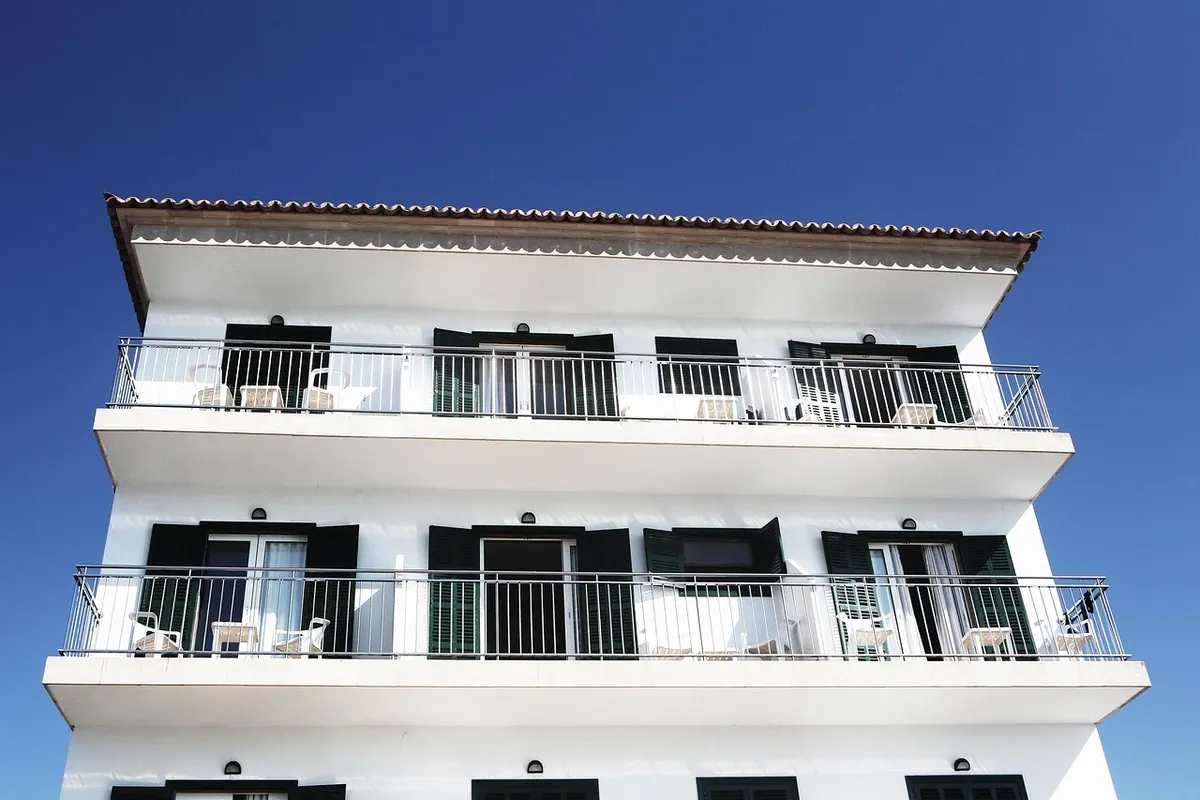
Before this is a safety question it is a permission question, and the permission question has an owner: your lease, your building rules, and in a condo your association. Those come first. Nothing on this page is a way around them.
After that, a balcony is a structure you do not own, sitting above other people, exposed to weather and shared air. That changes the answer from the one you would get in a garage. Here is what is normally allowed, what is normally not, and the one thing nobody writing on the internet can tell you about your balcony.
Start With the Document, Not the Tool
Read the lease, then the building's house rules, then your local code. Most balcony restrictions live in the first two, and they are usually written broadly: no storage, no combustible materials, no alteration, nothing attached to the railing, nothing that overhangs.
A broadly worded clause covers woodworking even when it never says the word. "No storage of items on balconies" covers your lumber. "Nothing may be affixed to the railing or structure" covers clamping a work surface to the rail.
If a rule prohibits something you want to do, the answer is to ask the landlord or the board in writing, or to do that work somewhere else. There is no version of this article that helps you get around a rule you are subject to. A written yes also protects you later, when a neighbor complains and the manager has to decide what was agreed.
What Your Balcony Will Carry Is Not Something We Can Tell You
This is the honest limit of any article on this topic.
Building codes set the load a balcony was designed for. Under the International Building Code's live load table, an exterior balcony is generally designed for 100 pounds per square foot, with an exception allowing 60 psf for balconies of one and two-family dwellings not exceeding 100 square feet. An interior residential floor, by comparison, is designed for 40 psf.
Those numbers describe the design, not your balcony. They tell you nothing about a specific structure's age, its condition, whether water has reached the fasteners or the reinforcement, whether it was built to the drawings, or what has been done to it since. Balcony collapses are a documented failure mode in residential buildings, and the cause is normally corrosion or rot at the connection, which is invisible from the surface.
So: we cannot tell you what your balcony will carry, and neither can anyone else who has not inspected it. If your plan involves a heavy bench, a stack of lumber, or a machine, that is a question for the building owner and, if they want one, a structural engineer. It is not a question to answer by guessing.
Fire Codes Already Treat Balconies as a Special Case
You do not have to take a landlord's word for balconies being different. The International Fire Code section 308.1.4 states that charcoal burners and other open-flame cooking devices shall not be operated on combustible balconies or within 10 feet of combustible construction, with exceptions that vary by jurisdiction and by whether the building is sprinklered. Many cities amend it further.
That rule is about cooking, not woodworking, so do not let anyone quote it at you as a woodworking regulation. What it tells you is the reasoning your building is already using: a balcony is an elevated, often combustible structure attached to occupied units, and open flame and heat sources are restricted there.
Apply the same reasoning to your own work. Finishes, solvents and the rags used with them are the fire risk in woodworking, not the saw. Oil-finish rags can self-heat as the oil cures. Follow the finish manufacturer's own disposal instructions on the can, every time, and do not leave a balcony as the storage location for solvent-soaked cloth.
Electricity and Weather Are the Pair That Gets Underestimated
A balcony is usually an outdoor location in the eyes of the electrical code, and that matters more than people expect.
In US dwellings, the National Electrical Code section 210.8 requires GFCI protection for outdoor receptacles, and receptacles in wet locations require a weather-resistant device with a cover rated to stay weatherproof while a cord is plugged in. A GFCI is designed to open the circuit at roughly 5 milliamps of leakage, fast enough to matter when you are holding a grounded metal tool.
If your balcony has no outlet, or has one you are not sure about, that is an electrician question and a landlord question. Running an extension cord out through a door or window into weather is exactly the situation the rule exists to prevent.
Two more that follow from the same fact:
- Stop when it starts raining, and do not restart on a damp surface. Corded tools and standing water do not coexist, and a wet balcony floor is a conductive surface you are standing on.
- Cords and doorways. A cord run under a door edge gets crushed, and a cord across a balcony is a trip hazard on a surface with a railing and a drop behind it.
The Guard Stays On, Especially Up There
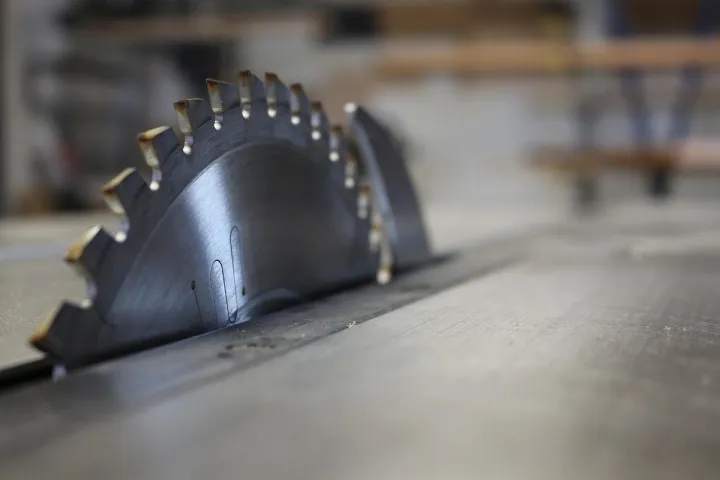
If you are using a circular saw or a jigsaw on a balcony, the tool's own guarding is doing more work than usual, because your footing, your work support and your light are all worse than in a shop.
OSHA's rule for portable circular saws, 29 CFR 1926.304(d), requires guards above and below the base plate, and requires that the lower guard return automatically and instantly to the covering position when the tool is withdrawn from the work. The Power Tool Institute's own circular saw guidance says to check guard operation before cutting and to repair or adjust a guard that is slow to return or hangs up.
Never tie, wedge or hold that lower guard open, and never treat a tool whose guard has stopped returning as usable. That is not a technique, it is a defect to fix before the next cut.
Alongside it: impact-rated eye protection marked Z87+ under ANSI/ISEA Z87.1, which is the marking for the high-velocity impact test, and hearing protection worn from the first cut rather than once the noise becomes annoying. Cutting outdoors does not reduce either requirement.
Dust and Noise Leave Your Balcony Immediately
Indoors, your dust is your problem. On a balcony, it is your neighbors' problem within seconds, and this is the most common reason balcony woodworking gets shut down.
Wood dust is not a nuisance issue only. The International Agency for Research on Cancer classified wood dust as a Group 1 carcinogen in 1995, and OSHA's permissible exposure limits for wood dust are 15 mg/m³ total dust and 5 mg/m³ respirable, as an 8-hour average. Those are occupational limits for daily exposure over a career, not hobby thresholds, but they are the reason sanding and cutting deserve a mask rather than a shrug.
On a balcony the practical rules are simple. Do not sand or cut on a windy day. Do not let dust travel into an open window below or beside you, including your own. Sweep and collect at the end of every session rather than letting it wash off in rain, because it ends up on someone's furniture. The same containment thinking that applies to an apartment woodworking workshop setup applies harder outdoors, because you control less.
Things Fall, and a Balcony Is a Height
The risk that is unique to a balcony, and the one almost nobody writes about, is the drop.
Anything that goes over the railing is potentially lethal to a person below. A dropped chisel, an offcut kicked by a saw, a clamp, a pencil. A railing designed to stop a person from falling does not stop a small object at all, because the gaps are sized for bodies.
Practical consequences worth building into how you work:
- Work back from the railing, not against it, with the cut line oriented so offcuts fall inside the balcony.
- Nothing rests on the railing. Not a tool, not a board, not a cup.
- Keep loose material off the floor near the edge, because wind moves offcuts and sheet material.
- Nothing gets clamped to the railing or the structure. It is usually a lease violation, and a railing is designed to resist an outward push from a person, not to be a work-holding fixture. If you need holding, the alternatives in woodworking without a workbench are the right starting point.
What Balcony Woodworking Looks Like When It Is Allowed
Assuming the lease permits it and you have somewhere solid to work, a balcony is genuinely useful for a narrow set of tasks: hand sawing, hand planing, sanding, and drying a finished piece under cover.
That is also the version most likely to survive contact with neighbors, because hand tools remove the noise problem and most of the dust plume at once. It is the same logic behind the hand-tool approach in building a floating shelf without power tools and the constrained-space philosophy in the no-garage starting guide. If you want project ideas already scoped to the space, the balcony project list is the companion piece to this one.
What a balcony is not good for: machines that need a stable base, anything heavy, anything involving open flame or a heat gun near combustible construction, and finishing in wind.
The Short Version
- Permission first. Lease, house rules, condo association. Get a yes in writing, and do not work around a no.
- We cannot tell you what your balcony will carry. Code design values describe a design, not your structure. Heavy loads are an owner and engineer question.
- Balconies are already treated as a fire-restricted space in the model fire code. Finishes, solvents and rags are the real fire risk in woodworking.
- Treat it as an outdoor electrical location. GFCI protection, weather-rated receptacle and cover, stop in rain.
- Guards stay on and PPE goes on first. Z87+ eye protection, hearing protection, dust mask for sanding.
- Nothing goes near the railing, and nothing gets attached to it.
- Hand tools are the version of this that usually works, on noise, dust and structure at the same time.
Frequently Asked Questions
Can my landlord ban woodworking on a balcony even if it is quiet? Yes. Balcony use clauses commonly restrict storage, alterations, attachments and activities generally, and they do not have to name a hobby to cover it. Ask in writing rather than interpreting a vague clause in your own favor.
Is a cordless tool safer than a corded one on a balcony? It removes the extension-cord and wet-location problem, which is a real gain. It does not change the guarding, the dust, the noise, or the falling-object risk, and it is not permission to work in rain.
How do I know if my balcony can hold a workbench and lumber? You do not, from looking at it. The building owner holds the structural information, and a structural engineer is who answers it properly. Keep loads light and distributed until someone qualified says otherwise.
Is sanding outside enough to skip a dust mask? No. Outdoor air movement reduces the concentration around you unpredictably, and wood dust carries a Group 1 carcinogen classification from IARC based on occupational exposure. Wear the mask and pick a still day.
What if my neighbor complains even though the rules allow it? Talk to them before the building does. Agreed working hours and a warning before a noisy session resolve most of these, and a landlord who hears from you first tends to read the situation differently.