How to Transport Lumber Without a Truck
How to transport lumber without a truck: measure your car's diagonal, have boards cut to fit, know their weight, and check your state's overhang rule.

Short answer: if you are working out how to transport lumber without a truck, the safest plan is to make the wood fit inside your car. Measure your car's longest straight diagonal before you shop, have the store cut boards to that length plus a little spare, and keep everything inside the vehicle. If you cannot, use store delivery or a rental truck. Avoid letting boards hang out of the back: in California and Louisiana, for example, a load that sticks out 4 feet or more behind the vehicle legally needs a flag by day and a red light at night (two in California), and the rules differ by state.
If your parts are short, an 8-foot board on the rack is a transport problem you can often solve at the store's saw before you leave.
How to transport lumber without a truck, step 1: measure your car
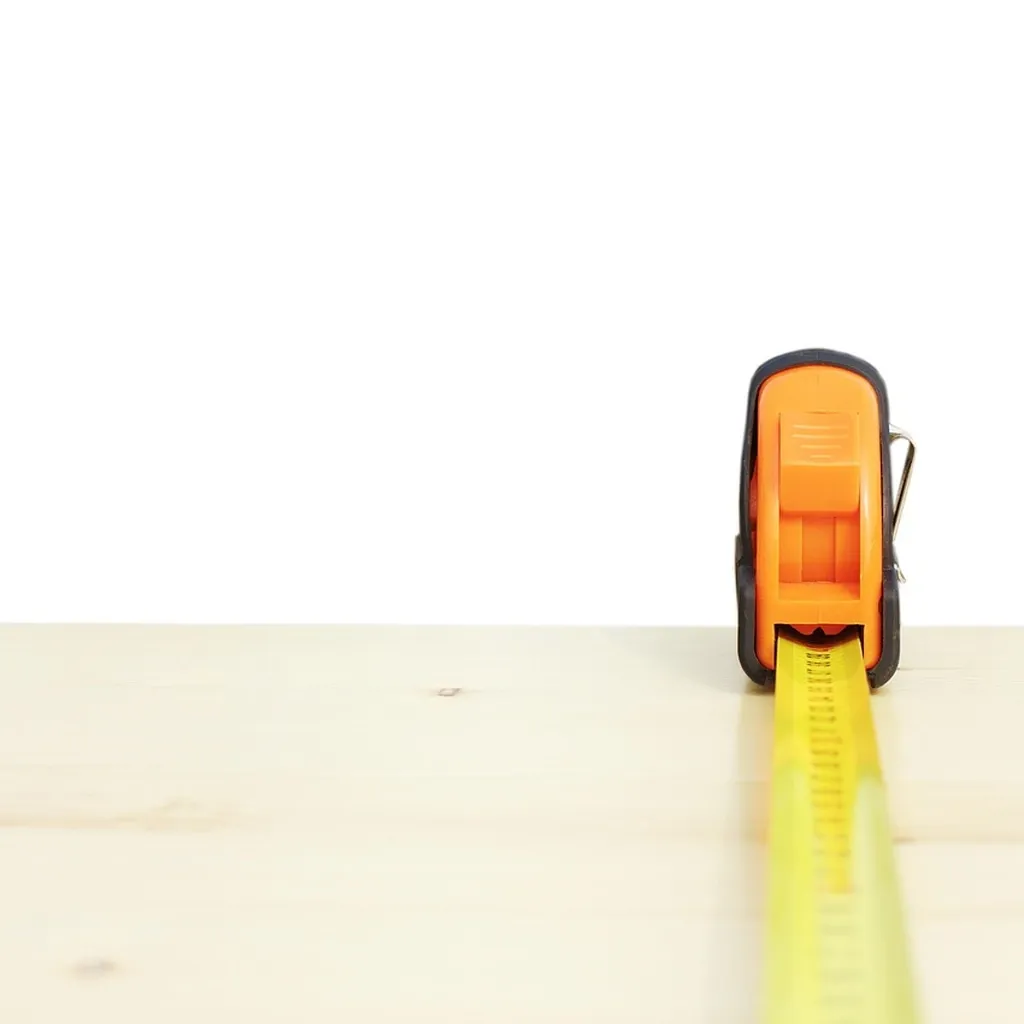
A straight board fits only if it fits the space corner to corner. Fold the seats you can, then measure three things inside the cargo space with a tape measure:
- Length (L): from the inside of the closed tailgate or trunk to the back of the front seat, or to the dashboard if the passenger seat folds flat.
- Width (W): side to side at the narrowest point between the wheel arches.
- Height (H): floor to roof at the lowest point along the path.
The longest rigid board that fits is the box's space diagonal: the square root of L squared plus W squared plus H squared. Here is our worked example with made-up measurements, to show the arithmetic only:
| Example measurement | Value |
|---|---|
| Length L | 70 in |
| Width W | 40 in |
| Height H | 30 in |
| Longest board flat on the floor, corner to corner (L and W) | about 80 in (6 ft 8 in) |
| Longest board corner to corner in all three directions | about 86 in (7 ft 2 in) |
In that example an 8-foot (96-inch) board does not fit, but a 6-foot board does, with room to spare. Real cargo spaces are not perfect boxes, so take a cut board or a cardboard tube of the same length to the car before you buy if you are close to the limit. Remember the board has to come out again through the hatch or door.
Step 2: Have the boards cut so they fit

Some home centers cut wood you buy there. Lowe's store services page says "We can cut lumber, mini-blinds, pipe, rope, chain and more," and Home Depot has listed small plywood project panels with "Free Custom Cut Available." Details such as the number of cuts, precision and any fees are set locally, so ask at the saw.
Give the store a cut list that is a little longer than your parts, not your exact finished sizes, and make the final cuts at home. Add a kerf and an inch of trim per board when you plan that list. Our beginner checklist covers what else to bring.
A full plywood sheet is 48 by 96 inches, so check it against your car's measurements before assuming it fits. Ask for it to be broken down at the store, or see our guide to cutting a plywood sheet alone if it is already home.
Step 3: Know what the load weighs
Wood is heavier than it looks, and you may be carrying it up stairs. We estimated weights at 12% moisture from the US Forest Service Wood Handbook's specific gravity values and its density relationship (our formula reproduces the Handbook's worked example for white ash, about 42 pounds per cubic foot):
| One 8-foot piece, at 12% moisture | Eastern white pine | Loblolly pine (a southern pine) | Yellow-poplar | Northern red oak |
|---|---|---|---|---|
| 1x6 (3/4 x 5-1/2 in) | about 5.6 lb | about 8.2 lb | about 6.7 lb | about 10.1 lb |
| 2x4 (1-1/2 x 3-1/2 in) | about 7.1 lb | about 10.4 lb | about 8.6 lb | about 12.8 lb |
These are averages; a wetter board weighs more. Ten 8-foot southern pine 2x4s are therefore roughly 100 pounds. For your car, check the owner's manual for its load capacity, and if you use a roof rack, follow the roof-load limit given by the car maker and the rack maker; we do not give a number because it varies by vehicle and rack.
Step 4: If boards must stick out, know the rule where you drive
Letting boards hang out of the trunk or a window is where transport goes wrong. Two state laws show how much the details can differ, and why you must check your own:
| California Vehicle Code §24604 | Louisiana R.S. 32:313 | |
|---|---|---|
| When it applies | Load extends 4 feet or more beyond the rear, "as measured from the taillamps" | Load extends 4 feet or more "beyond the bed or body" |
| Lights (CA: during darkness; LA: lighting hours under R.S. 32:301) | Two red lights at the end of the load, visible from 500 feet | A red light or lantern, visible from 500 feet |
| At other times | A solid red or fluorescent orange flag or cloth "not less than 18 inches square" | A red flag or cloth "not less than 12 inches square" |
Same 4-foot trigger, different flag sizes and different measuring points. California's section, as published on Justia, also requires two flags when the projecting load is wider than two feet; Caltrans summarizes the same rule. Louisiana's text is on the state legislature's site. We read only these two states; other states may set different rules, so look up your state's vehicle code before you drive with anything sticking out.
Even below the legal trigger, a board through an open window or trunk lid can shift under braking. Our advice: keep loads inside the vehicle, close the doors and trunk fully, and if that is not possible, use delivery or a rental truck instead.
Step 5: Use delivery or a rental for bigger loads
If the job needs long boards or full sheets, two options avoid the car entirely:
- Store delivery. Lowe's says it "offers delivery seven days a week." Fees and minimums are local, so ask.
- Rental trucks. Home Depot's site footer lists "Truck & Tool Rental." Ask about rates and availability at your store.
Step 6: Getting it into the apartment
- Carry long pieces vertically in elevators, and measure the elevator's interior height and diagonal the same way you measured the car.
- Wrap board ends in cardboard or a towel to protect walls and door frames in shared hallways.
- Lay the wood flat with air on both faces once inside, in the room where you will use it. Our guide to storing wood and tools in a small apartment shows where that can go.
FAQ
Can I put lumber on my car roof without a rack?
We do not recommend it. Without a rack there is nothing designed to carry or anchor the load. If you use a rack, stay within the car and rack makers' roof-load limits and follow the rack maker's instructions for tying the load down.
How far can lumber stick out of a car?
It depends on your state. In California and Louisiana, a load extending 4 feet or more behind the vehicle must carry a red light at night and a red (or, in California, fluorescent orange) flag by day, with flag sizes of 18 inches and 12 inches respectively. Check your own state's vehicle code.
Will the store cut lumber so it fits in my car?
Some home centers cut wood bought there; Lowe's says on its store services page that it can cut lumber. Ask about limits and fees at your store, and ask for pieces slightly longer than you need.
How heavy is a 2x4?
By our estimate from Wood Handbook data, an 8-foot 2x4 at 12% moisture weighs about 7 pounds in eastern white pine and about 10 pounds in loblolly pine. Wetter boards weigh more.