How to Cut a Plywood Sheet Alone, No Helper Needed
How to cut a plywood sheet alone, no helper: support it fully on foam, guide the saw, and plan cuts so nothing sags, pinches or falls. Safe solo method.

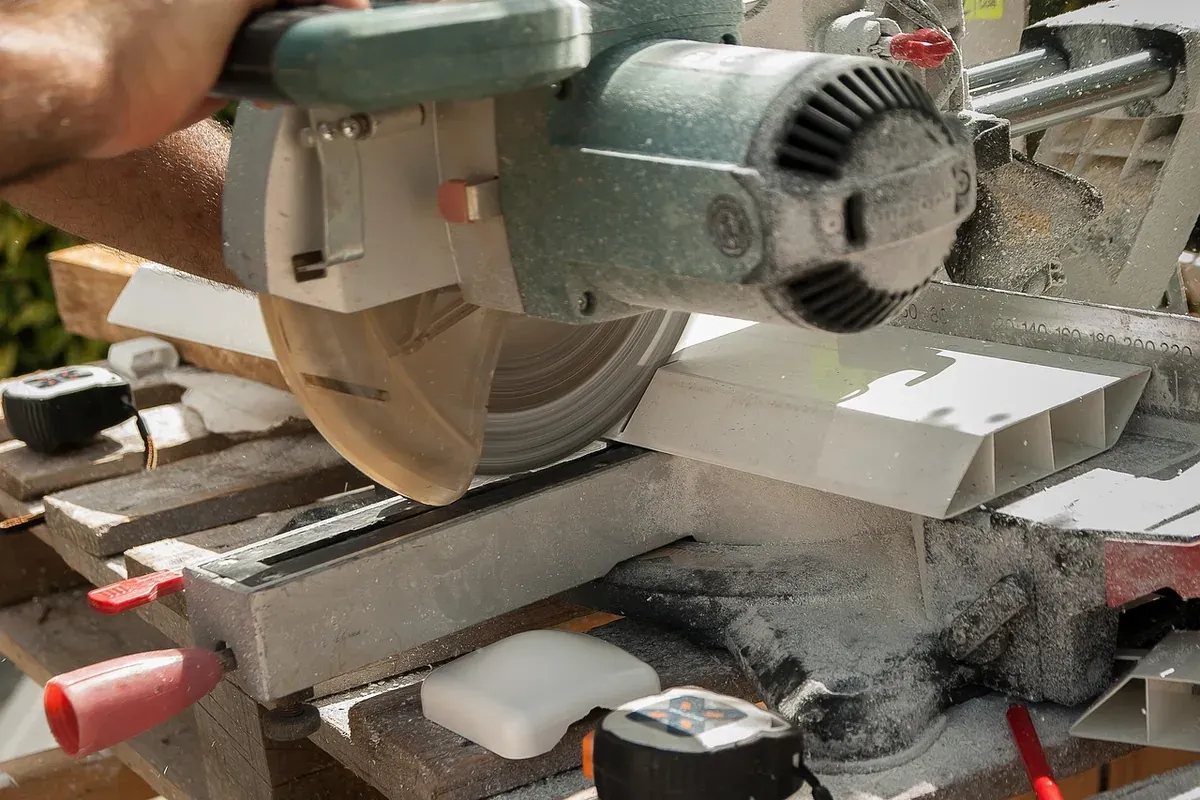
If you are working out how to cut a plywood sheet alone with no helper, the answer is to stop trying to hold the sheet up. Lay the whole sheet flat on a sacrificial support, such as a sheet of rigid foam insulation on the floor, so every part of it is supported before, during and after the cut. Clamp a straightedge on as a guide, set the circular saw blade just deeper than the plywood, and cut. Because nothing hangs off the edge, neither piece sags, pinches the blade or drops, so there is nothing for a second person to catch.
The rest of this guide covers the setup in detail, how to plan cuts so the sheet gets smaller and easier to handle at each step, and the safety rules that matter more when nobody else is in the room.
Why a helper seemed necessary in the first place
A full sheet of plywood is large, heavy and floppy. When it spans two sawhorses and you cut through the middle, two things go wrong:
- The sheet sags toward the cut. As the kerf opens, the two halves fold down toward each other and squeeze the blade. That pinch is a common trigger for kickback.
- The offcut falls. Near the end of the cut, the unsupported piece breaks off, tearing a splinter from the edge and sometimes dropping onto your feet.
A helper holding the offcut fixes the second problem and partly fixes the first. Full support fixes both, which is why you do not need the helper.
OSHA's woodworking guidance on handheld circular saws (read September 27, 2026) describes kickback as happening "when the blade catches the stock and throws it back toward the operator," and lists as a safe work practice: "Properly support all pieces of stock, including the cut and uncut ends, scrap, and finished product." Cutting a sheet on a full-size support is that practice applied to a solo job.
How to cut a plywood sheet alone: the full-support method

What you need
- A circular saw with a sharp blade suited to plywood (a higher tooth count cuts cleaner).
- A sacrificial support the size of the sheet. Rigid foam insulation board is the common choice because the blade passes into it without harm to the saw and it holds the sheet flat. Scrap 2x4s laid across the floor under the sheet also work, as long as there are boards on both sides of every cut line.
- A straightedge at least as long as the cut: a factory edge of plywood, a straight board, or a purpose-made cutting guide.
- Two clamps, plus a tape measure, a square and a pencil.
- Safety glasses and hearing protection.
Step by step
- Clear floor space. A full sheet needs its own footprint plus room for you to kneel or crouch along the cut line. In a small apartment, that may mean moving furniture or cutting in a parking space or on a patio if your lease and building rules allow it. Our guide to how much space you need to start woodworking goes through the measurements for a small room.
- Lay the support down, then the sheet on top. Slide the sheet off its edge onto the foam rather than lifting it flat. Tilting and sliding keeps the weight on the floor.
- Put the good face down. A circular saw blade cuts upward, so the most splintering happens on the top face. Keep the face you want to show on the bottom.
- Mark the cut and add the guide offset. Measure the distance from the edge of the saw's base plate to the blade, and clamp your straightedge that far from the cut line, on the side of the piece you are keeping.
- Set the blade depth. Adjust it so the teeth pass just through the plywood and into the foam, following your saw's manual. A shallow setting exposes less blade and keeps the teeth out of the floor.
- Make the cut in one steady pass. Keep the base plate tight to the guide and let the saw work at its own speed. Kneel beside the cut, not behind the saw's line of travel.
- Let the blade stop before you lift. Release the trigger and wait for the blade to stop completely before lifting the saw off the sheet.
On foam, both pieces stay where they were when the cut ends. You can lift the smaller one away at your leisure.
Plan your cuts so the sheet shrinks fast
Most people cut the piece they need first. When you are alone, cut the piece that makes the sheet easiest to handle first.
- Make the long rips before the crosscuts if your parts allow, or make one crosscut that turns an unmanageable sheet into two pieces you can each lift.
- Rough-cut every part slightly oversize from the full sheet, then trim to final size once the pieces are small enough to clamp to a table or a portable workbench.
- Draw a cutting diagram on paper before you start. Every cut on the full sheet should reduce weight and size; fussy, exact cuts belong at the end, on smaller pieces.
This is where the method pays for itself in accuracy. You get a cleaner, more accurate final cut on a piece you can clamp down than on a full sheet you are crouching over.
Getting it home and through the door
The awkward part of cutting a sheet alone often comes before the saw even comes out. A full sheet may not fit in your car, up a stairwell or around the tight turn into an apartment.
- Ask the store about rough cuts. Some lumber yards and home centers offer panel cutting. Policies, fees and accuracy vary by store, so ask first, treat any store cuts as oversize breakdown cuts, and do the final cuts yourself.
- Consider smaller panels. Check whether your store sells plywood in half or quarter sheets. Compare the cost per square foot against a full sheet before deciding; you may pay more for the convenience.
- Carry on edge, not flat. A sheet carried flat catches wind and bends. Carried on edge, it is more controllable. A panel-carrying handle that hooks under the bottom edge helps if you do this often.
If a full sheet is too big to handle at any stage, change the plan rather than forcing it. A sheet that gets away from you on a staircase is a genuine injury risk.
What about a table saw, a track saw, or a hand saw?
Table saw: pushing a full sheet across a small table saw alone is the setup this guide is built to avoid. Even people who own one often break sheets down with a circular saw first and use the table saw for final, smaller cuts. Our comparison of a circular saw vs a table saw for beginners explains why a circular saw is the better first buy for a small space.
Track saw: a track saw works like a circular saw on a guide, with the guide built in, and it suits solo sheet cutting on foam. Whether the added cost buys you enough accuracy is covered in our guide to track saw vs circular saw accuracy.
Hand saw: you can cut plywood on foam with a panel saw or a Japanese pull saw. It is slower and takes effort on a long cut, but it is quiet and throws far less fine dust, which matters in a shared building. The support rules are the same: fully supported sheet and a clamped guide. Keep the good face up this time, because a hand saw tends to splinter the face where its teeth exit, which is the underside.
Safety rules for cutting plywood alone
Working alone removes the person who would notice something going wrong, so the basics carry more weight.
- Keep the guard working. OSHA's standard for portable circular saws, 29 CFR 1910.243 (read September 27, 2026), requires guards above and below the base plate and states that "when the tool is withdrawn from the work, the lower guard shall automatically and instantly return to covering position." If your lower guard sticks or returns slowly, stop using the saw until it is repaired.
- Support every piece. This is the whole point of the foam method, and it is one of the kickback controls OSHA lists for these saws.
- Keep hands out of the line of cut. OSHA's handheld circular saw guidance says to "keep hands out of the line of the cut." Kneeling on the sheet to hold it still is fine only if your knees and hands are well clear of the cut line and the path of the saw.
- Wear eye protection. OSHA lists wood chips, splinters and broken saw teeth among the things a circular saw can throw.
- Wear hearing protection. OSHA's woodworking noise guidance calls hearing protection the "final line of defense against noise hazards." A circular saw is loud; our noise guide by tool compares it with quieter options.
- Manage the cord or battery. Run a corded saw's cable behind you and away from the cut line, so the saw cannot cut its own cord.
- Read your saw's manual. Blade depth, the blade to use and the kickback warnings differ between models, and the manual's instructions take priority over any general guide, including this one.
Stop condition: if the blade binds, smokes or the saw starts to climb out of the cut, release the trigger, hold the saw still until the blade stops, and check the support before continuing. Do not push through a binding cut.
Protecting a rented floor
For renters, the foam method has a bonus: the foam sits between the saw and the floor. Still, set the blade depth carefully, put a drop cloth under the foam to catch dust, and vacuum before you pack up. Circular saw dust is fine and spreads, so cutting near an open door with a fan blowing outward, or outdoors where your building allows it, keeps the mess out of carpet and vents.
FAQ
Can one person safely cut a 4x8 sheet of plywood? Yes, if the sheet is fully supported. Lay it on rigid foam or on boards on the floor so both pieces stay supported after the cut. The risk comes from sheets that sag or fall, not from working alone.
What is the best support for cutting plywood alone? A sheet of rigid foam insulation on the floor supports the whole sheet and lets the blade pass through the plywood into the foam. Boards laid on both sides of every cut line are an alternative.
Which side of plywood faces up when cutting with a circular saw? The good side faces down, because a circular saw blade cuts upward and splinters the top face more. With a hand saw, the good side generally faces up.
How do I keep a long plywood cut straight without a helper? Clamp a straightedge to the sheet, offset by the distance from your saw's base plate edge to the blade, and keep the base plate against it for the whole cut.
Should I have the store cut my plywood instead? It helps with transport. Treat store cuts as rough breakdown cuts, since accuracy varies, and make your final cuts at home once the pieces are small enough to clamp down.