Low Odor Wood Finish Indoor Guide: What Labels Really Mean
Low odor wood finish indoor guide: which finish types are gentlest on small-space air, why 'zero VOC' is not 'safe to breathe', and how to read a label.


Short answer: if you need a low odor wood finish indoors, water-based (waterborne) topcoats such as water-based polyurethane or acrylic finishes, applied by brush or rag, are usually the gentlest practical choice for a small room. Oils and waxes without added solvents are the other low-fume route, with slow curing and a rag fire risk. But low odor is not the same as low exposure. Smell is a poor guide to what is in the air, and "low VOC" or "zero VOC" on a can does not mean nothing comes off it. Read the warning section and the safety data sheet, and ventilate anyway.
There is no true "no-fume" wood finish you can buy and forget about. What exists is a range, from finishes that a small room with an open window can handle to finishes that belong outdoors. This guide sorts them by that line, and shows you how to check a can before you bring it home.
Why "low odor" and "zero VOC" do not mean safe to breathe
This is the part most product pages skip, and it is the most useful thing to know before you shop.
Smell does not measure risk. The Minnesota Department of Health, on its page about volatile organic compounds in your home (read on September 27, 2026), says VOCs "may or may not be able to be smelled, and smelling is not a good indicator of health risk." A finish that barely smells can still release compounds you would rather not breathe in a closed room.
VOC labels are not all measuring the same thing. The US Environmental Protection Agency's technical overview of volatile organic compounds (read on September 27, 2026) explains that some VOC labels are based on what a product emits into indoor air, while others "are based on the content of VOCs that are regulated to control the formation of photochemical smog outdoors." It says this is "especially true of most wet products, such as paints or adhesives that may be labeled as 'low-VOC' or 'zero VOC'," and that labeling and certification norms for indoor products "are not standardized."
Even low-odor finishes carry vapor warnings. Minwax describes its water-based Polycrylic as "low odor." The same product page carries the warning "VAPOR HARMFUL. Use only with adequate ventilation," and tells users to open windows and doors to ensure fresh air entry during application and drying.
The practical takeaway: pick a low-odor product type to make the job easier on your room, but treat the label's ventilation instructions as the rule, not the odor.
Low odor wood finish indoor options compared
These are product categories, not recommendations of specific products. Individual products vary within each category, so the label always wins.
| Finish type | Typical odor while applying | What it is thinned with | Cleanup | The small-space catch |
|---|---|---|---|---|
| Water-based polyurethane or acrylic | Low | Water, often with some solvents | Soap and water | Still carries ventilation warnings; may not give the warm tone of oil-based finishes |
| Pure drying oils (linseed, tung) with no thinners | Low to moderate, can linger | None, if truly unthinned | Per label | Slow to cure; rags can self-heat and ignite |
| Oil and wax blends | Low to moderate | Varies; some contain solvents | Per label | Softer protection; read the ingredients |
| Paste wax | Varies | Often solvent-based | Per label | Light protection only |
| Shellac | Noticeable while drying | Alcohol | Alcohol | Flammable while wet |
| Oil-based polyurethane, varnish, oil-based stain | Strong | Mineral spirits or similar solvents | Solvent | Flammable, long dry time; best done outdoors |
Water-based topcoats
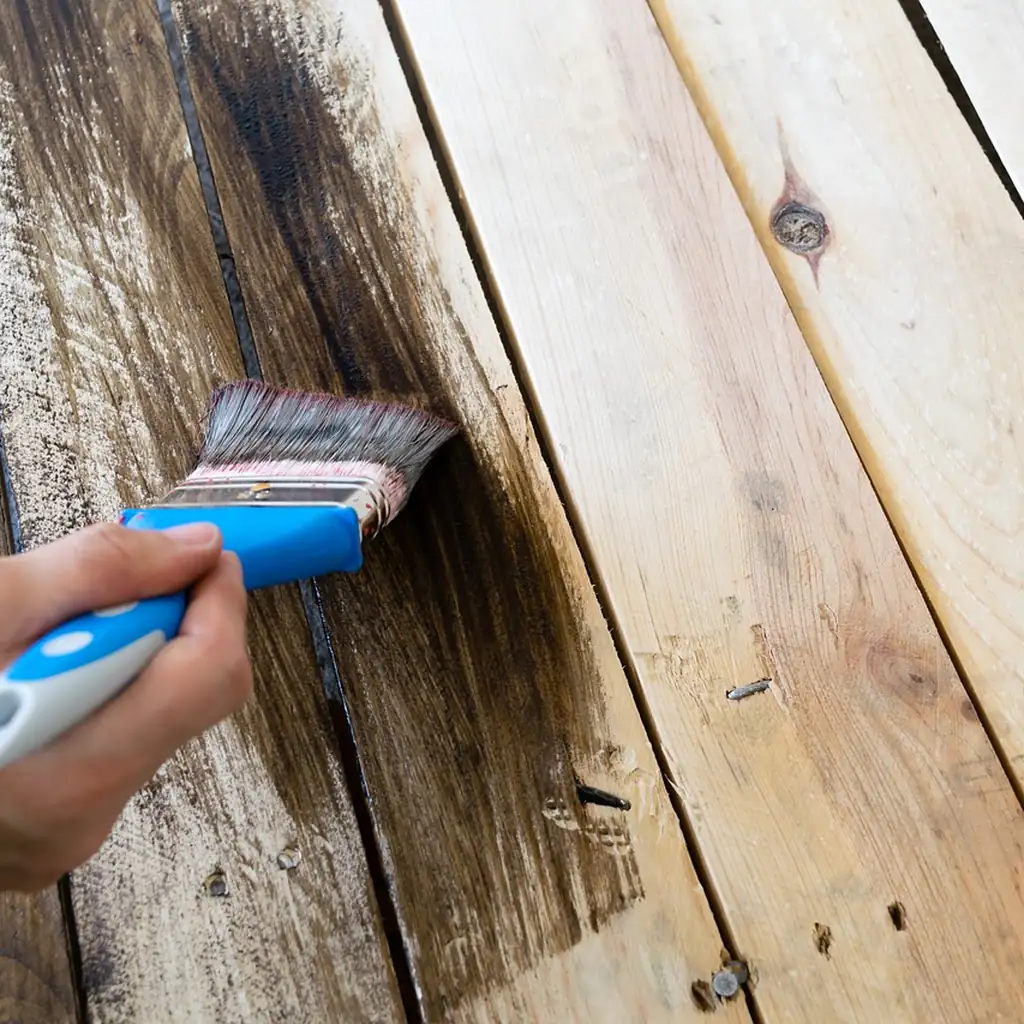
For most small-space projects, such as shelves, boxes, frames and plant stands, a water-based topcoat is the most practical low-odor choice. It cleans up with soap and water, which means no solvent-soaked brushes to deal with indoors, and it typically dries faster than oil-based finishes. Minwax's Polycrylic page, for example, says to allow 3 hours before light handling and 24 hours before normal use after the final coat.
The trade-offs: water-based finishes tend to look clearer and cooler than oil-based ones. Polycrylic is sold as "non-yellowing, non-ambering," which is a plus on light woods and a minus if you wanted a warm glow.
Oils and waxes
Oils without added thinners and simple wax blends can be low in solvent odor, but they come with two costs. They cure slowly, so the smell can linger longer than the application suggests. And rags used with drying oils such as linseed oil can heat up as the oil cures. East Sussex Fire and Rescue Service advises spreading oily rags out to dry in a ventilated area or soaking them in water for several days before disposal, and never leaving them in a closed container or pile where they cannot dry out.
Watch the names. A product called an "oil finish" can be a blend that includes thinners or varnish. Read the ingredient and warning sections, not the front of the can.
Shellac, solvent-based finishes and strippers
Shellac is dissolved in alcohol, so it is flammable while wet and has a noticeable smell as it dries. Oil-based polyurethanes, varnishes and stains use petroleum solvents, smell strongly and take longer to dry. The EPA's technical overview also notes that methylene chloride, used in some paint strippers, is exempt from outdoor VOC regulation but "could pose serious health risks to exposed individuals if present indoors." In a small apartment, solvent-based finishing and stripping are balcony jobs, where your lease allows, or not-now jobs.
How to read a finish label before you buy
Five checks take a few minutes in the store or on the maker's website:
- The warning section. Look for "vapor harmful," "use only with adequate ventilation" and any reproductive or pregnancy warning. These apply regardless of what the front of the can says about odor.
- Flammability. If the can warns about flammability, it should not be opened near a gas stove, water heater or space heater.
- Cleanup instructions. "Soap and water" usually means a water-based product. "Mineral spirits" or "paint thinner" means a solvent-based one.
- Dry time versus use time. Many labels give separate times for recoating, light handling and normal use. The last one is when the piece can go back into daily life.
- The safety data sheet (SDS). Most makers publish one online. Section 8 covers exposure controls and personal protection, including whether a respirator is recommended and what type.
Using a low-odor finish safely in a small room
Low odor makes the job more pleasant. It does not remove the need for fresh air. The Minnesota Department of Health notes that "increasing the amount of fresh air in your home will help reduce the concentration of VOCs indoors," suggests opening doors and windows and using fans, and points out that "chemicals off-gas more in high temperatures and humidity."
In practice:
- Open a window and create an exit path. A fan blowing out of one window, with another window or door open for fresh air, moves far more air than an open window alone.
- Keep ventilating during drying, not only while you apply.
- Work in thin coats. Thick coats take longer to dry.
- Buy only what you need. The Minnesota Department of Health suggests buying only the quantities of finishing products you need and storing unused chemicals outside living spaces.
- Keep your housemates in the loop. Our guide to woodworking without annoying roommates or neighbors covers how to schedule jobs that affect shared air.
If you have a balcony, it is often the best place for any finishing, low-odor or not. See what is allowed and safe on a balcony before you set up there.
Who should get advice first. If you are pregnant, or someone in the home has asthma or another breathing condition, talk to a doctor before finishing indoors, and show them the product's SDS. Some water-based products carry reproductive warnings too; Minwax's Polycrylic label is one. If you share your home with pets, ask your vet before finishing in shared air.
What low-odor finishes cost you
Being honest about the trade: you will usually get a thinner-looking, clearer finish, and you may need more coats for the same build. Oils and waxes give a natural feel but less protection on surfaces that see water and wear. None of these are reasons to avoid low-odor finishes in a small space. They are reasons to match the finish to the piece. A decorative shelf or a picture frame does not need a floor-grade topcoat, and our renter-friendly wood projects are a good starting point for pieces that suit a simple water-based finish.
FAQ
What is the lowest odor wood finish for indoor use?
Water-based topcoats applied by brush or rag are usually the lowest-odor practical option. Unthinned oils and simple waxes can also be low in solvent odor, but they cure slowly and their rags need careful disposal. Always follow the ventilation instructions on the specific product.
Is a zero-VOC finish safe to use in a closed room?
A zero-VOC label does not guarantee that. The EPA notes that some VOC labels are based on content regulated for outdoor smog rather than on emissions into indoor air, and that labeling for indoor products is not standardized. Ventilate regardless of the label.
Does no smell mean no fumes?
No. The Minnesota Department of Health says VOCs may or may not be smelled and that smelling is not a good indicator of health risk.
How long does a water-based finish smell?
It depends on the product, coat thickness, temperature and airflow. Warmer, more humid conditions increase off-gassing, according to the Minnesota Department of Health. Check the label's dry and normal-use times, and keep ventilating until the smell is gone.
Are natural oil finishes safer than polyurethane indoors?
Not automatically. Unthinned oils may contain fewer solvents, but they cure slowly and rags used with drying oils can self-heat and catch fire. Compare the labels and SDS of the specific products.