How to Reduce Woodworking Noise for Apartment Neighbors
Why soundproofing panels do less than tool choice and timing for apartment woodworking noise, and the honest limits of what you can fix.


Reducing the noise your woodworking sends to apartment neighbors comes down to three practical levers, and honestly, none of them is soundproofing in the acoustic-panel sense. The biggest lever is tool choice: a hand saw or hand plane is dramatically quieter than a circular saw or router, and swapping to hand tools for the loudest operations often does more than any amount of wall treatment. The second is timing, working during hours when noise is genuinely less disruptive, not just legally permitted. The third is reducing impact and vibration transfer into shared walls and floors, since a lot of what neighbors hear from tool work is vibration traveling through a shared structure, not just airborne sound. Acoustic panels and rugs help with general room noise, but they don't meaningfully quiet a power saw at the source, and it's worth being upfront about that rather than overselling foam panels as a fix they aren't.
Why general soundproofing advice doesn't fully answer this question
Search for soundproofing an apartment and you'll find genuinely useful, well-established advice: acoustic panels for lateral wall noise, heavy rugs with underlay for impact noise through floors, door seals for gaps, and the fact that even a small unsealed crack can measurably reduce a wall's sound-blocking performance. All of that is real and worth doing for general noise reduction. What it doesn't address is the specific problem of a circular saw, a router, or a power sander running for the length of a single cut or pass, a short, loud burst rather than the sustained lower-level noise, TV audio or footsteps, that most soundproofing advice is written around. A power tool's peak volume during a cut isn't something a rug or an acoustic panel meaningfully reduces, and it's more honest to say so than to imply a few panels solve the actual complaint a neighbor has.
Lever 1: tool choice, the biggest single factor
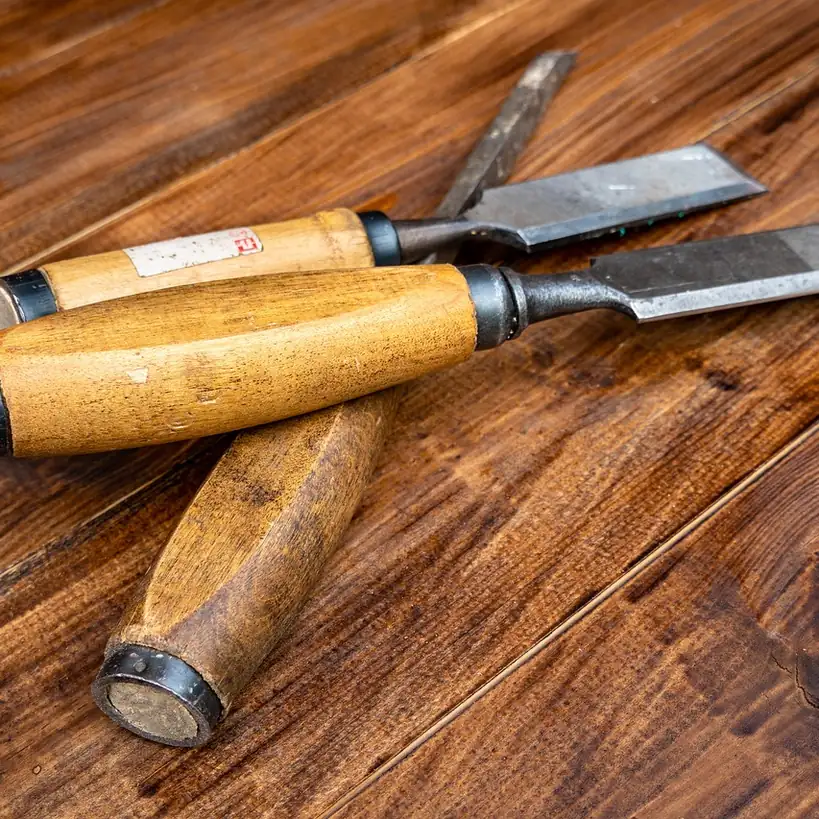
The loudest tools in a beginner's kit, a circular saw, a router, an orbital sander, all produce sustained, high-decibel noise for as long as they're running. Hand tools, a hand saw, a hand plane, hand sanding, produce far less noise, both in peak volume and in duration of any single loud moment. This is the single most effective lever available, because it addresses the noise at the source rather than trying to block it after it's already generated. It's not a universal fix, some cuts and some materials genuinely call for a power tool, but for a meaningful share of small-project work, a hand-tool approach is quieter by a wide margin, not a marginal one.
Lever 2: timing, beyond just legal quiet hours

Most leases and local ordinances specify quiet hours, typically late evening through early morning, and staying within them is a baseline requirement, not a courtesy. But legal quiet hours and actually-considerate timing aren't the same thing. A loud cut at 9am on a weekday, technically within quiet hours almost everywhere, can still be disruptive to a neighbor working from home or sleeping after a night shift. Where you can, running the loudest single operations, the actual saw cuts rather than the quieter assembly or hand-sanding steps, during a window when most neighbors are naturally out or active themselves genuinely reduces friction, independent of what the lease technically allows.
Lever 3: reducing vibration and impact transfer
A meaningful share of what a downstairs or adjacent neighbor perceives as "noise" from woodworking isn't purely airborne sound, it's vibration traveling through the floor, a shared wall, or the furniture the work surface sits on. A workbench or table set directly on a hard floor can transmit tapping, sawing vibration, and tool contact directly into the building structure. A dense rug or a rubber mat under the work area's legs adds a layer that absorbs some of that vibration before it reaches the floor, the same principle behind rugs with acoustic underlay reducing impact noise generally, applied specifically to where your bench legs meet the floor rather than the whole room.
What this doesn't fully solve, said plainly
Be honest with yourself about the limits here. No combination of a rug under your bench, hand tools where practical, and considerate timing turns a genuinely loud operation, cutting a sheet of plywood with a circular saw, for instance, into something inaudible to a neighbor on the other side of a shared wall. These three levers reduce both the volume and the duration of disruptive noise meaningfully, and they're worth doing consistently, but they don't eliminate the noise question entirely for every tool and every project. For the loudest, least avoidable cuts, the most reliable fix isn't an acoustic product at all: it's proactively telling a neighbor when a loud cut is happening and roughly how long it'll take, which does more for the actual relationship than any amount of foam.
A practical routine that combines all three
Plan the loudest single steps of a project, the actual saw cuts, as a short, concentrated window rather than spread across a whole session, and do that window during a reasonable daytime hour. Use hand tools for anything where a hand saw or plane genuinely gets the job done, saving the power tool for cuts that actually need it. Set your work surface on a rug, mat, or other vibration-absorbing layer rather than directly on a hard floor. And where you know a specific loud cut is coming, a quick heads-up to an adjacent neighbor costs nothing and prevents most complaints before they start.
How this fits your wider apartment setup
Noise is one of several constraints this site treats as first-class planning factors, alongside dust and lease terms. The temporary workshop setup guide covers where and how to physically set up with noise in mind from the start, and the renter's damage-avoidance guide covers the parallel deposit-risk question this same audience deals with. If your setup includes a balcony, the balcony projects guide covers the noise and neighbor-etiquette specifics of that space directly. The roadmap for starting without a garage is the place to start if you're building out your full apartment setup around all of these constraints together.
FAQ
Do soundproofing panels actually reduce woodworking noise? They help with general ambient room noise but do little to reduce the peak volume of a running power tool at the source. Tool choice and timing are more effective levers for the specific noise a saw or router produces.
What's the quietest way to cut wood in an apartment? A hand saw, used with a stable clamped setup, is dramatically quieter than a circular saw or jigsaw, both in peak volume and duration. It's the single biggest lever available for reducing noise at the source.
Is it enough to just follow my building's quiet hours? Legally, yes, but staying within quiet hours doesn't guarantee your noise won't disrupt someone with a different schedule, like a night-shift worker. Concentrating loud operations into a short window and giving neighbors a heads-up goes further than quiet-hours compliance alone.
Does a rug under my workbench actually reduce noise neighbors hear? It reduces vibration transfer through the floor specifically, which is part of what a downstairs or adjacent neighbor perceives as noise, though it won't reduce the airborne sound of the tool itself. It's one part of a broader approach, not a complete fix on its own.
Can I fully eliminate woodworking noise in an apartment? No, and it's worth being honest about that. Tool choice, timing, and vibration isolation meaningfully reduce disruption, but a genuinely loud cut on a power tool will still be audible through most shared walls. Communicating with neighbors ahead of a loud session does more than any product for the cuts you can't avoid.