Circular Saw Cut Drifting Off Line? Causes and Fixes
Circular saw cut drifting off line? Find the cause from where the drift starts, then fix the support, blade or saw setup and cut straight again.

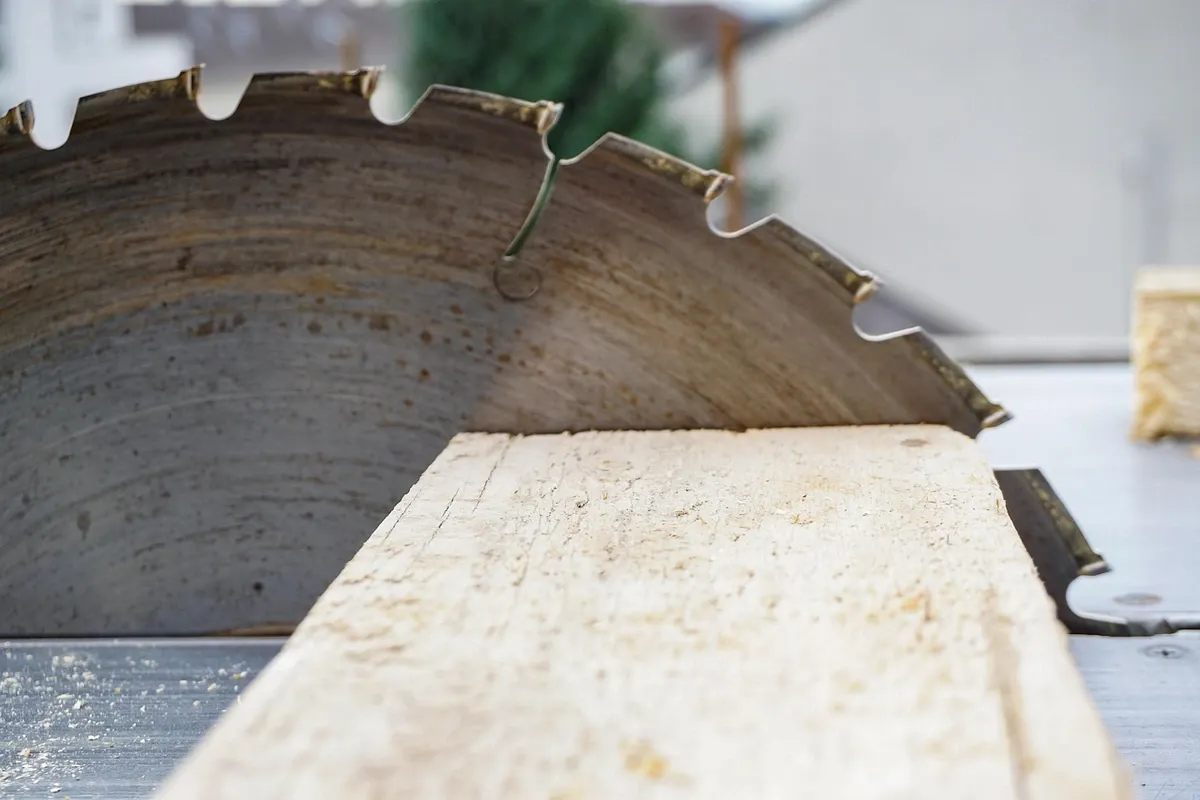
If your circular saw cut keeps drifting off line, the cause is almost always one of four things: you are steering the saw by eye instead of against a guide, the kerf is closing and squeezing the blade because the work is poorly supported, the blade is dull or wrong for the cut, or the blade is not running parallel to the saw's base plate. The quickest way to tell them apart is to notice where the drift starts and which way it goes. Drift from the first inch points to setup or sighting. Drift that builds in the middle usually points to support or a dull blade. Drift that happens even against a clamped guide points to the saw itself.
This guide explains what the kerf is, why a blade wanders, and how to diagnose the cause instead of guessing.
First, what "kerf" means and why it matters here
The kerf is the slot the blade removes as it cuts. It is as wide as the blade's teeth, which are slightly wider than the steel plate behind them. That extra width at the teeth (called "set" on many blades) gives the plate room to pass through without rubbing.
Two things follow from that:
- The kerf has a width, and it has to go somewhere. If you center the blade on your pencil line, half the kerf eats into the piece you wanted to keep, and the part comes out short. Many "drift" complaints are really this: the saw cut straight, just on the wrong side of the line. Put the blade on the waste side of the mark every time.
- A closing kerf grabs the blade. When the slot pinches shut behind the teeth, the plate rubs, the saw slows, and the blade gets pushed sideways toward the side with less resistance. That sideways push is what you see as wander.
Is the saw drifting, or are you steering?
A blade that is spinning at speed and buried in wood tends to track in a straight line. Most wander starts when something pushes it sideways: your hands, the material, or a misaligned saw.
Freehand, your hands are doing the steering. You watch the line, notice a small error, correct it, overshoot, and correct again, and the kerf ends up gently wavy. That isn't a fault in the saw. It is why a clamped straightedge or guide matters more than anything else in this article. If you haven't used one before, our comparison of track saws and circular saws for beginners explains how a guided circular saw gets close to a track saw's straightness.
There's also a sighting trap. Most saws have a notch or mark on the front of the shoe to show where the blade will cut. On some saws, and on saws that have been knocked around, that notch doesn't line up with the actual blade. If you follow the notch, you follow the error. Make a short test cut in scrap, see where the kerf actually lands compared with the notch, and mark the real line on the shoe with a fine permanent marker.
Circular saw cut drifting off line? Start with where it drifts
This table covers most of what goes wrong. Work down it in order, because the causes near the top are more common and cheaper to fix.
| What you see | Most likely cause | What to check or change |
|---|---|---|
| Cut is wavy, wanders both ways, only freehand | Steering by eye | Clamp a straight guide and ride the shoe against it |
| Cut is straight but the part is short or long | Blade centered on the line, or wrong side | Put the kerf on the waste side of the mark |
| Straight at first, then veers and the saw bogs down near the end | Kerf closing because the offcut sags or the board is supported only at its ends | Support both sides near the cut line; let the offcut fall free |
| Saw needs more and more push, smells hot, edges look burned | Dull or pitch-coated blade, or wrong blade type | Clean or replace the blade; use a blade suited to the cut |
| Saw pulls away from a clamped guide even with good support and a sharp blade | Blade not parallel to the shoe, or shoe bent | Check alignment (below) and follow the manual's adjustment |
| Cut edge is beveled when it should be square | Bevel not set to 0 degrees or bevel lock loose | Check the blade against a square with the saw unpowered |
| Sudden jog partway along | Cord snag, stopping and restarting, or a knot | Clear the cord path; keep a steady feed |
Support: the most common hidden cause
Kreg Tool's guide to getting straight circular saw cuts (read September 25, 2026) puts it plainly: "If your material can move or fall as you cut, it's almost impossible to make a straight cut with a circular saw, no matter how good you are." The same guide recommends clamping only the piece you keep, not both sides of the cut, so the offcut can move away from the blade instead of pinching it.
Picture a board spanning two sawhorses with the cut in the middle. As the blade gets through, the two halves sag toward each other at the bottom and the kerf closes on the blade. Now picture the same board with the cut just outside one sawhorse: the offcut drops away and the kerf stays open. For sheet goods in an apartment, the reliable version is a sheet of rigid foam insulation on the floor with the blade set to cut just into the foam, so both sides stay supported the whole way along. Our guide to woodworking without a workbench covers more ways to hold work steady on a floor or folding table.
The blade: dull, dirty, or wrong for the job
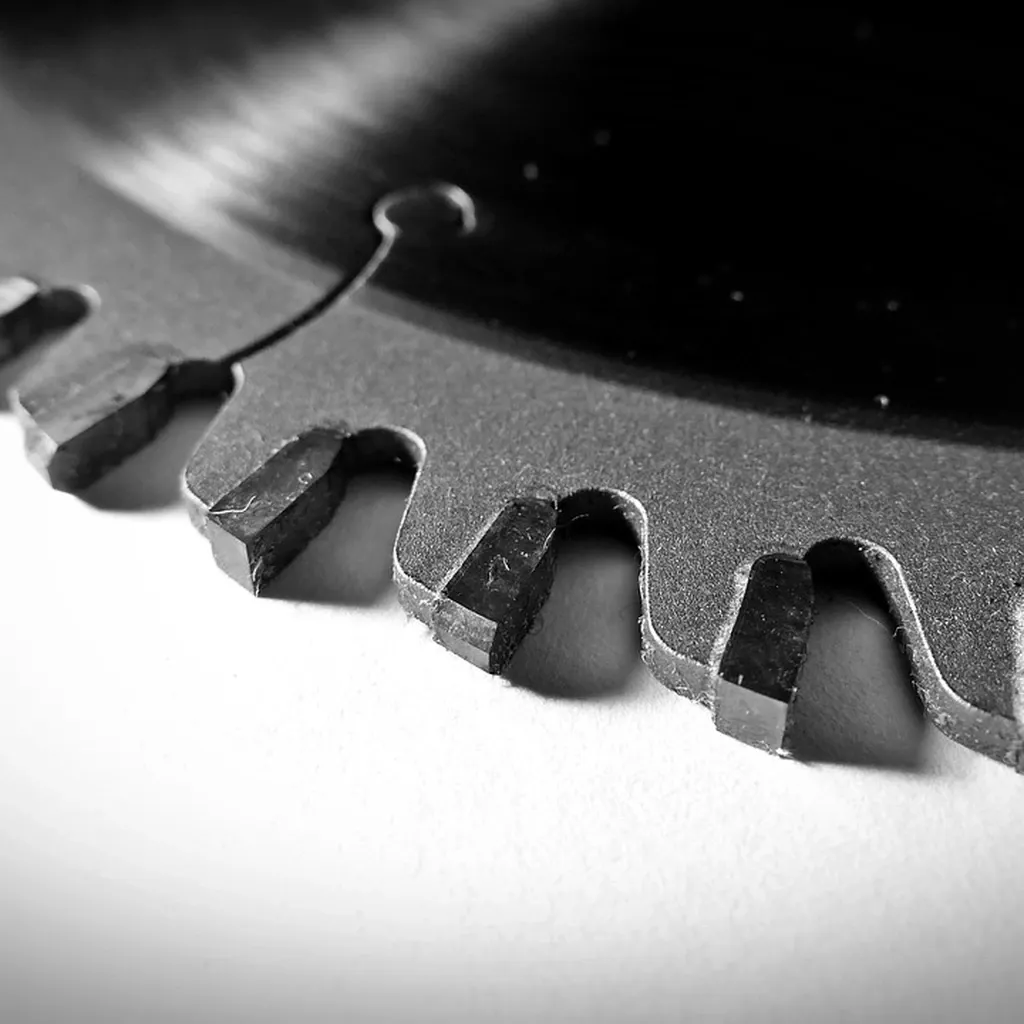
A sharp blade cuts with little sideways force. A dull one makes you push harder, and the harder you push, the more the plate flexes and the more sideways force goes into the cut. Resin and pitch buildup on the plate does something similar because it adds friction inside the kerf.
Signs the blade is the problem: burn marks along the cut, a saw that slows down in material it used to cut easily, and more splintering than before. Clean the pitch off with a blade cleaner or replace the blade. The OSHA woodworking eTool page on handheld circular saws (read September 25, 2026) lists "use proper blade for cutting action," "maintain and sharpen blade," and "operate saw at speed specified by the manufacturer" among its kickback controls. A blade that drifts and a blade that kicks back often have the same problem.
The saw: blade not parallel to the shoe
If the drift survives a clamped guide, full support and a fresh blade, check the saw. The blade should run parallel to the edge of the shoe from front to back. If the front of the blade points even slightly toward or away from the guide, the saw steers itself on every cut.
How to check it without special tools:
- Take out the battery or unplug the saw. Don't skip this.
- Set the bevel to 0 degrees and lock it firmly.
- Retract the lower guard by hand and hold it back safely.
- Mark one tooth with a marker.
- Measure from the edge of the shoe to that tooth with the tooth at the front of the blade, then turn the blade by hand so the same tooth is at the back, and measure again.
The two measurements should match. If they don't, the saw's manual will show whether the shoe can be adjusted and how. Some saws have an adjustment, some don't. A shoe that is visibly bent from a drop is a repair or replacement question, not something to bend back by hand. While the saw is unplugged, also check the blade against a small square to confirm it sits at 90 degrees to the shoe, because a slight bevel makes a cut look like it drifted when the edge is really just tilted.
The wood itself can move
Sometimes the saw is fine and the board is not. Solid lumber can hold internal stress from how the tree grew and how it was dried. When you cut into it, that stress is released and the board can spread apart or close up along the kerf as you go. Knots and wet or pitchy wood make the blade work harder in some places than others.
You can't always see this ahead of time. What you can do: watch the kerf as you cut. If it starts closing behind the blade, stop, release the trigger, and let the blade come to a complete stop. Slip a thin wedge or shim into the kerf behind the saw to hold it open, then check that the teeth are clear of the wood before you restart. If a board keeps doing it, use it for shorter parts where a slight bend doesn't matter.
What not to do once the cut starts drifting
Don't try to steer back onto the line mid-cut. Twisting a spinning blade sideways in a kerf is exactly the misalignment that can make it bind. Release the trigger, let the blade stop completely, and never pull the saw backward while the blade is still turning. Then either finish on the waste side with a guide, or start a fresh, guided cut and leave the extra for a hand plane or sanding block.
Drift and kickback share causes
The conditions that make a cut wander (a closing kerf, a dull blade, a blade twisted in the cut) are the same conditions that cause kickback. OSHA's handheld circular saw eTool page describes kickback as when "the blade catches the stock and throws it back toward the operator," and it lists supporting all pieces of stock, "including the cut and uncut ends, scrap, and finished product," among the controls. So fixing drift also makes each cut safer.
Every cut, not just the ones that feel risky:
- Keep the lower guard working and never pinned or wedged open.
- Clamp the workpiece. Don't hold short pieces by hand near the blade.
- Keep both hands on the saw and stand to the side of the blade's line, not directly behind it.
- Wear eye protection and hearing protection. A circular saw is one of the loudest tools in a small apartment, and our woodworking noise guide by tool explains what that means for your ears and your neighbors.
When the fix is a different method
A guided circular saw handles shelves, boxes and cabinet parts well once the causes above are sorted. It struggles with narrow strips (the shoe has little to rest on and the offcut is hard to support) and with parts that need a joinery-grade edge. For those, cut a little wide and bring the edge to the line with a hand plane, or cut short, fine pieces with a hand saw. Being honest about that is cheaper than ruining another board.
FAQ
Why does my circular saw drift even with a straightedge? If a clamped guide, good support and a sharp blade still don't stop it, the blade is probably not parallel to the shoe, or the shoe is bent. Check with the saw unplugged by measuring from the shoe edge to the same tooth at the front and back of the blade.
Should the blade be on the line or beside it? Beside it, on the waste side. The kerf has a width, so a blade centered on the line takes half the kerf out of the piece you're keeping.
Can a dull blade cause a crooked cut? Yes. A dull or pitch-coated blade needs more force, and extra force pushes the blade sideways in the kerf. Burn marks and a saw that slows down in the cut are the usual signs.
How deep should the blade be set to cut straighter? Only a little deeper than the material. Kreg Tool's straight-cut guide notes that a saw set too deep is harder to control, which makes straight cuts harder. Less exposed blade also means less blade in contact with a kerf that might close.
Is it safe to correct a drifting cut mid-cut? No. Twisting the saw in the kerf can make the blade bind. Release the trigger, let the blade stop completely, and restart with a guide or finish the edge by hand.