Lumber Grade Stamps Explained for Beginners
Lumber grade stamps explained: agency mark, mill number, grade, species and moisture. Why KD means 19% at the mill, and why HT is not a moisture rating.

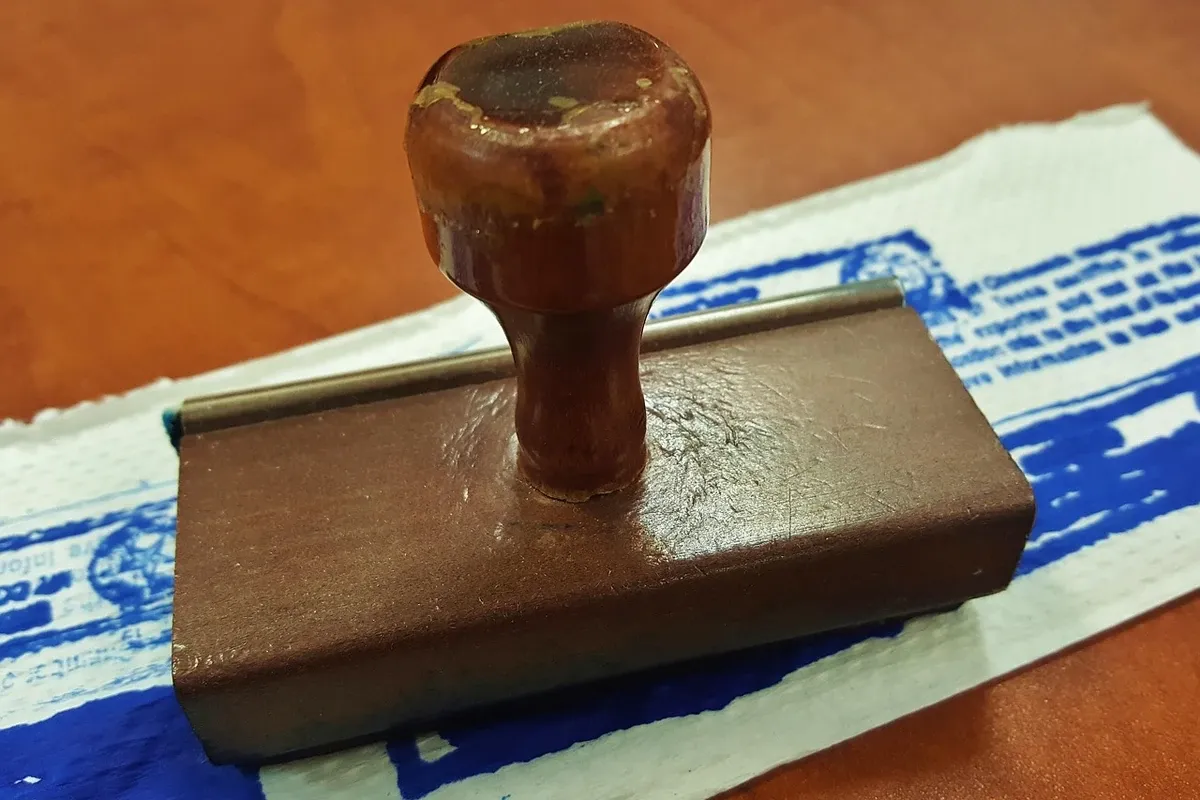
Short answer: here are lumber grade stamps explained in one line: the inked box on a softwood board tells you who supervised the grading (the agency mark), which mill made it (a number or name), the grade, the species, and how dry it was when it was planed at the mill. For a beginner building indoor furniture, the moisture mark is the one that matters most, and it is also the most misread. "KD" or "S-DRY" means the board was surfaced at 19% moisture or less; "MC15" or "KD15" means 15% or less; "S-GRN" means it was surfaced green. "HT" means heat treated and is not a moisture rating at all.
None of these tell you the board's moisture today, and none tell you how straight it is. Here is how to read each part and what to do with it at the store.
The five parts of a grade stamp
The Pacific Lumber Inspection Bureau (PLIB), one of the agencies that supervises grading, lists the parts of its stamp on its grade stamping page. The Structural Building Components Association describes the same system for US softwood lumber graded under rules approved by the American Lumber Standard Committee and certified to the American Softwood Lumber Standard (PS 20).
| Part of the stamp | What it tells you | What it does not tell you |
|---|---|---|
| Agency mark (logo) | The grading was supervised by that agency; PLIB says its mark "Attests to quality control supervision" | It is not the mill's brand |
| Mill identification | "It may be a name or assigned mill number" (PLIB); useful for tracing a problem | A higher number is not a better mill or grade |
| Grade | The grade name, number or abbreviation (for example No. 2, Stud, Select) | How straight the board is today |
| Species | The species or species group | Exactly which tree species in a group |
| Moisture and seasoning | "the moisture content/condition of seasoning when lumber was surfaced at mill" (PLIB) | The moisture content now |
Lumber grade stamps explained: the moisture marks
This is the part worth memorizing. From PLIB's table:
| Mark | PLIB's definition | What it means for an indoor project |
|---|---|---|
| MC15 or KD15 | "Surfaced at 15% maximum moisture content" | The driest standard mark; closest to indoor conditions |
| S-DRY or KD | "Surfaced at 19% maximum moisture content" | Dry by the lumber standard, but still above indoor levels |
| S-GRN | "Surfaced green (unseasoned)" | Wet when planed; expect a lot of shrinking and movement indoors |
| HT | "Heat Treated" | Says nothing about dryness on its own |
Three details are easy to miss:
- MC15 and S-DRY are not always kiln dried. PLIB's footnote says "MC15 and S-DRY may be air dried or kiln dried." KD names kiln drying (the Wood Handbook's definition also allows "some special drying method"); S-DRY and MC15 tell you only the moisture limit.
- HT can stand alone. PLIB says HT "may appear in conjunction with one of the other seasoning identifiers," for example KD HT, and that "It may also appear alone as a stand-alone HT stamp." SBCA explains HT is used when lumber is heat treated to kill pests, typically for exported lumber. A board marked only HT has not been given a moisture class by that stamp.
- The marks set a maximum, not a range. You will see popular guides, such as This Old House, describe KD lumber as "between 16% and 19%"; the agency's own definitions above state only a maximum.
How dry is "dry" compared with your apartment?
The US Forest Service's Wood Handbook, Chapter 13 recommends about 8% moisture on average for interior woodwork and furniture in most of the US (6 to 10% for individual pieces), and says common grades of softwood boards and dimension lumber are not normally dried to those values. So even a perfectly honest KD stamp leaves a board that may still shrink as it settles indoors. MC15 or KD15 stock starts closer; hardwood dried for furniture, which the Handbook says is usually dried to 6 to 8%, is closer still. Either way, let boards settle in the room where they will be used before you cut joinery. Our guide to storing wood in a small apartment covers where to stack them.
What the grade on the stamp means for a woodworker
Stamped softwood is graded around its intended use. The Wood Handbook, Chapter 6, says grading requirements for softwood yard lumber "are specifically related to the construction uses intended," and splits yard lumber into Select and Common grades. It adds that "Select lumber is intended for natural and paint finishes."
For a beginner that means:
- Select or appearance grades are graded on looks and are the better choice for visible furniture parts.
- Structural grades such as No. 2 or Stud on 2x lumber are graded for strength and use in walls. They can carry knots and some warp and still be in grade, so pick each board by eye.
Why a board may have no stamp at all
SBCA notes that every board is usually stamped once before it leaves the mill, and that cutting boards shorter is common, so "the process of cross-cutting often produces one or more board sections that do not have a stamp." If you have a long board cut into pieces at the store, some pieces will be blank. Read and write down the stamp before the cut if the moisture mark matters to you.
How to use the stamp at the store: a quick checklist
- Find the moisture mark first. For indoor furniture, prefer MC15 or KD15; accept KD or S-DRY and plan to let the wood settle; avoid S-GRN for anything that must stay flat indoors.
- Do not read HT as dry. Look for KD, S-DRY or MC15 next to it.
- Check the species. Southern pine and Douglas-fir are much harder than eastern white pine, which changes how the board cuts by hand.
- Check the grade against the job. Appearance grades for visible parts; structural grades are fine for hidden frames and practice.
- Then ignore the stamp and inspect the board. No mark guarantees a straight board today. Sight along it and check for twist, bow, crook and cup before it goes in the cart.
Our beginner checklist covers the rest of the shopping trip, and the list of beginner woodworking mistakes is worth a read before your first build.
FAQ
What does KD-HT mean on lumber?
KD means kiln dried and surfaced at 19% maximum moisture content; HT means heat treated, which SBCA says is used to kill pests, typically for exported lumber. KD-HT is both marks together.
Is S-DRY the same as kiln dried?
Not exactly. S-DRY and KD both mean surfaced at 19% maximum moisture content, but PLIB notes S-DRY lumber may be air dried or kiln dried, while KD indicates kiln drying.
What does S-GRN mean?
Surfaced green: the board was planed while unseasoned. It will shrink as it dries, so it is a poor choice for indoor furniture parts that need to stay flat.
Does the grade stamp tell me the moisture today?
No. PLIB defines the moisture mark as the condition "when lumber was surfaced at mill." Storage and shipping change moisture afterward; a moisture meter or simply letting the wood settle indoors tells you more.
What is the number on a lumber stamp?
Usually the mill identification. PLIB says it "may be a name or assigned mill number" and that the agency can identify the mill if needed.