How Loud Is Woodworking, Really? A Noise Guide by Tool
NIOSH measured a woodshop at 86 to 94 dBA. Every 3 dB halves your safe time, so a router uses a day's allowance in about an hour.

There are two noise problems and they have almost nothing to do with each other. One is your hearing, which is about how loud and for how long. The other is your neighbors, which is mostly about vibration through the building, and a quiet tool can be worse than a loud one for that.
Most guides answer neither properly, so here are the measured numbers and what they actually mean for someone working in an apartment.
The Numbers, From Actual Measurements
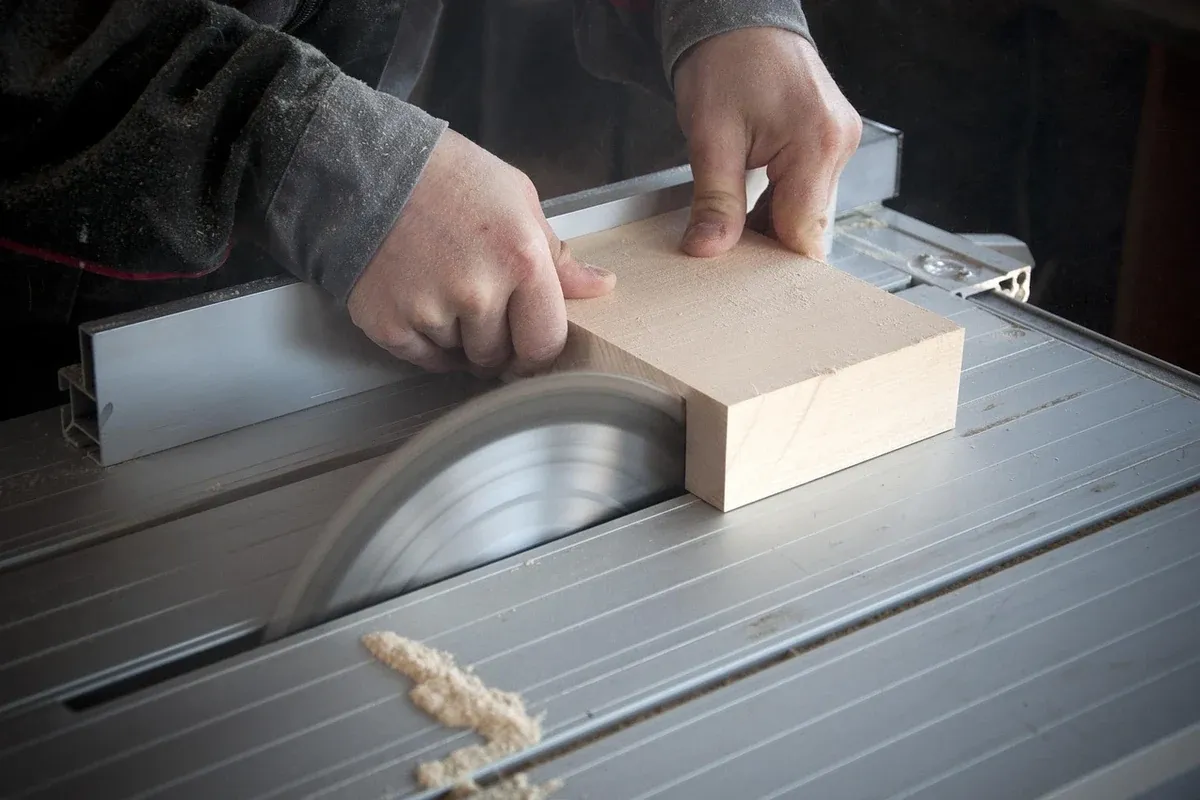
NIOSH measured sound levels in a woodshop during use of a table saw, miter saw and router. The range was approximately 86 to 94 dBA, with the handheld router the loudest of the three at 92 to 94 dBA.
The CDC's broader table of noise levels by decibel puts other tools you might reach for in context:
| Tool | Level |
|---|---|
| Chain saw | 110 dBA |
| Spray painter | 105 dBA |
| Hand drill | 98 dBA |
| Router (measured in a woodshop) | 92 to 94 dBA |
| Table saw, miter saw (same woodshop) | 86 to 94 dBA |
Every tool on that list is above the level at which NIOSH says damage accumulates.
The Rule That Makes These Numbers Mean Something
A decibel figure on its own tells you very little. What matters is the pairing of level and time, and the rule is not intuitive.
NIOSH recommends a limit of 85 dBA averaged over 8 hours, with a 3 decibel exchange rate. That exchange rate is the important part: for every 3 dBA increase, the safe exposure time halves.
Apply that to the numbers above and the picture changes completely:
| Level | Time before you have used the day's allowance |
|---|---|
| 85 dBA | 8 hours |
| 88 dBA | 4 hours |
| 91 dBA | 2 hours |
| 94 dBA | 1 hour |
| 97 dBA | 30 minutes |
| 100 dBA | 15 minutes |
A router at 94 dBA uses a full day's allowance in about an hour. Not an hour of standing in the room, an hour of the tool actually running, which for most projects is a reasonable estimate of an afternoon's cutting.
One thing to be clear about: this is an occupational limit, written for people exposed every working day for years. A weekend hobbyist is not in the same position as a cabinet shop employee. But the physics of how hearing damage accumulates is the same, and the exchange rate is what tells you that a short burst of a loud tool is not the small thing it feels like.
OSHA's enforceable limit is different and less strict: 90 dBA over 8 hours with a 5 decibel exchange rate. The two numbers being different is a legitimate source of confusion. NIOSH's is the health-based recommendation; OSHA's is the regulatory floor.
Hearing Protection Is Not Optional at These Levels
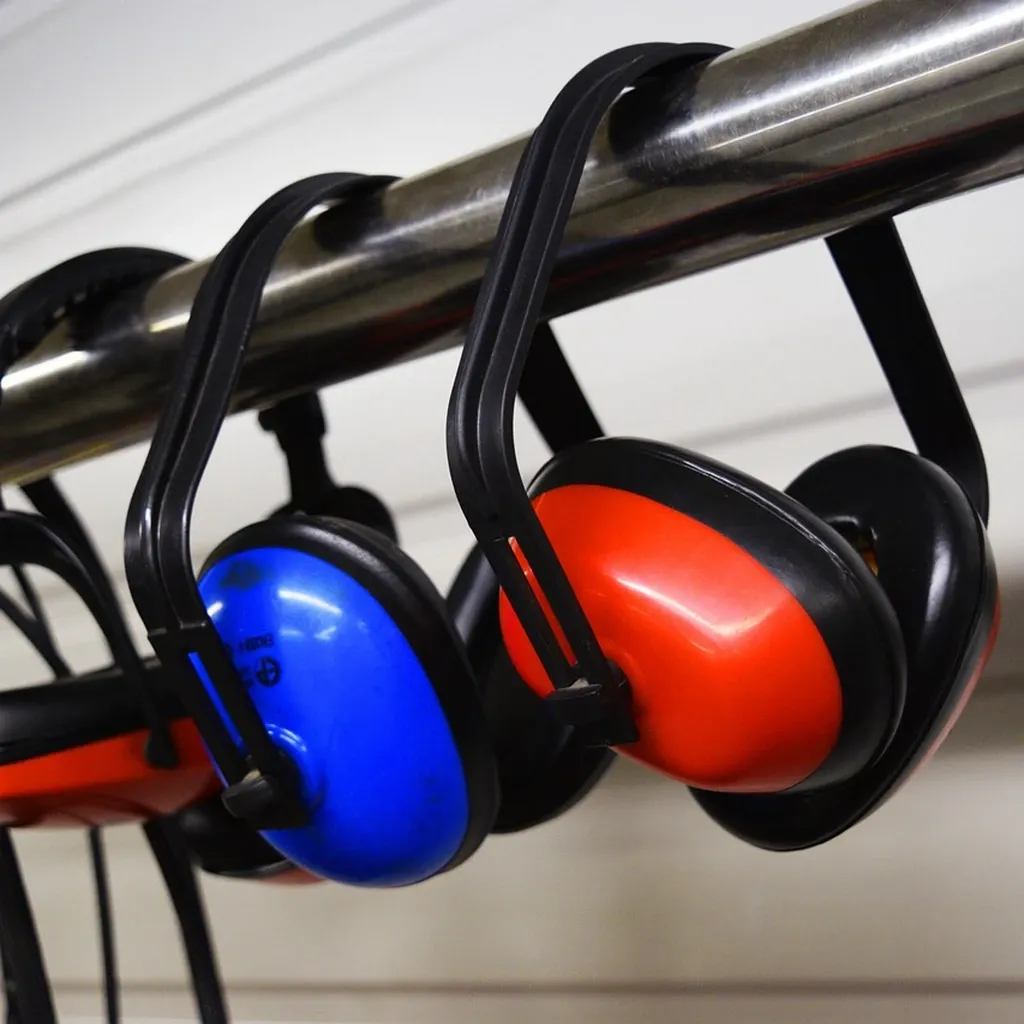
At 92 to 94 dBA, the question is not whether to wear protection. It is that you need it from the first cut, not once it starts feeling loud.
By the time a noise feels uncomfortable, you are well past the level where damage happens. Hearing loss from tool noise is painless, gradual, and permanent, which is a bad combination because none of those properties prompt you to act.
Muffs or plugs both work. The one you actually wear is the one that works, and if reaching for them is any effort at all, they end up on the shelf. Keeping a pair hanging on the tool rather than in a drawer is a small change that does more than choosing a better pair.
The Neighbor Problem Is a Different Problem
Here is the part that catches apartment woodworkers out.
Your neighbors mostly do not hear the airborne sound. They feel the vibration through the structure. A tool that is loud in your room but sits on a soft surface can be less disruptive than a quiet one clamped to a shared wall.
Three consequences that matter more than decibel ratings:
Anything that transmits into the floor travels. A machine bolted to a bench that sits directly on the floor puts its vibration into the building. A rubber mat, a folded blanket or foam feet under the bench break that path, and the difference is not subtle.
Impact noise is the worst offender and it is not on any decibel chart. A mallet, a chisel being struck, a board dropped flat on a bench. Each one is a brief impulse that carries through a structure far better than continuous sound, and it is what generates complaints in buildings.
Hand tools solve the neighbor problem and not the hearing one, and that is fine, because hand tools are quiet on both counts. A hand saw, a block plane and a brace do not need protection and do not carry through walls. On a site built around working without a garage this is not a compromise, it is often the better answer, and it is the approach behind a floating shelf without power tools and a picture frame without a miter saw.
Practical Ways to Cut Both Kinds of Noise
Cut outside the quiet hours, and know what yours are. Most leases and many local ordinances set them, and they are usually the single rule you can break without realizing.
Put something soft between every machine and the building. Bench on a mat, machine on a pad, workpiece on a padded surface rather than bare wood on bare bench.
Batch the loud work. One concentrated hour of routing is better for your hearing allowance and for your neighbors than the same hour spread across a Sunday, because the disruption is bounded and predictable.
Use a sharp blade. A dull blade in a saw or a dull bit in a router works harder, runs hotter and is measurably louder than a sharp one doing the same cut.
Consider whether the cut needs a power tool at all. Many of the cuts in small-space projects are short, and a hand saw does them in about the same total time once you count setup, without the noise or the dust. That is the logic that runs through woodworking without a garage and an apartment woodworking workshop setup.
If You Are Choosing Tools With Noise in Mind
Buy the tool for the cut, then manage the noise, rather than choosing a worse tool because it is quieter. A router is loud because of what it does, and a quieter router that struggles is not an improvement.
Where a hand tool genuinely does the job, it is the better apartment choice, and the shape of a kit built that way is in the minimal woodworking tool kit.
Cordless is not quieter in any meaningful sense. The noise comes from the cutting, not the motor.
The Short Version
- NIOSH measured a woodshop at 86 to 94 dBA, with the handheld router loudest at 92 to 94.
- The limit is 85 dBA over 8 hours, and every 3 dB halves the time. At 94 dBA you have about an hour.
- Wear protection from the first cut. If it sounds loud enough to bother you, you are already past the point.
- Neighbors feel vibration more than they hear sound. Isolate the bench from the floor.
- Impact noise carries furthest and appears on no decibel chart.
- Hand tools are the one answer that fixes both problems, which is why they suit small-space work.