The Minimal Woodworking Tool Kit: What to Buy First
The ONE tool to buy first for woodworking with no shop, what to add next, and what each stage actually costs at typical retail prices.

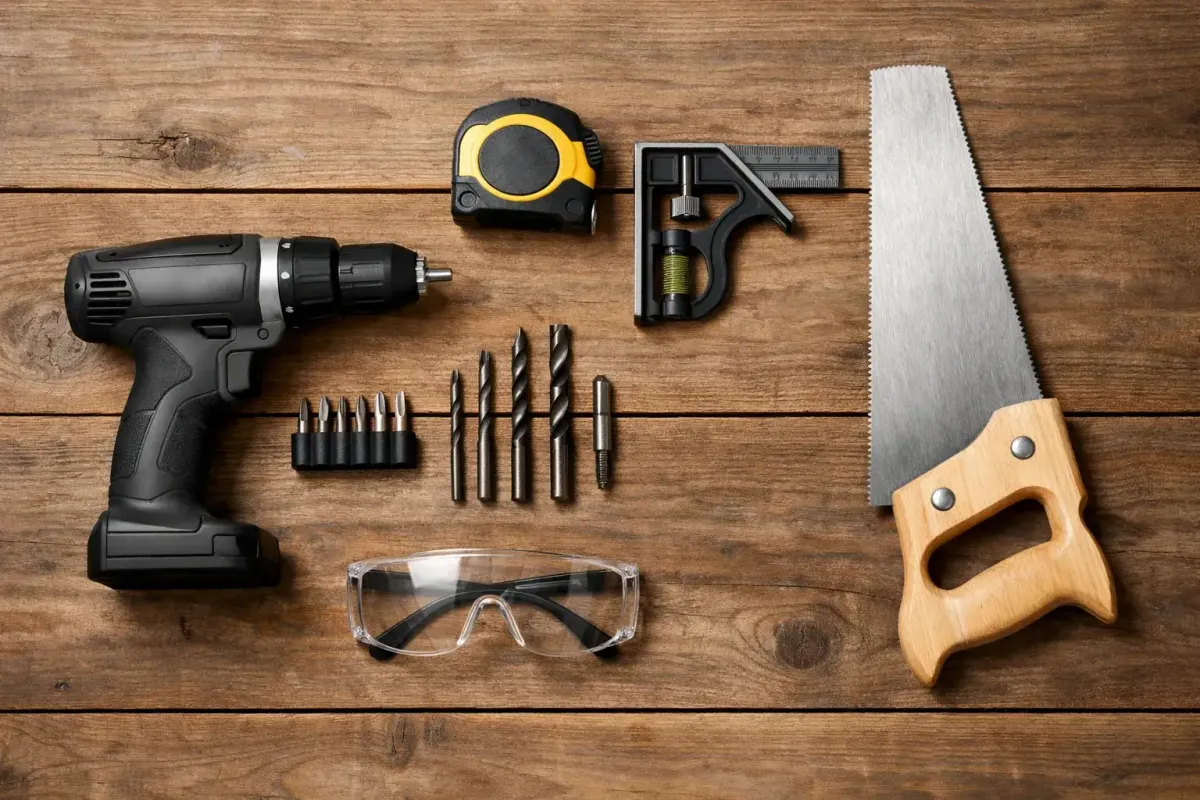
The one tool to buy first for no-shop woodworking is a cordless drill: it covers drilling and driving screws for nearly every early project, costs the least of any tool in the kit, and needs almost no storage space. Everything after it should be added only once that first tool is genuinely limiting a real project, not bought in advance as part of a wishlist.
Most existing tool-kit guides, including well-known ones from Popular Woodworking and Family Handyman, list five to ten "essentials" at once. That answers a different question than the one a beginner with no shop and a tight budget actually asks: what do I buy this week, and in what order, before I've built anything at all.
The mistake: buying a full kit before your first project
Buying a complete kit before starting a single project front-loads cost and storage commitment before knowing which tools actually get used. A beginner who buys a table saw, a router, a miter saw, and a full clamp set before their first build routinely finds that two or three of those tools sit unused for months while a $40 hand tool would have covered the actual first project. The buy-order below exists specifically to avoid that.
Tool #1: the cordless drill
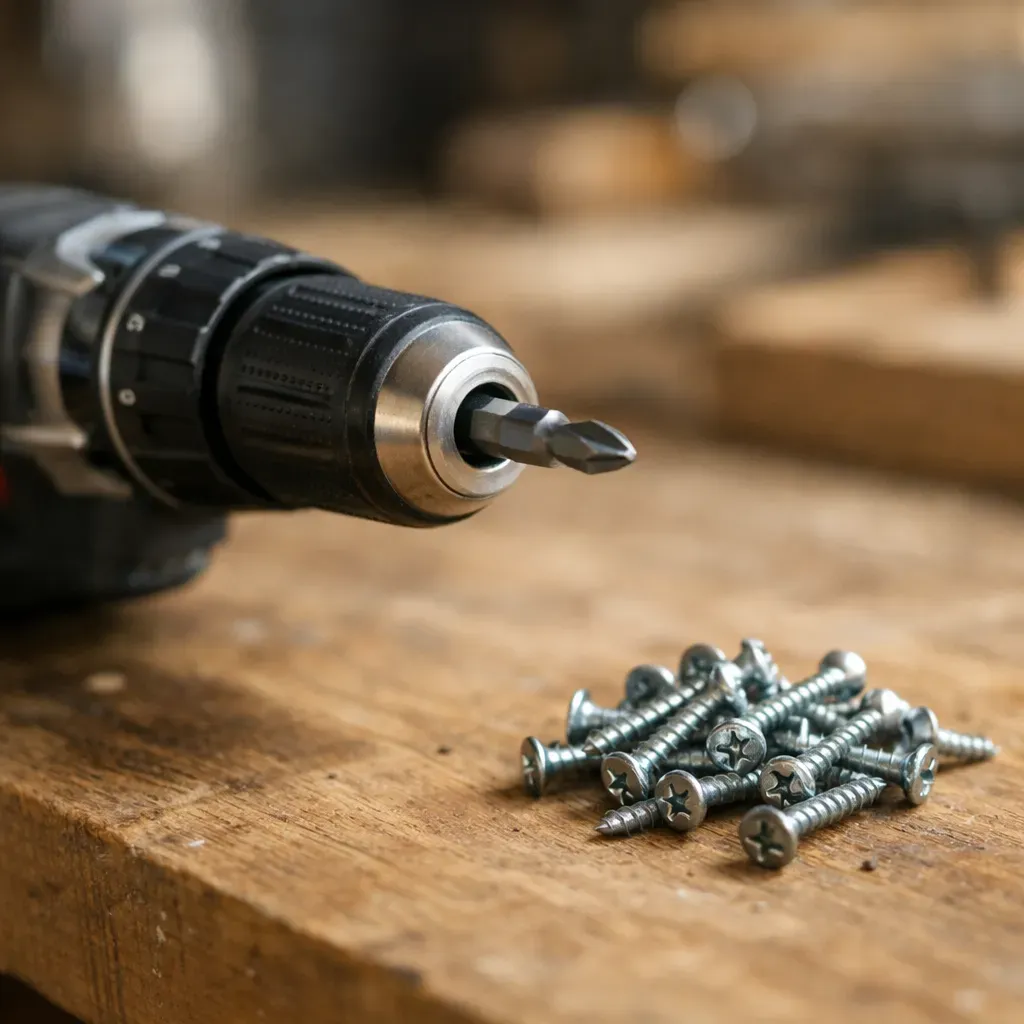
A cordless drill drives screws and drills pilot holes, which covers assembly for nearly every simple project: boxes, shelves, and basic joinery all lean on a drill more than any other single tool. It is quiet enough for most apartment hours, small enough to store in a drawer, and it is genuinely the cheapest tool in this entire kit. Entry-level cordless drill kits from major brands commonly run somewhere in the $50 to $100 range at big-box retailers, with basic models from discount tool chains sometimes available for less; exact pricing varies by retailer and changes often, so treat any figure as a general range rather than a fixed number.
This single tool unlocks the box and floating-shelf projects from a beginner's first weekend without needing anything else beyond hand tools and clamps.
Tool #2 and #3: added only once #1 is genuinely limiting
The second tool worth adding is a circular saw, and only once hand-sawing straight cuts has become a real bottleneck rather than a minor inconvenience. A circular saw with a straight-edge guide handles most rip and crosscuts a beginner needs without a table saw. Basic corded models suitable for a beginner typically retail in roughly the $40 to $120 range, again varying by retailer.
The third addition, for most beginners, is a random orbital sander, once hand-sanding a project's surface starts taking longer than the rest of the build combined. It is optional longer than the drill or saw; plenty of small projects finish fine with hand-sanding blocks.
Nothing beyond these three needs to be bought before finishing several real projects. Everything else on a typical "essentials" list, chisels, a hand plane, a router, is worth adding only in response to a specific project that needs it.
What each stage actually costs
Stage one (drill only) is the cheapest entry point into this hobby by a wide margin, typically well under the cost of a single mid-range power tool elsewhere in this list. Stage two (drill plus circular saw) roughly doubles that starting cost but unlocks the large majority of beginner and intermediate projects on this site. Stage three (adding a sander) is a smaller additional cost on top of stage two and mainly buys time rather than new capability, since hand-sanding accomplishes the same result more slowly.
Exact totals depend on brand, sale timing, and whether tools are bought new or used, which is why this guide gives ranges tied to typical current retail pricing rather than a single fixed number that would go stale within months.
Noise and storage: the two factors most tool-kit lists ignore
A shop-oriented tool list judges tools mainly on capability and price. An apartment list has to weigh two more factors those lists skip entirely: how much noise a tool makes, since that determines what hours it can run, and how much dedicated storage it needs, since an apartment rarely has a garage's worth of shelving to spare. A cordless drill wins on both counts before it even gets credit for capability; a table saw loses on both, which is exactly why it's absent from this list.
Safety gear belongs in the first purchase, not an afterthought
Eye protection and hearing protection are worth buying alongside the very first power tool, not added later once a habit of skipping them has already formed. Both are inexpensive relative to any tool on this list, and both address risks (flying debris, cumulative hearing exposure from repeated power-tool use) that are well established rather than hypothetical. Treat this as part of tool #1's real cost, not a separate, optional line item.
What you're trading off by staying hand-tool or no-table-saw for now
Skipping a table saw means giving up repeat, high-precision rip cuts on long stock, the kind a cabinet shop relies on daily. For the vast majority of small furniture, boxes, and shelving a beginner builds in the first year or two, a circular saw with a straight-edge guide covers the gap adequately. The tradeoff is real but narrow: it affects a specific category of advanced, repeat-precision work far more than it affects a beginner's actual project list.
When it's time to consider a table saw
A table saw starts to earn its footprint once projects regularly demand repeated, identical rip cuts across many boards, once cut accuracy needs to be tighter than a circular saw and guide reliably deliver, or once a dedicated space finally exists to store one safely. Until then, the drill-first, saw-second, sander-third sequence above covers what most beginners actually build.
This buy-order sits inside the larger roadmap in the no-garage starting guide, and it assumes the work-holding setup from the clamping and workbench guide is already sorted, since a stable table matters as much as the tool itself for a clean, safe cut.
FAQ
What is genuinely the first tool I should buy for woodworking with no shop? A cordless drill. It covers assembly for nearly every early project, costs the least of any tool discussed here, and needs almost no storage space.
Do I need a table saw to start woodworking? No. A circular saw with a straight-edge guide covers the large majority of cuts a beginner needs; a table saw becomes worth the space and cost mainly for repeat, high-precision rip cuts later on.
How much does a basic starter tool kit actually cost? It depends on brand, retailer, and timing, so treat any figure as a general range rather than a fixed number. A drill alone is the cheapest entry point; adding a circular saw roughly doubles the starting cost, and a sander adds a smaller amount on top of that.
Should I buy tools used to save money? It can work well for basic hand tools and simple power tools, and it's a reasonable way to lower the entry cost, though it carries some risk on battery-powered tools where battery health isn't visible before buying.
When should I add a router or a set of chisels? Only in response to a specific project that genuinely needs one, not in advance as part of a general kit. Both are common additions after a few completed projects rather than starting-point purchases.
Do I need safety glasses and hearing protection right away? Yes, alongside the first power tool rather than after. Both are inexpensive compared to any tool on this list, and both protect against risks, flying debris and cumulative hearing exposure, that build up with regular power-tool use rather than announcing themselves immediately.