How to Start Woodworking Without a Garage or Shop
No garage, no shop, no table saw? A real roadmap for starting woodworking anyway, plus the honest limits of working without one.

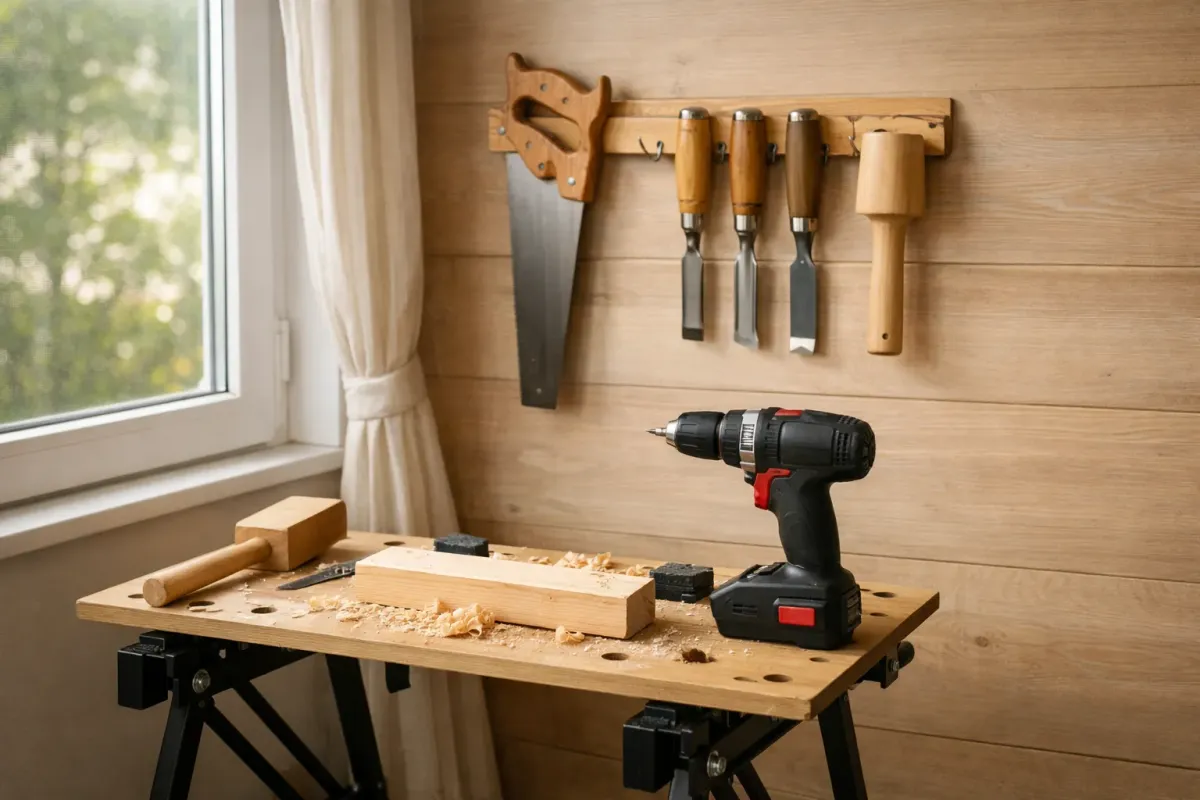
Woodworking without a garage is entirely possible. What changes is the workflow, not the craft itself: a spare room, a balcony, or even a cleared kitchen table can replace a shop, hand tools and a few compact power tools replace a table saw, and project size adjusts to match the space available. The honest version of that answer, including what genuinely does not work without a shop, is below.
This is not a "you don't need much" pep talk. Two real blogs, sawsonskates.com and theapartmentwoodworker.com, currently rank on page one for these exact searches, which proves the model works. Neither one, though, gives a new reader a single page that says "start here, in this order." That is what this guide is for.
What "no shop" actually rules out, and what it doesn't
A shop mainly buys three things: dedicated floor space, stationary tools bolted in place, and the freedom to leave a project set up between sessions. Losing all three does rule some things out. Large sheet-good furniture (a full dining table, a wardrobe built from full 4x8 plywood sheets) is genuinely harder without a table saw and a place to store the offcuts. Heavy ripping of long hardwood boards, the kind a cabinet shop does daily, is not a realistic apartment task.
Almost everything else survives the move. Small furniture, shelving, boxes, frames, and most joinery can be done with a circular saw, a drill, hand tools, and a folding table. The constraint changes which projects come first, not whether woodworking is possible at all.
The four real blockers, and the fix for each
Every apartment woodworker runs into the same four walls, usually in this order.
No garage. The fix is picking a flexible space rather than a dedicated one: a spare room, a balcony, or a cleared section of a shared room, set up and broken down each session. The specific tradeoffs of each option are covered in how to set up a temporary workshop.
No table saw. A circular saw with a straight-edge guide, or a track saw, covers most of what a beginner actually needs a table saw for: straight rip cuts on plywood and boards. It will not replace a table saw for repeat, high-precision cuts, but it gets a beginner through years of real projects first.
No workbench. Clamps, a portable clamping workstation, or a simple DIY batten jig on a table hold work steady enough to cut and sand safely. A dedicated guide to this exact problem covers the full hierarchy of options.
Noise, dust, and the deposit. This is the blocker every other guide underplays. It has its own section below because it is the one most likely to end a hobby early if ignored.
The evidence this niche is actually winnable
The reason this guide exists at all, rather than just pointing to what's already out there, is that the evidence for a new voice in this space is unusually direct. sawsonskates.com, a one-person blog, has appeared on page one across multiple constrained searches in this niche, including outranking established home-improvement media on general finishing questions. That is not a fluke of one lucky post; it is a sign that the audience for constrained, honest, apartment-specific woodworking content is real and currently underserved, not that the craft itself has changed.
theapartmentwoodworker.com is the clearest direct competitor, ranking first for several of the exact searches this cluster targets. It is also, on its own evidence, a project diary more than a structured resource: a reader arriving there gets one person's ongoing build log, not a page that says "here is the order to do this in." That gap, a genuine start-to-finish roadmap rather than a chronological journal, is what this pillar and the rest of this cluster are built to fill.
Hand tools vs a minimal power-tool kit: choosing your starting path
Two honest paths exist, and neither is wrong.
The hand-tool path (hand saw, chisels, a block plane, sandpaper) is quiet, cheap, and needs almost no dedicated storage. It is slower, and it demands more practice to get straight, square results. It suits someone in a thin-walled apartment or with unpredictable working hours.
The minimal power-tool path (a cordless drill, then a circular saw) is faster and more forgiving on accuracy, at the cost of noise, dust, and a small amount of storage space. It suits someone with at least some flexibility on when they can work.
Most beginners land somewhere in between: hand tools for joinery and finishing, one or two power tools for the cuts that would otherwise take an hour by hand. The full buy-order for that path, including what to skip entirely as a beginner, is in the minimal tool kit guide.
Your first project should not be furniture
The single most common mistake in this niche is a beginner's first project being a bookshelf or a table: a project with squareness tolerances that punish every small mistake in cutting, drilling, and assembly at once. A first project that goes wrong here usually ends the hobby, not just the build.
A better first project is small, forgiving of minor errors, and finishable in a single weekend: a simple box, a floating shelf, or a cutting board. Each teaches one or two real skills (straight cuts, basic joinery, finishing) without punishing a beginner for normal early mistakes. Three specific starter projects, ranked by difficulty, are broken down with a full cut list and tool list for each.
Where to physically work
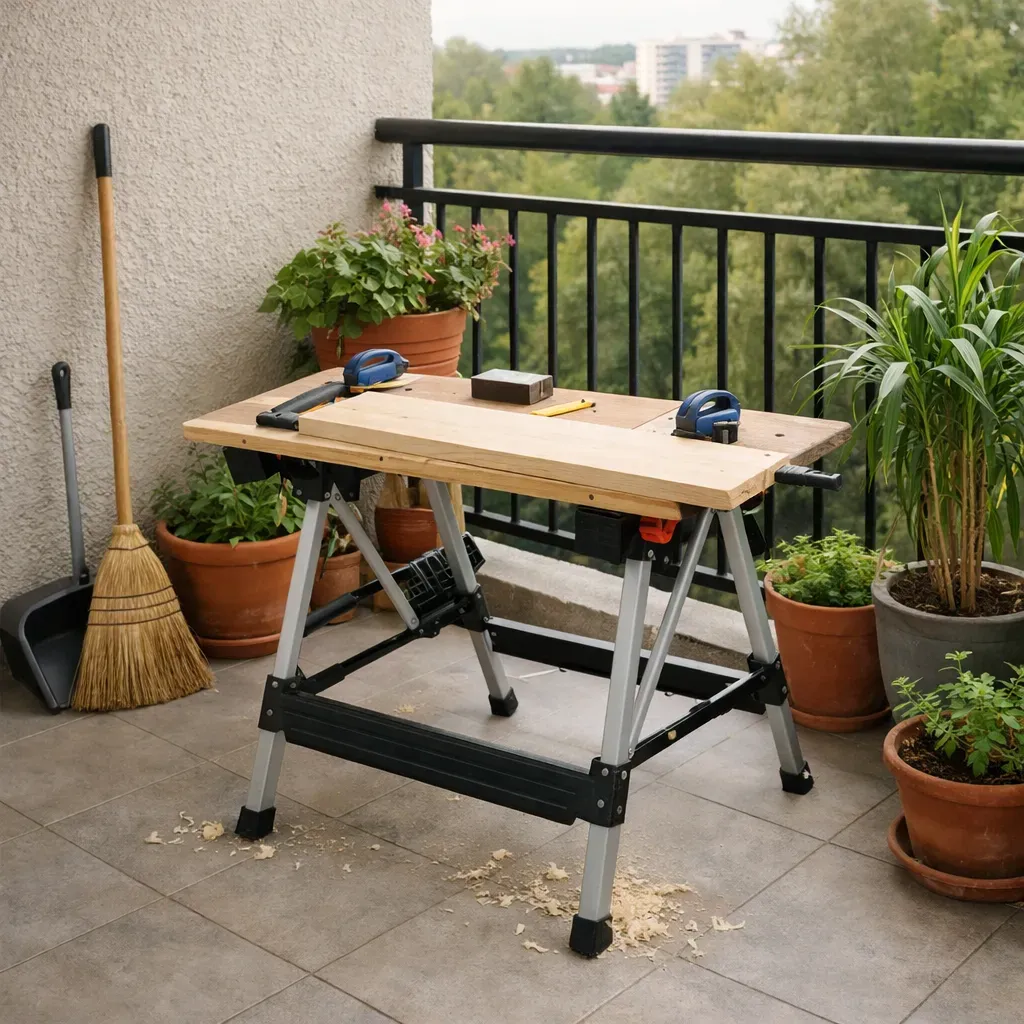
Four realistic options exist for most apartment dwellers, each with a real tradeoff:
- A spare room gives the most flexibility to leave a project set up, at the cost of dust settling on everything else in the room.
- A balcony solves dust and noise reasonably well but adds weather and railing-safety limits, and is not available in every lease.
- A kitchen table, protected with a sacrificial board underneath, works for small projects but must be fully cleared and cleaned after every session.
- A shared living space is the least ideal option and works only for the quietest hand-tool projects, done on a schedule that respects whoever else lives there.
A dedicated guide walks through the setup checklist for each of these, including the noise and dust routine that makes any of them workable.
The lease and landlord conversation nobody has before they start
Most guides in this niche treat the landlord as an afterthought, something to deal with if a complaint arrives. That is backward. Before the first cut, it is worth knowing three things directly from the lease or the landlord: whether alterations to walls or floors are restricted, whether there is a quiet-hours clause that governs when a power tool can run, and whether the building has a policy on storing flammable finishing products. Asking before a problem exists costs nothing and avoids a deposit dispute later.
What "success" looks like in the first three months
It's worth being honest about pace. A beginner working evenings and weekends, without a dedicated shop, typically finishes a small first project (a box or a shelf) within the first two to three weekends, not the first sitting. That is not slow; it reflects real time spent learning to measure accurately, cut square, and let glue cure fully rather than rushing assembly. Expecting furniture-quality results on the first attempt is the most common source of early frustration in this hobby, and it is avoidable simply by choosing a forgiving first project and expecting the first attempt at any new skill to look rougher than the tenth.
A realistic first roadmap
A workable sequence for the first month or two looks like this: pick a workspace and set up the dust and noise routine, buy the one starting tool that unlocks the first project (covered in the minimal tool kit guide), build the first small project end to end, then decide whether the hand-tool or power-tool path fits better before buying anything else. Skipping ahead to a full tool kit before finishing one project is the single most common way beginners overspend on tools they do not end up using.
FAQ
Is it actually possible to do real woodworking without a garage? Yes, for the large majority of small-to-medium furniture, boxes, shelving, and joinery projects. The main things a garage genuinely enables are large sheet-good furniture and repeat high-precision cuts on long stock, which are a small fraction of what a beginner builds in the first year.
How much does it cost to start woodworking with no garage? It depends heavily on whether the hand-tool or power-tool path is chosen and what is already on hand. The minimal tool kit guide breaks down what the first tool actually costs and what it unlocks, using current typical retail pricing rather than a fixed number that goes stale.
Will my landlord care if I do woodworking in my apartment? It depends entirely on the lease and the specific activity. Cutting and light assembly rarely trigger a problem; drilling into walls, running loud tools outside quiet hours, or storing flammable finishing products without ventilation are the situations most likely to. Checking the lease and having a short conversation before starting is cheaper than dealing with a complaint after.
What's the very first thing I should buy? Nothing, until the first project is chosen. Buying a full tool kit before a single project is the most common way beginners overspend on tools they never end up using. The minimal tool kit guide walks through the actual buy order.
Can I really finish a project without a table saw? Yes, for the great majority of beginner and intermediate projects. A circular saw with a straight-edge guide handles most rip cuts a beginner needs; a table saw becomes worth the friction of shop space mainly for repeat, high-precision cutting later on.