Woodworking Projects for Renters That Won't Damage Anything
A renter's checklist for judging any woodworking project by damage risk, plus freestanding, non-permanent builds that protect your deposit.


The safest woodworking projects for a rental are freestanding: built to stand on their own weight rather than attach to a wall or floor, so nothing about the build itself puts your deposit at risk. A wooden box, a step stool, a modular set of stacking cubes, or a portable kitchen island on wheels all fall into this category. Wall-mounted pieces, floating shelves included, aren't automatically off-limits, but they involve actual holes and hardware rated for your specific wall type, and reversing that damage on move-out is a separate task from the build itself. The rest of this guide gives you a way to judge any project, not just the ones on a list, by exactly how much it risks.
Most "renter-friendly" lists skip the actual risk test
Search this topic and you'll find lists of specific projects, floating shelves, a blanket ladder, a sunglasses rack held up with adhesive strips. Useful as ideas, but they don't give you a way to evaluate a project that isn't already on someone's list, which is most of what you'll actually want to build over time. What you need instead is a simple test you can apply to anything: does finishing this project require putting a hole, a screw, or a permanent fixture into the wall, floor, or ceiling of a space you don't own? If the answer is no, the project is inherently reversible. If the answer is yes, it's not automatically a bad idea, but it moves into a different category that needs a separate plan for move-out.
The three-tier risk framework
Tier 1: fully freestanding. The project stands on its own weight and touches nothing structural. A wooden box, a step stool, a coaster set, a small plant stand, a portable kitchen island on locking casters. Move out and it moves with you, with zero wall or floor work required to undo anything.
Tier 2: temporarily attached, removable without a trace. Uses adhesive strips rated for the weight involved, or hardware designed to be removed cleanly, rather than screws into drywall or studs. A lightweight rack or small shelf under a certain weight limit can sometimes fall here, but only if the hardware is genuinely rated for that weight and genuinely removable, which not all "no-damage" adhesive products are for heavier pieces.
Tier 3: fixed to the wall or floor. Requires actual screws, wall anchors, or a fastener into a stud or the wall material itself. A floating shelf is the clearest example on this site: the guide to building one without power tools is explicit that this is a genuinely non-reversible project, it leaves real holes that need spackle and paint to fully undo, and it's worth checking your lease's terms on wall modifications before starting one, not after it's already up.
Freestanding projects that cover most of a beginner's actual needs
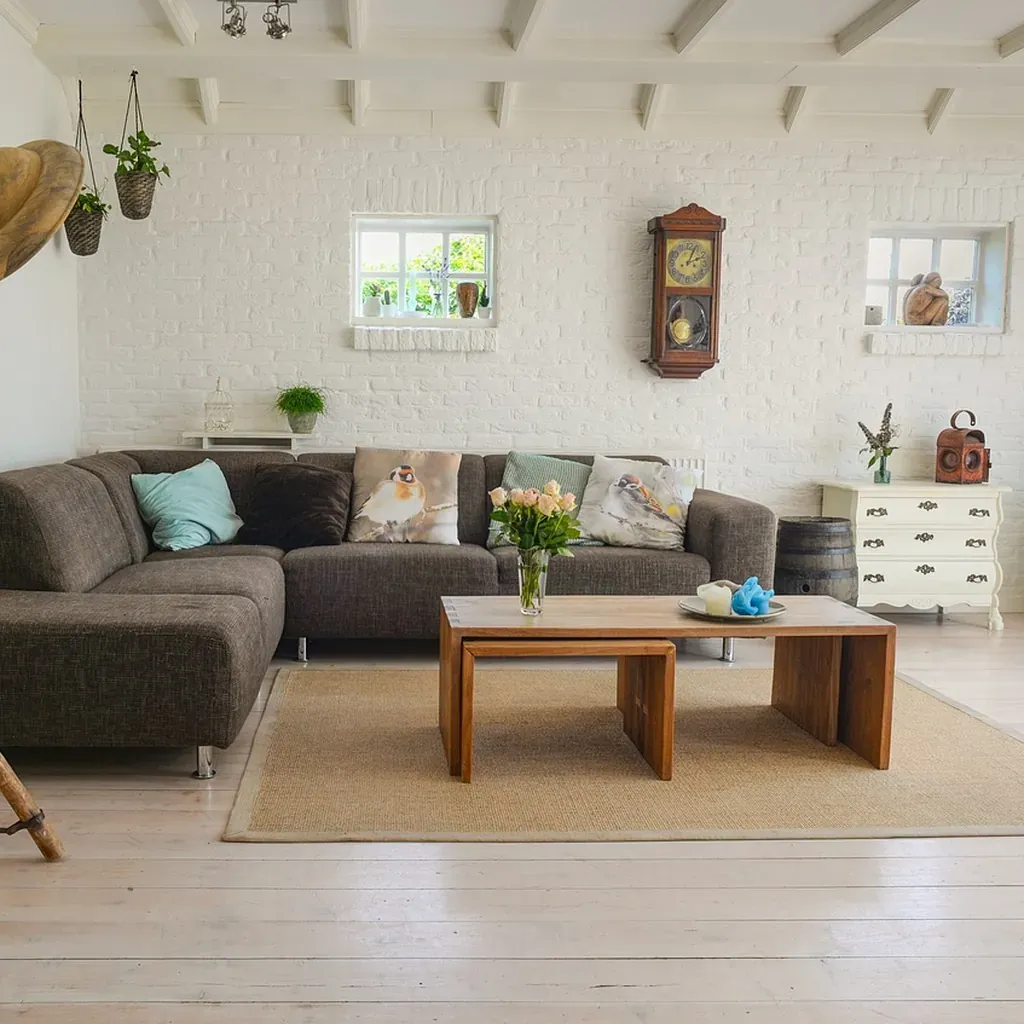
The honest reality is that most useful early projects don't need to touch a wall at all. A wooden box works as storage, a gift, or a first project to learn square cuts and simple joints, and the beginner's box-building guide covers it start to finish. A step stool solves a genuine household need without any wall attachment, and the step stool guide walks through it with the added caution that a piece meant to be stood on deserves extra care in construction. A small bookshelf can be built as a genuinely freestanding unit rather than wall-secured, which the small-space bookshelf guide covers, including the tradeoffs of skipping a wall-anchor safety strap on a taller piece.
What "no damage" doesn't mean: floors need protecting too

Deposit risk isn't limited to walls. Cutting, sanding, or finishing directly on a rented floor risks scratches, dents from a dropped tool, or finish stains that are just as costly to fix as a wall hole. The guide to cutting wood on a table or floor without damaging it covers the sacrificial-layer protection every project in this guide should still use, freestanding or not, since the deposit risk from an unprotected floor is real even when the finished piece itself never touches a wall.
What the checklist doesn't cover: furniture that gets heavy or tall
One category deserves a specific caution beyond the three-tier framework: a freestanding piece that's tall relative to its base, a bookshelf especially, carries a genuine tip-over risk once it's loaded with weight, independent of whether it damages the rental. Many owners solve this with an anti-tip wall strap, which technically involves a small wall fastener even on an otherwise freestanding piece. That's a legitimate trade-off between damage-avoidance and physical safety, and it's worth deciding deliberately rather than skipping the strap purely to stay in "Tier 1."
Choosing your first project with this framework
If avoiding any wall or floor risk entirely is the priority, start with a wooden box, a coaster set, or a step stool, all genuinely freestanding and none require reconsidering your lease. If a wall-mounted piece is worth the trade-off for you, floating shelves being the clearest example, read the lease terms on wall modifications first, and plan the move-out repair (typically spackle and a matching paint touch-up) as part of the project's real cost, not an afterthought.
FAQ
What's the safest type of woodworking project for a renter? Freestanding projects that don't touch a wall or floor structurally, a wooden box, step stool, or portable furniture piece. Nothing about finishing them puts a deposit at risk.
Are floating shelves actually renter-friendly? They're a popular choice, but they're not damage-free. This site's floating shelf guide is explicit that they leave real wall holes needing spackle and paint on move-out, so check your lease's wall-modification terms before building one.
Can I use adhesive strips instead of screws for a wall-mounted project? For lightweight pieces within the product's rated weight limit, yes, and that keeps the project reversible. For anything heavier, adhesive strips generally aren't rated to hold it safely, and screws into a stud become the safer choice, which moves the project into a different risk tier.
How do I know if a project is actually reversible? Ask whether finishing it required a hole, screw, or fixture into your rental's wall, floor, or ceiling. If not, it's reversible by definition. If so, it isn't, regardless of how small the hardware looks.
Do freestanding projects still need floor protection while I build? Yes. Cutting, sanding, and finishing can all mark an unprotected floor even when the finished piece never touches a wall. The kitchen-table and floor protection guide covers the sacrificial-layer method to use regardless of what you're building.