Best Non-Toxic Wood Finish for Furniture Kids Pets Guide
Best non-toxic wood finish for furniture kids pets use daily: match the finish to chewing, wiping or light use, and learn what the label really promises.

Short answer: the best non-toxic wood finish for furniture kids pets will touch depends on what happens to the piece. For tables, dressers and shelves that get wiped and bumped, a water-based polyurethane or acrylic is usually the most practical lower-odor choice. For anything a child or pet is likely to chew, a simple finish such as shellac or a pure drying oil, fully cured, is what many woodworkers reach for. In every case the biggest exposure is while the finish is wet and curing, not after. "Non-toxic" on a can is a marketing claim, not a certification.
That last sentence is the part most "best finish" lists skip, so this guide starts there, then sorts the common finish types by what your furniture actually goes through.
If a child or pet has already swallowed or chewed wet finish
Do this before reading anything else. For a child in the US, call the Poison Help line at 1-800-222-1222, the number listed by Poison Control at poison.org (read on October 2, 2026). For a pet, call your vet or an emergency vet, or the ASPCA Animal Poison Control Center at (888) 426-4435. The ASPCA's page (read on October 2, 2026) says the line runs "24/7, 365 days a year" and that "a consultation fee may apply." Have the product can or its safety data sheet in hand when you call.
What "non-toxic" on a finish label does and does not mean
There is no government seal that makes a wood finish "non-toxic." The word is a marketing claim. The Federal Trade Commission's Green Guides (16 CFR 260.10, read on October 2, 2026) say "it is deceptive to misrepresent, directly or by implication, that a product, package, or service is non-toxic," and that such a claim "likely conveys that a product, package, or service is non-toxic both for humans and for the environment generally." The FTC expects marketers to have evidence for the claim. It does not test or approve finishes before they reach the shelf.
What is regulated is lead. The US Consumer Product Safety Commission's Lead in Paint FAQ (read on October 2, 2026) states that "all children's products and certain furniture articles must not contain a concentration of lead greater than 0.009 percent (90 parts per million) in paint or any similar surface coatings," and that "household paint must also meet this requirement." The same page lists "beds, bookcases, chairs, chests, tables, dressers" among the covered furniture.
So when a can says "non-toxic," read it as the maker's claim, and read the back of the can as the real information: the warnings, the ventilation line, and the drying and use times.
Read the back of the can, not the front
Here is what one common water-based finish actually says. Minwax's Polycrylic Protective Finish page (read on October 2, 2026) describes it as "low odor" with soap and water cleanup. It also says "Use only with adequate ventilation" and "KEEP OUT OF THE REACH OF CHILDREN," and it carries a California warning that the product "contains chemicals known to the State of California to cause cancer and birth defects or other reproductive harm." For use, it says to "allow 3 hours before light handling and 24 hours before normal use."
That is a typical label for a product many people would call kid-friendly. The lesson is not that this finish is dangerous. It is that a low-odor, water-cleanup finish still has a wet phase you keep children and animals away from, and still has a waiting period before the piece goes back into use.
Four things to find on any label before you buy:
- Cleanup method. Soap and water usually signals a water-based product. Mineral spirits signals solvents.
- Ventilation line. Almost every finish has one. It tells you how much fresh air the wet phase needs.
- Flammability warning. "Flammable" or "combustible" means a fire risk in storage and in the rags.
- Use times. Recoat, light use and normal use are separate numbers. The longest one is the one that matters for a family room.
Best non-toxic wood finish for furniture kids pets: matched to how the piece is used
No single finish wins every line. This table sorts the common types by the job, which is how the decision actually gets made.
| How the piece is used | Finish types people commonly choose | What you gain | What it costs you |
|---|---|---|---|
| Wiped often, spills, homework, food nearby (tables, desks) | Water-based polyurethane or acrylic | Tough surface film, low odor, water cleanup | Still needs ventilation and a full cure; looks cooler and clearer than oil-based |
| Likely to be chewed or mouthed (low rails, toy boxes, low stools) | Shellac, pure drying oil (pure tung or raw linseed), or a beeswax and mineral oil blend | Short ingredient lists; easy to touch up | Less resistant to water and wear; needs more upkeep |
| Low touch (shelves, plant stands, picture frames) | Any of the above, or a wipe-on oil | Freedom to pick by look | Pick by label warnings and use times, not by marketing |
| Scratched and licked by pets (bed frames, low furniture) | Water-based film finish, or an oil you are happy to reapply | Film resists claws better; oil is easy to spot-repair | Film shows scratches; oil needs regular renewal |
A few honest notes on each type.
Water-based polyurethane and acrylic
These form a hard, plastic-like film on top of the wood. That film is what makes them good for tables and desks that get wiped daily. They usually smell less than oil-based products and clean up with water. The trade-offs are the look (clearer, less amber) and the fact that they still carry ventilation lines and, on some products, health warnings like the Polycrylic one above. Thin coats matter more than speed: a thick coat traps solvent and stays soft longer.
Shellac
Shellac is a resin from the lac insect dissolved in alcohol. Once the alcohol evaporates, what is left is a thin film. Woodworkers have long used it on toys and children's pieces because the ingredient list is short. The cost: it marks easily from water, heat and alcohol, so it is a poor choice for a kitchen table. The liquid is alcohol-based, so check the can for a flammability warning and keep it away from any flame.
Pure drying oils (pure tung oil, raw linseed oil)
"Pure" is the important word. Many cans labeled "tung oil finish" or "Danish oil" are blends with solvents and driers, so the front of the can tells you little; check the ingredients and the safety data sheet. Pure oils soak in rather than forming a film, so they protect less against spills and scratches. They also cure slowly. Boiled linseed oil is not simply heated oil; it usually contains added drying agents, so treat it as a different product from raw linseed oil and read its own label.
Beeswax and mineral oil blends
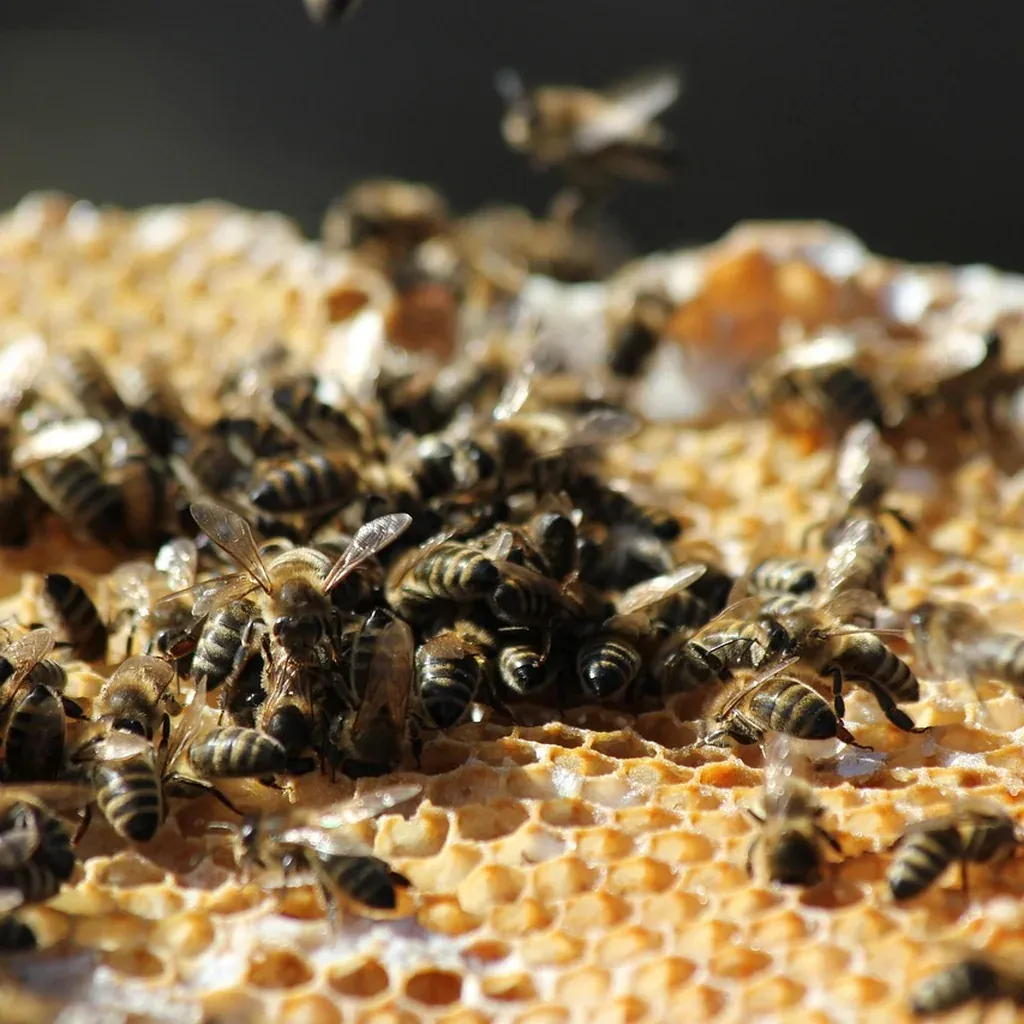
The gentlest-feeling option, common on toys and cutting boards. Mineral oil does not harden, and wax wears off, so these give little protection on furniture and need regular reapplication. They suit pieces that are handled, not pieces that get spills. If you are making a wooden cutting board as a first project, this is the finish family that usually comes up.
The real exposure is the wet phase
Here is the part that changes how you plan the job. Once a finish has fully cured, the main concern with a chewing toddler or puppy is usually physical: splinters, chipped edges and swallowed bits of wood. Before it cures, the concern is the finish itself: vapors in a closed room, tacky surfaces small hands touch, and fresh coats a dog can lick.
That is why the finishing plan matters as much as the product:
- Finish in a room you can close off from children and pets, with a window open. Our guide to containing sawdust in a small apartment covers sealing off a work zone, and the same setup helps here.
- Keep the piece out of reach until the label's normal-use time has passed, and longer if the room is cold or humid or the coats went on thick. If you can still smell the finish, treat it as not finished.
- Store the can closed and out of reach. The Polycrylic label says to keep it out of the reach of children, and pets knock things over. See our notes on storing tools and supplies in a small apartment.
- Deal with oily rags the same day. Minwax's oil-based Fast-Drying Polyurethane page (read on October 2, 2026) warns that "rags, steel wool, other waste soaked with this product, and sanding residue may spontaneously catch fire if improperly discarded," and says to place them immediately "in a sealed, water-filled, metal container." Treat rags from any oil finish the same way unless its own label says otherwise.
What this guide cannot tell you
Being direct about the limits:
- We cannot certify any finish as safe for your child or pet. Nobody can from a web page. The label, the safety data sheet and the maker's technical line are the authorities on a specific product.
- "Food safe" and "toy safe" are separate claims from "non-toxic." If a maker says a product meets a food-contact or toy standard, look for that specific statement on their own label or technical sheet, not on a retailer listing.
- If you sell children's furniture, CPSC rules apply to you as a manufacturer, including testing and certification. That is beyond a hobby guide; read the CPSC's business guidance directly.
- Health conditions change the answer. If anyone in your home is pregnant, has asthma or another breathing condition, or has a known allergy, ask a doctor before finishing indoors and bring the safety data sheet. If you have a pet with health issues, ask your vet.
A sensible default for most homes

If you want one plan rather than a comparison: for furniture that gets wiped, a water-based film finish applied in thin coats, with the room closed to kids and pets and the window open, then left until well past the label's normal-use time. For small pieces that may end up in a mouth, a short-ingredient finish such as shellac or a pure oil, fully cured, and checked regularly for chips and splinters.
Building something small first lets you learn the process at low stakes. A beginner step stool is a good test piece for a water-based finish before you commit to a bigger family table.
FAQ
What is the safest wood finish for a crib or toddler furniture?
No finish can be called safe for every child. Many woodworkers choose shellac or a pure drying oil for pieces that may be mouthed, because the ingredient lists are short. Whatever you choose, let it cure fully, follow the label, and keep the piece out of use until the smell is gone. If you make cribs for sale, CPSC rules apply.
Is water-based polyurethane non-toxic once dry?
It is usually lower in odor than oil-based polyurethane, but labels still carry warnings. Minwax's Polycrylic page, for example, requires ventilation, says to keep the product out of reach of children, and lists 24 hours before normal use. "Dry" and "fully cured" are not the same thing.
Is a wood finish that says "non-toxic" guaranteed safe?
No. "Non-toxic" is a marketing claim. The FTC's Green Guides say it is deceptive to misrepresent a product as non-toxic, but there is no approval before sale. Read the warnings, ventilation line and use times on the back of the can.
What finish should I use on furniture my dog chews?
Choose by use: a water-based film resists scratches better, while an oil is easier to spot-repair. With a chewing dog, splinters and swallowed wood are often the bigger issue, so ask your vet about the chewing itself. If your pet has eaten wet finish, call your vet or ASPCA Animal Poison Control.
How long should kids and pets stay away from freshly finished furniture?
At least until the label's normal-use time has passed, and longer in cold or humid rooms or with thick coats. Keep the room closed off during application and drying, and treat any lingering finish smell as a sign it is not done.