Best Respirator for Wood Finishing: What to Look For
Best respirator for wood finishing, explained: why dust masks fail on vapors, which NIOSH label to check, and how to spot counterfeit cartridges.

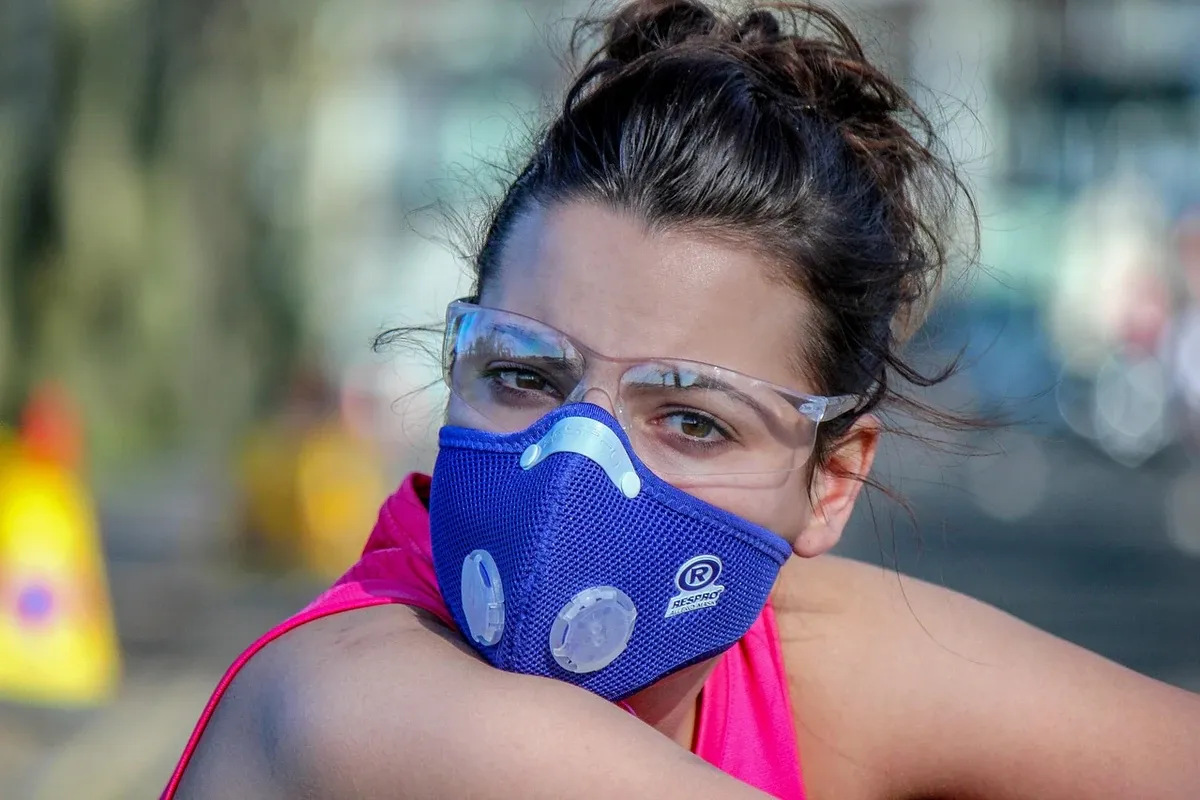
Short answer: the best respirator for wood finishing is not a brand. It is a NIOSH-approved reusable half-mask (or full-face) respirator fitted with organic vapor cartridges, used as the complete assembly its approval label lists, that seals on your face and gets fresh cartridges on a schedule. A disposable N95 dust mask does not do this job: NIOSH states that filtering facepiece respirators "provide protection against particles, but not gases or vapors." Solvent fumes from finishes are vapors.
This guide does not rank models, and we have not tested any. Instead it shows you how to read the label, match the respirator to the task, and avoid the counterfeit cartridges NIOSH has flagged.
Why a dust mask is the wrong tool for finish fumes
Woodworking has two airborne problems, and they need different protection.
- Dust from sawing and sanding is made of particles. A particulate filter traps it.
- Finish vapor from oil-based polyurethane, varnish, many stains and thinners is a gas-phase chemical. A particulate filter lets it straight through.
NIOSH's page on filtering facepiece respirators (read on October 2, 2026) puts it plainly: they "remove particles from the inhaled airstream" and "do not provide protection against gases or vapors." That covers N95s and similar disposable masks. If you can smell the finish through a dust mask, that smell is the vapor reaching you.
For vapor, you need a respirator that holds chemical cartridges, which capture organic vapors before you breathe them in. NIOSH's elastomeric respirator page (read on October 2, 2026) says half-masks with an exhalation valve "can protect against gases, vapors, or particles when equipped with the proper filter or cartridge."
Best respirator for wood finishing: match it to the task
Not every finishing job calls for the same setup. Start with the product label: if it says "vapor harmful" or names NIOSH-approved respiratory protection, take that seriously. This table sorts common jobs by what is in the air.
| Task | What is in the air | Protection class to look for | Notes |
|---|---|---|---|
| Sanding raw wood or between coats | Fine dust | Particulate filter (an N95 or better, or a particulate filter on a reusable mask) | No vapor protection needed for the dust itself |
| Brushing or wiping oil-based poly, varnish or stain | Solvent vapor | Organic vapor (OV) cartridges on a reusable half-mask | Ventilation still comes first |
| Brushing water-based finish | Lower vapor, still some | Follow the label; many call for ventilation only | If the label names respiratory protection, use OV cartridges |
| Spraying anything, including aerosol cans | Vapor plus fine mist | Combination cartridges: organic vapor plus a particulate filter | Spraying indoors in an apartment is a poor idea regardless |
| Stripping old finish | Strong solvent vapor | Read the stripper's label carefully | Some strippers carry warnings a half-mask cannot address; work outdoors or not at all |
If a job involves both dust and vapor, a combination cartridge or a particulate prefilter on top of an OV cartridge covers both. Check that the specific combination is listed on the respirator's approval label.
How to read a NIOSH approval label

This is the part almost every "best respirator" list skips, and it is the one that decides whether you are protected.
NIOSH's guide to identifying NIOSH Approved respirators (read on October 2, 2026) says every approved respirator comes "with a NIOSH approval label on or within the respirator packaging," and that the label includes a testing and certification (TC) approval number, such as "TC 84A-XXXX." It adds that "the easiest way to confirm that a product is a NIOSH approved respirator is to search for it on the NIOSH Certified Equipment List (CEL)."
What to check before you trust a respirator:
- Find the TC number on the packaging or approval label.
- Search it on the NIOSH Certified Equipment List and confirm the maker, model and approval match what you are holding.
- Use only the parts the approval lists. NIOSH's cautions for chemical cartridge respirators (schedule 23C, read on October 2, 2026) say: "Never substitute, modify, add, or omit parts. Use only exact replacement parts in the configuration as specified by the manufacturer." A cartridge from a different seller that "fits" your mask is not part of an approved assembly.
- Read the limitations. The same NIOSH list says these respirators are "not for use in atmospheres containing less than 19.5 percent oxygen," and warns: "Do not wear for protection against organic vapors with poor warning properties." It also states that "failure to properly use and maintain this product could result in injury or death."
The counterfeit cartridge problem
Here is the risk that has nothing to do with which model you choose. NIOSH's page on counterfeit and misrepresented chemical cartridges (last updated February 4, 2025; read on October 2, 2026) reports fakes using the part numbers "60921, 60923, 60924 and 60926," which belong to genuine 3M combination cartridges. It says "many listings incorrectly or falsely claim these cartridges can be used with the 3M 6000, 7000 and FF-400 series facepieces."
According to the same page, a genuine cartridge's label must show:
- the approval holder's name
- the product part or model number
- the protection or filter series
- the acronym "NIOSH"
- a lot number
The page notes that "mandatory information is missing from the counterfeit cartridges." So when you buy replacements, buy from the maker or an authorized distributor, check every one of those markings on arrival, and treat a suspiciously cheap multipack from an unknown seller as a warning sign, not a bargain.
Getting a seal: the part money cannot fix
A respirator only filters the air that goes through the cartridges. Air that leaks around the edge of the mask is unfiltered.
- Facial hair. OSHA's respiratory protection standard (29 CFR 1910.134, read on October 2, 2026) says employers must not permit tight-fitting respirators on workers who have "facial hair that comes between the sealing surface of the facepiece and the face or that interferes with valve function." That rule is written for workplaces, but the seal works the same way at home. If you have a beard, a tight-fitting half-mask will not seal, and you need a different approach, such as finishing outdoors or choosing a product whose label does not call for respiratory protection.
- Size and fit. NIOSH's elastomeric page says these respirators "must form a tight seal to the user's face; and therefore, require fit testing." Professional fit testing is a workplace requirement; at home, at minimum do the seal check described in your mask's user instructions every time you put it on, and choose a size that passes it.
- Glasses and safety eyewear. These can push on the mask. Try them on together before a finishing session, not during one.
Changing cartridges: smell is not a schedule
Organic vapor cartridges fill up as they work, and you cannot count on noticing when they are done. That is why OSHA requires workplaces using gas and vapor cartridges to use either an end-of-service-life indicator certified by NIOSH or "a change schedule for canisters and cartridges that is based on objective information or data that will ensure that canisters and cartridges are changed before the end of their service life." The NIOSH caution about "organic vapors with poor warning properties" makes the same point from the other side: some vapors give no smell warning at all.
At home, the practical version is: follow the change guidance in your cartridge's user instructions, write the date you opened them on the cartridge, and replace them sooner if you smell or taste the finish or feel irritation. If you notice the smell, leave the room first, then check the seal or change cartridges in fresh air.
What a respirator cannot do for you
Being straight about the limits:
- It does not replace ventilation. The finish vapor still fills the room, still reaches anyone else in the apartment, and still lingers after you take the mask off. Open windows and move air out, as your finish label directs.
- It does not protect housemates, children or pets. Keep them out of the room while you work and while the finish dries.
- It does not make indoor spraying a good idea. A half-mask helps you; it does nothing about overspray on your walls or solvent mist near a heat source in a small room.
- It is not for everyone. If you have a heart or lung condition, asthma, or are pregnant, talk to a doctor before using a respirator, and bring the finish's safety data sheet.
If you are setting up your first kit, our woodworking beginner checklist puts protective gear in context with the tools you actually need first.
Dust is a separate job
Most indoor finishing starts with sanding, and that dust is the other half of your breathing protection. A particulate respirator or N95 handles dust; the OV cartridge is for the finish. Controlling dust at the source matters more than either: our guide to containing sawdust in a small apartment covers sealing off a work area, and if you sand by machine, the random orbital sander guide covers what to check for dust collection in a small space.
OSHA's four rules for voluntary use
Even if no one requires you to wear one, OSHA's advisory for voluntary respirator users (Appendix D to 29 CFR 1910.134, read on October 2, 2026) makes a good home checklist:
- "Read and heed all instructions provided by the manufacturer on use, maintenance, cleaning and care, and warnings regarding the respirators limitations."
- "Choose respirators certified for use to protect against the contaminant of concern."
- "Do not wear your respirator into atmospheres containing contaminants for which your respirator is not designed to protect against."
- "Keep track of your respirator so that you do not mistakenly use someone else's respirator."
Store the mask and cartridges as the user instructions direct, away from dust and finish fumes. Our notes on storing tools and supplies in a small apartment cover keeping gear sealed and out of the way.
FAQ
Can I use an N95 mask for polyurethane fumes?
No. NIOSH states that filtering facepiece respirators, including N95s, protect against particles but "do not provide protection against gases or vapors." Solvent fumes from oil-based polyurethane are vapors. You need a respirator with organic vapor cartridges, used as its approval label lists.
Do I need a respirator for water-based finishes?
Follow the label. Many water-based finishes call for adequate ventilation rather than a respirator. If the label names NIOSH-approved respiratory protection, or you get symptoms such as eye watering or headache, stop, get fresh air, and use an organic vapor respirator before continuing.
How do I know if my respirator is NIOSH approved?
Find the TC approval number on the packaging or label and search it on the NIOSH Certified Equipment List. Check that the maker and model match. Cartridges should show the approval holder's name, part number, protection series, "NIOSH" and a lot number.
How often should I change organic vapor cartridges?
Follow the change guidance in the cartridge's user instructions, note when you opened them, and replace them sooner if you smell or taste the finish or feel irritation. Workplaces must use a change schedule or a NIOSH-certified end-of-service-life indicator, because senses alone are not reliable.
Does a respirator work with a beard?
A tight-fitting half-mask generally does not seal over facial hair. OSHA bars workplaces from using tight-fitting respirators on workers whose facial hair comes between the seal and the face. If you have a beard, finish outdoors where allowed, or choose products whose labels do not call for respiratory protection.