Random Orbital Sander for Small Spaces: What to Check
Pad size, disc availability, orbit diameter and dust extraction, the four specs that decide a sander indoors, plus the grit scales explained.


In a small home, a sander is chosen on dust before it is chosen on power. Four specifications decide it: pad size and whether those discs are actually stocked where you shop, the orbit diameter the maker publishes, whether the dust port fits a vacuum hose rather than only a bag, and corded against cordless. Judge any sander against those four, and treat the extraction as the one that cannot be compromised indoors.
This page ranks nothing and quotes no price. It gives you the specifications and the checks, so you can evaluate whatever is on the shelf when you are ready.
Why This Page Has No Picks
Being straight about it: nobody here has tested a sander, so nothing on this page is a review. No model is named as a winner and no price appears, because prices move and differ by country, and a roundup written today is wrong the moment a model is discontinued.
What is durable is the specification. A pad size and a hole pattern will still mean the same thing in five years, and they let you judge a tool that did not exist when this was written. The same reasoning shapes the rest of this site's buying guides.
What "Random Orbit" Means and Why It Matters
The pad on a random orbital sander does two things at once: it spins on its axle, and the axle itself moves in a small circle. Because the two motions are not synchronized, no grain of abrasive follows the same path twice.
That is the whole point. A sander that oscillates in a fixed pattern leaves a repeating scratch, and repeating scratches show up under a finish as swirl marks. A random pattern leaves scratches that scatter, so they disappear as you step through grits.
The consequence for how you use it: let the sander move slowly across the surface and do not lean on it. Pressure stops the pad from orbiting freely, which turns a random orbit sander into a fixed-pattern one and puts the swirls back. The most common beginner sanding failure is pushing hard to speed the job up, which is one of several habits covered in the guide to common beginner woodworking mistakes.
Pad Size, and the Discs You Can Actually Buy
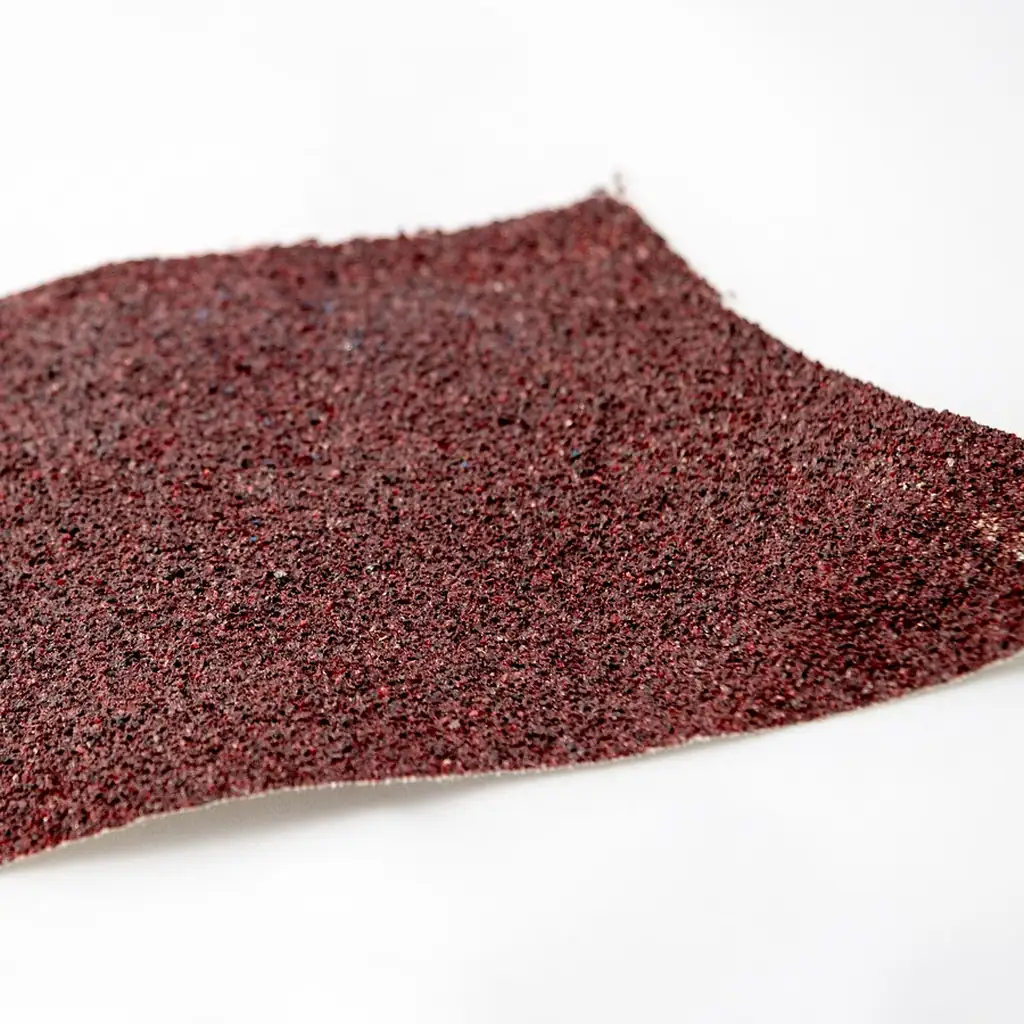
Two classes cover almost the whole market: 5 inch and 6 inch pads. The larger pad covers more area per pass and the tool is heavier and bulkier to control on small parts; the smaller is easier one-handed and better on narrow stock.
The specification that matters more than the diameter is the hole pattern. Discs attach with hook-and-loop backing and have holes that must line up with the holes in the pad for extraction to work at all. Patterns differ by maker, and a disc whose holes do not line up blocks the airflow it was supposed to feed.
Before buying a sander, check what discs are stocked near you or shipped to you, in the grits you will actually use, with the right hole count. A sander with unavailable abrasives is a paperweight, which is the same availability-before-capability test that applies to cordless battery platforms.
Two more pad points worth knowing: pads wear out and are replaceable, and some sanders offer a firmer or softer replacement pad, where a soft pad follows a curve and a hard pad keeps an edge flat.
Orbit Diameter, the Specification Most Buyers Skip
The orbit diameter, sometimes listed as the orbit or stroke, is how far the pad travels in its little circle. Makers publish it in the specification table.
A larger orbit removes material faster and leaves a coarser scratch. A smaller orbit removes less and leaves a finer surface. That is the trade in a single line, and it explains why two sanders with identical motors behave differently on the same board.
For general furniture work at home, where you are usually cleaning up milling marks and preparing for finish rather than leveling a floor, the smaller-orbit machines are easier to live with, because the last grit does more of the work for you. If your projects involve reclaimed timber or heavy stock removal, the bigger orbit saves real time. Look the figure up in the manual before you buy; it is rarely on the box.
| Specification | What to look up | What it changes |
|---|---|---|
| Pad diameter | 5 inch or 6 inch | Coverage per pass against control on small parts |
| Hole pattern | Hole count and layout on the pad | Whether extraction works at all |
| Orbit diameter | The maker's spec table or manual | Removal rate against finish quality |
| Dust port | Port size and available adapter | Whether it connects to your vacuum |
| Power source | Corded or a battery platform | Runtime, weight in your hand, and where you can work |
| Pad hardness | Standard, soft or hard replacement pads | Flat edges against following a curve |
Dust Extraction Is the Whole Argument Indoors
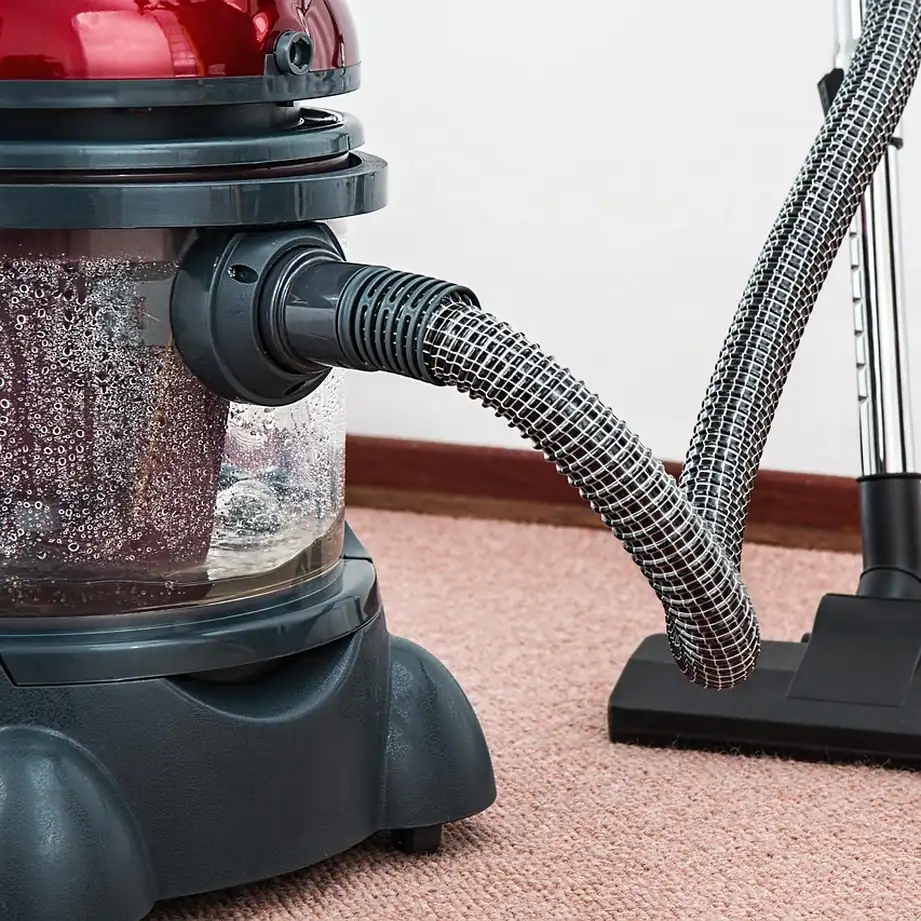
Sanding is the dustiest thing that happens in home woodworking, and the dust it makes is the fine, airborne kind rather than chips.
IARC classifies wood dust as carcinogenic to humans, Group 1, on the evidence linking occupational exposure to cancers of the nasal cavity and sinuses. That classification is about long-term occupational exposure rather than an afternoon of sanding, and it is exactly why the extraction specification is not a convenience feature.
What to check, in order:
- Is there a port that accepts a vacuum hose, or only a bag or canister? An onboard canister is a convenience for outdoor work and is not a substitute for extraction indoors.
- Will your vacuum actually connect? Port diameters and adapters vary between sander makers and vacuum makers, and the adapter is often sold separately. Check the two together, not the sander alone.
- Does your vacuum's filter hold fine dust? A shop vacuum with a coarse filter blows the finest particles, the ones that stay airborne longest, straight back into the room.
- Do the disc holes match the pad holes? Extraction fails at that interface first.
Then add what the tool cannot do: a fitted respirator rather than a loose nuisance mask, and a plan for the dust that escapes anyway. Sanding on a balcony moves the problem outdoors and creates a new one for the flat below, which is the trade-off set out in whether woodworking on a balcony is safe. Sanding indoors means containment and cleanup, covered in the apartment workshop setup guide.
Corded or Cordless, and the Grit Scales Nobody Explains
Corded is the stronger argument for a sander specifically. Unlike a drill, a sander runs continuously for long stretches, which is the usage pattern that drains batteries fastest, and a battery adds weight to a tool you hold in one hand for an hour. The cordless case is real if your sanding happens somewhere without an outlet, such as a balcony.
The abrasives themselves carry a specification that trips people up. Coated abrasives are graded under two different systems: the FEPA P scale, standardized as ISO 6344, and the older North American CAMI scale. A P prefix on the box means the first; a bare number usually means the second. At coarse grades the two are close, and at fine grades they diverge, so a P-graded sheet and a CAMI-graded sheet with the same number are not the same abrasive.
What to do about it: stay inside one scale for a project, and step through grits without skipping more than one step, because each grit's job is to remove the scratches left by the previous one. Sanding a small item such as a set of wooden coasters makes this obvious quickly, since the surface is small enough to inspect properly at every stage.
Noise, Vibration, and the Stop Condition on Old Paint
A sander is not the loudest tool in a home workshop, but it is the one that runs longest. NIOSH recommends a limit of 85 dBA averaged over eight hours with a 3 decibel exchange rate, meaning the safe time halves for every 3 dBA increase, so a moderately loud tool running for a whole afternoon still adds up. The measured levels for the common woodworking tools are in how loud woodworking tools really are. Wear hearing protection and take breaks, which also addresses the hand-arm vibration a sander transmits through the grip.
The hard stop is paint. Do not power-sand painted surfaces in older housing without knowing what is in the paint. In the United States, lead-based paint was banned for residential use in 1978, and the EPA's Renovation, Repair and Painting rule governs work that disturbs paint in housing built before that date, including the requirement for certified renovators in work done for compensation. Power sanding is the worst case, because it turns coatings into airborne dust throughout the home. If a piece of old painted furniture or trim is the project, stop and have the paint tested first, and follow the EPA's guidance rather than a sanding tutorial. Bare, new timber has none of this problem, which is one reason first projects are better built from new stock, as in a first cutting board.
The Short Version
- Choose on dust first indoors: a real vacuum port, a matching adapter, a fine filter, and discs whose holes line up.
- Pad size is 5 inch or 6 inch. Check which discs are actually available to you before choosing.
- Orbit diameter decides behavior: larger removes faster and scratches coarser, smaller finishes finer. It is in the manual.
- Corded suits a sander, because it runs continuously and battery weight sits in your hand.
- Grit numbers come from two scales. P means FEPA under ISO 6344; a bare number usually means CAMI. Do not mix them.
- Do not power-sand old paint. Pre-1978 housing means lead until tested; follow the EPA rule.
Frequently Asked Questions
Is a random orbital sander worth buying for a beginner? It is the power tool that most reliably improves how finished work looks, and it does a job that is genuinely tedious by hand. In a small home the condition attached is extraction: with a vacuum connection it is workable indoors, and without one it is an outdoor tool.
Can I just use sandpaper by hand instead? For small items, edges and final passes, yes, and hand sanding with a cork or rubber block gives more control on edges than a machine does. For flattening a glued panel or preparing a tabletop, hand sanding is hours of work the machine does in minutes.
What grits do I actually need? Fewer than most kits contain. A coarse grade for shaping and removing mill marks, a medium for cleanup, and a fine grade before finish will cover ordinary furniture work. Stepping up without skipping matters more than owning many grades.
Does a bigger motor make a better sander? Not on its own. Pad size, orbit diameter and extraction change the result far more than wattage or amperage, and a sander is not a tool you should be pushing hard enough to bog down anyway.
Why does my finish show swirl marks? Usually pressure, a worn disc, or skipping grits. Let the machine's weight do the work, replace discs when they stop cutting rather than when they look worn, and make sure each grit has removed the previous grit's scratches before moving on.