Box Joint vs Dovetail Beginner Guide: Which to Cut First
Box joint vs dovetail beginner guide for hand tools only: which joint forgives mistakes, what each needs, and which to cut first without a jig.

Short answer: the box joint vs dovetail beginner question has two honest answers, and the tools you own decide which one applies. If you have a table saw with a dado blade or a router with a box joint jig, cut box joints first: the machine makes the fingers even for you. If you work with only a hand saw and chisels, a simple through dovetail is often the more forgiving first joint, because you cut the tails first and then mark the pins straight from them. A hand-cut box joint needs every finger square, evenly spaced and tight, on both boards.
Most articles comparing these two joints quietly assume a shop. This one assumes you have a table, a few clamps, a saw and some chisels, and that the neighbors can hear you.
Why most "box joints are easier" advice assumes a machine
Read the pages that rank for this question and a pattern shows up. Box joints are called the easier, beginner-friendly joint, and then the method section reaches for a table saw and a dado stack, or a router table and a finger jig. That advice is correct for those tools. Once a jig is set, it indexes each cut the same distance from the last one, so every finger comes out the same width, and one setup can cut a stack of boards.
Take the jig away and the job changes. You are now sawing each side of each finger to a line, on both boards, and then chopping out the waste between them. Every finger has to land in exactly the right place, because each one must slide into a slot cut separately on the other board. Experienced hand-tool woodworkers in long-running forum threads on this exact question say much the same thing: without a jig, box joints are the fussier of the two, because straight, evenly spaced fingers leave nowhere for a small error to hide.
So the real question for a no-shop beginner is not which joint is easier. It is which joint is easier with the tools you actually have.
What each joint is
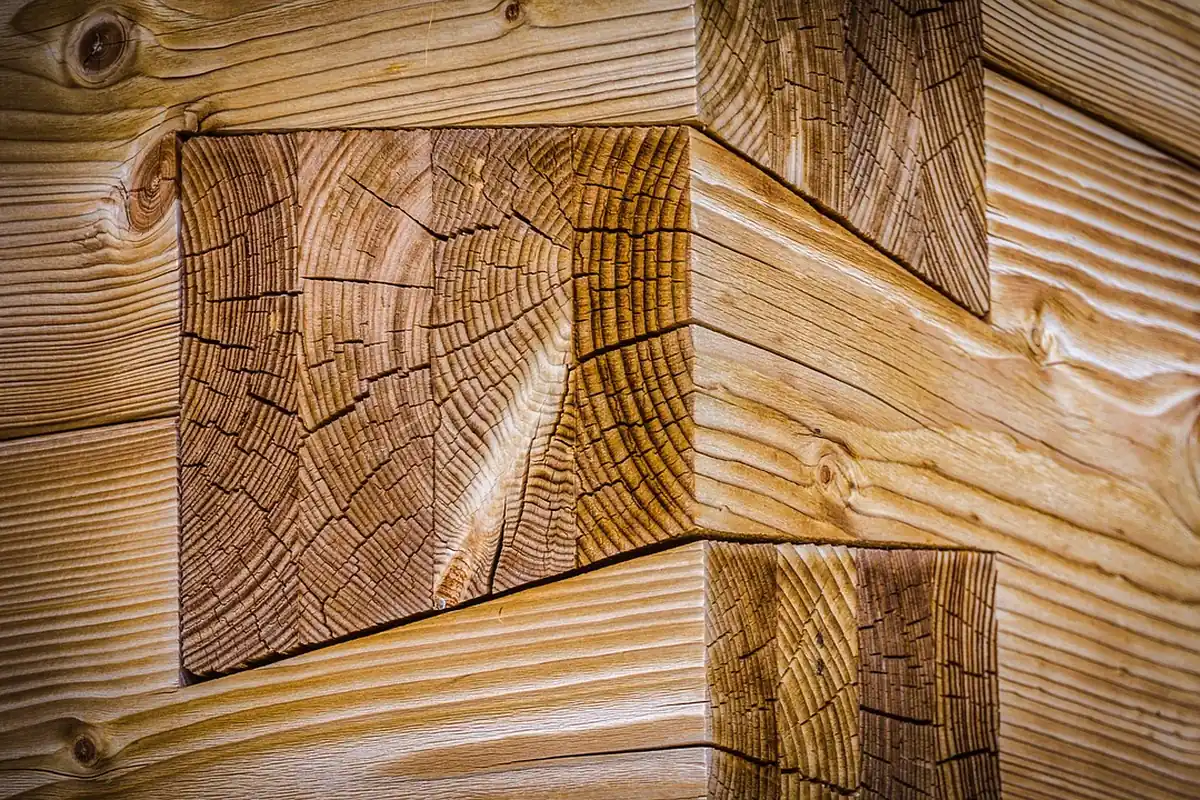
A box joint (also called a finger joint) is a corner joint made of square-sided fingers on one board that interlock with matching square notches on the other. The fingers are usually all the same width. Glue on the many long-grain faces is what holds it together. There is no mechanical lock; pull hard enough along either board and, without glue, it slides apart.
A through dovetail is a corner joint made of angled, fan-shaped tails on one board that fit between angled pins on the other. The angle creates a mechanical lock: once assembled, the tail board cannot be pulled away from the pin board in one direction, even before the glue cures. That is why dovetails became the traditional joint for drawer fronts, which get pulled every day.
Box joint vs dovetail beginner comparison at a glance
| Factor | Box joint (by hand) | Through dovetail (by hand) |
|---|---|---|
| Shape of cuts | Square fingers, straight saw cuts | Angled tails, pins cut to match |
| How the fit is set | Each board laid out and cut to its own lines | Tails cut first, pins traced directly from them |
| Forgiveness of small errors | Low: uneven spacing shows on every finger | Higher: a slightly off angle is copied onto the mating board |
| Mechanical lock | None; relies on glue | Resists pulling in one direction |
| Squaring at glue-up | Needs careful clamping and a diagonal check | Still check square with a diagonal measurement |
| Suits plywood | Yes | Poorly; angled cuts break up the plies |
| Visual result | Regular, modern grid | Traditional, hand-made look |
| With a jig | Much faster and more repeatable | Faster, but a dovetail jig is a separate purchase |
Why a hand-cut dovetail can forgive a beginner more
The dovetail's advantage by hand comes from the order of work. You lay out and saw the tails first. The angle does not need to match a number exactly, and the spacing does not need to be perfectly regular, because nothing has been cut on the pin board yet. Then you stand the pin board up, lay the finished tail board on it, and scribe around the tails with a sharp knife. The pins are marked from the real tails, including their small wobbles, so the two boards are made to fit each other rather than to fit a drawing.
A box joint does not get the same benefit from that transfer step. Each finger is a straight, vertical cut, and a finger that leans or runs a hair wide on one board shows as a gap on the other. You can mark one board from the other here too, but square cuts show every deviation in a straight line, and the eye notices a crooked grid far more than a slightly uneven row of dovetails.
What this costs you in accuracy: your first dovetails will almost certainly have gaps. That is normal. What matters is that the joint closes and the corner is square. Glue is not a gap filler, so treat a gappy first joint as practice, not furniture.
Where box joints still make sense for you
Box joints are not the wrong joint. They win in a few clear cases:
- You are building in plywood. Dovetail angles cut across the thin plies and leave fragile, chip-prone tips. Square fingers suit sheet goods better.
- You plan to buy a jig later. If a router and a finger jig are in your future, box joints become the fast, repeatable joint the ranking articles describe.
- You want many identical corners. A set of matching storage boxes is where a jig pays off and hand-cutting becomes a slog.
- You like the look. A grid of square fingers reads modern. That is a design choice, not a skill ranking.
One practical warning either way: do not assume the box will be square just because the joints closed. Clamp across the joint, then measure the two diagonals of the box. When the diagonals match, the box is square.
Strength: less important than the internet suggests
Strength debates dominate this topic, and for small boxes they rarely decide anything. A widely cited home-shop test published on woodgears.ca broke apart a machine-cut box joint and a jig-cut dovetail by wedging the boxes open from the inside; the box joint held up better in that test. Its own author notes that a box joint with exactly the same contact area as the dovetail would most likely have lost, and that the strength of modern wood glues makes these differences matter far less than they once did.
The fair summary: a well-fitted joint of either type is strong enough for a jewelry box, a tool tray or a small storage box. A poorly fitted joint of either type is weak. Fit matters more than the joint name.
The no-shop tool list for either joint
You do not need a special kit. Both joints use the same small set of hand tools:
- A fine-toothed saw that cuts accurately to a line. A dovetail saw or a small Japanese pull saw both work. Our guide to choosing a Japanese pull saw as a beginner covers the tooth types and blade sizes that suit joinery.
- Two or three bench chisels, sized to the waste you remove between fingers or pins. The chisel buying guide for new woodworkers explains which widths to start with.
- A marking knife, marking gauge and small square. Knife lines give your saw and chisel something to register against, which pencil lines cannot, and a crisp knife line is what makes the dovetail transfer step work.
- A way to hold the board. Clamps and a sturdy table are enough if you set them up well, as described in woodworking without a workbench.
- A mallet, for chopping out waste.
- Optional: a coping saw, to remove most of the waste before chiseling, which means fewer mallet blows.
Noise, apartments and the chopping problem
The loud part of hand-cut joinery is not the sawing. It is chopping waste with a chisel and mallet, which sends sharp knocks through a table and into the floor. If you share walls, do your chopping during the day, remove waste with a coping saw where you can, and pare the last bit by hand pressure instead of mallet blows. A folded towel or rubber mat under the work also takes some of the knock out of the floor. Sawing by hand, by contrast, is one of the quieter jobs in woodworking, which is part of why hand-cut joinery suits shared walls.
Safety with saws and chisels
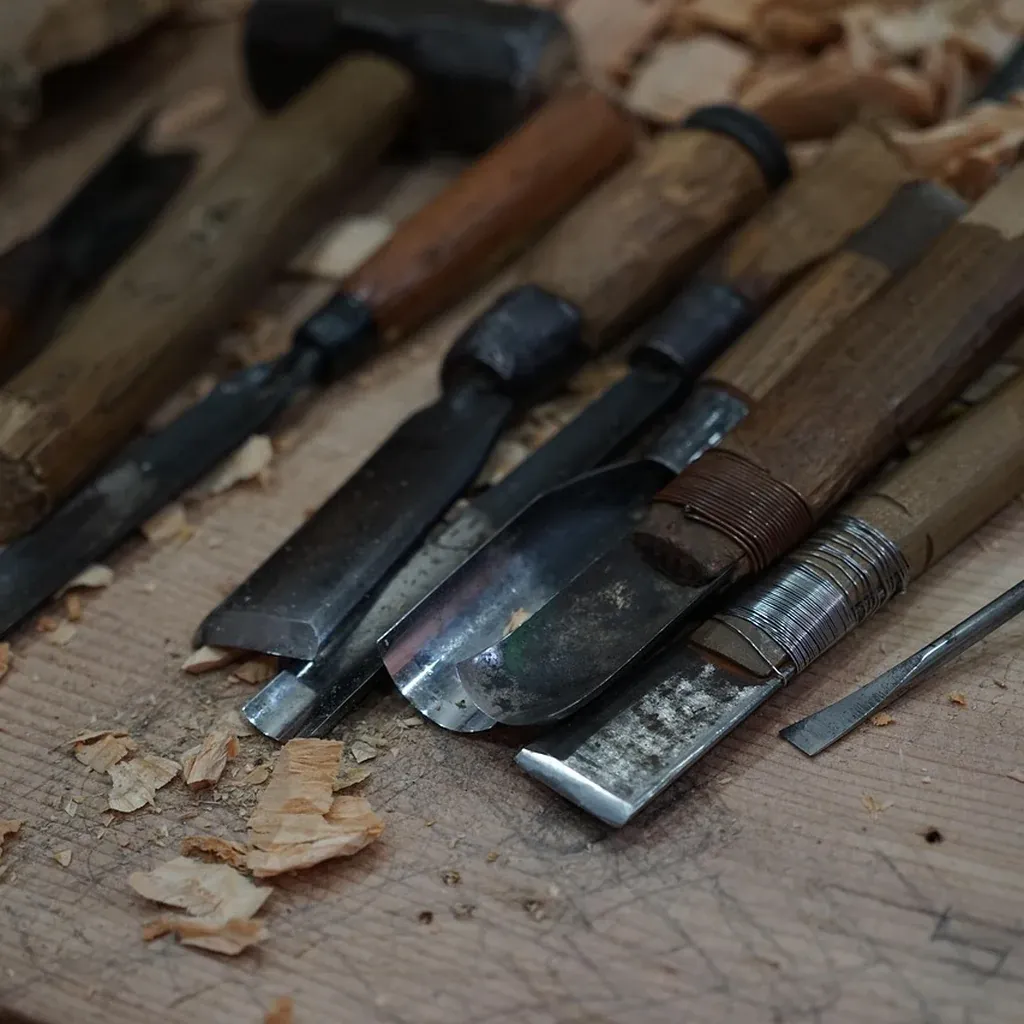
Hand tools cut people as readily as wood, and joinery puts your hands close to sharp edges. The University of Chicago Environmental Health and Safety page on hand and portable power tools (read on September 27, 2026) says to "secure work with clamps or a vise, freeing both hands to operate the tool," and notes that "dull tools can be more hazardous than sharp ones." It also warns that impact tools such as chisels with mushroomed heads can shatter when struck and send sharp fragments flying.
In practice:
- Clamp the board every time. Never hold a board in one hand while chiseling toward that hand.
- Keep both hands behind the cutting edge, and chisel away from your body.
- Keep chisels sharp, because a dull edge takes more force and is more likely to slip.
- Wear safety glasses when chopping with a mallet.
A practical order for a no-shop beginner
If you are just starting, the honest sequence is:
- Build a box with butt joints first. Glue and screws, or glue and pins, teach you to cut square ends and assemble square corners. Our beginner wooden box project is built exactly that way.
- Practice sawing to a line. Cut a dozen straight, square kerfs in an offcut before you touch a joint.
- Cut one through dovetail on scrap, in a straight-grained, medium-density wood. Very soft wood can crush under the chisel, which hides whether your technique is right.
- Try a box joint on scrap too, and compare. You will see quickly which one your hands find more forgiving.
- Only then use either on a real project.
If your answer after step 4 is "box joints, but with a jig," that is a perfectly good conclusion. Just know the jig usually needs a router or table saw, which brings its own noise, dust and space costs in an apartment.
FAQ
Is a box joint or a dovetail easier for a beginner?
With a table saw or router jig, a box joint is easier because the jig spaces the fingers for you. Cutting by hand with a saw and chisels, many woodworkers find a through dovetail more forgiving, because the pins are marked directly from the finished tails.
Is a dovetail stronger than a box joint?
A dovetail resists pulling apart in one direction thanks to its angle, even without glue. A box joint relies on glue, but it has a lot of glue surface. For small boxes, a well-fitted joint of either type is strong enough; fit matters more than type.
Can you cut box joints without a table saw?
Yes, with a fine saw, chisels and careful layout, but it is slow, and every finger must be square and evenly spaced. Many hand-tool woodworkers consider it harder to do well than a hand-cut dovetail.
What wood should I practice dovetails on?
A straight-grained, medium-density wood that cuts cleanly is a common practice choice. Very soft woods can crush under the chisel, and very hard woods are slow to saw and chop.
Do box joints work in plywood?
Yes, better than dovetails. The square fingers cut cleanly across plies, while dovetail angles leave thin, chip-prone tips in plywood.