Japanese Pull Saw for Beginners: What to Look For
Ryoba, dozuki or kataba, and the specifications that actually decide: blade length, tooth pitch, kerf, and whether the blade can be sharpened at all.

For a first Japanese saw, the choice is between three shapes, not between brands. A ryoba carries rip teeth on one edge and crosscut teeth on the other, so one blade covers both grain directions. A dozuki has a stiffening spine that limits how deep it can cut. A kataba has one toothed edge and no spine, so its depth is unlimited. Pick the shape your work needs, then check four specifications.
This page names no product, ranks nothing and quotes no price. It gives you the specifications that decide how a saw behaves, so you can judge whatever is actually available where you live.
Why This Page Has No Picks and No Prices
Being straight about it: nobody here has tested a pull saw, so nothing on this page is presented as a review. No saw is named as a winner, none is linked, and no price appears, because prices in this category move constantly and differ by country.
A specification is more useful than a pick anyway, and it lasts longer. If you know that a spine limits depth of cut, or that impulse-hardened teeth cannot be filed, you can evaluate a saw that did not exist when this was written. The same approach runs through the wider hand tool starter kit guide, which covers the four operations a kit has to perform rather than a shopping list.
What follows is the mechanism, the three shapes, the four specifications that separate them, and the safety and technique points that decide whether a beginner gets a clean cut or a wandering one.
Why the Pull Stroke Changes the Tool
A Western hand saw cuts on the push stroke, which puts the blade in compression. A blade in compression can buckle, so it has to be thick enough to resist that, and a thick blade removes a wide ribbon of wood.
A Japanese saw cuts on the pull stroke, which puts the blade in tension. Tension does not buckle a blade, so the steel can be much thinner. That thinner blade produces a narrower kerf, which is the slot the saw cuts, and a narrower kerf means less wood turned into dust and less effort per stroke.
Two practical consequences follow, and both matter more at the start than later. A thin kerf tracks a marked line closely, so the saw is easier to start accurately. And the cutting happens on the stroke that pulls the tool toward you, which is the stroke your arm controls better than a push.
The cost of that thinness is fragility. A pull saw bends if you push it hard, and a kinked blade never cuts straight again.
The Three Shapes, and What Each One Cannot Do
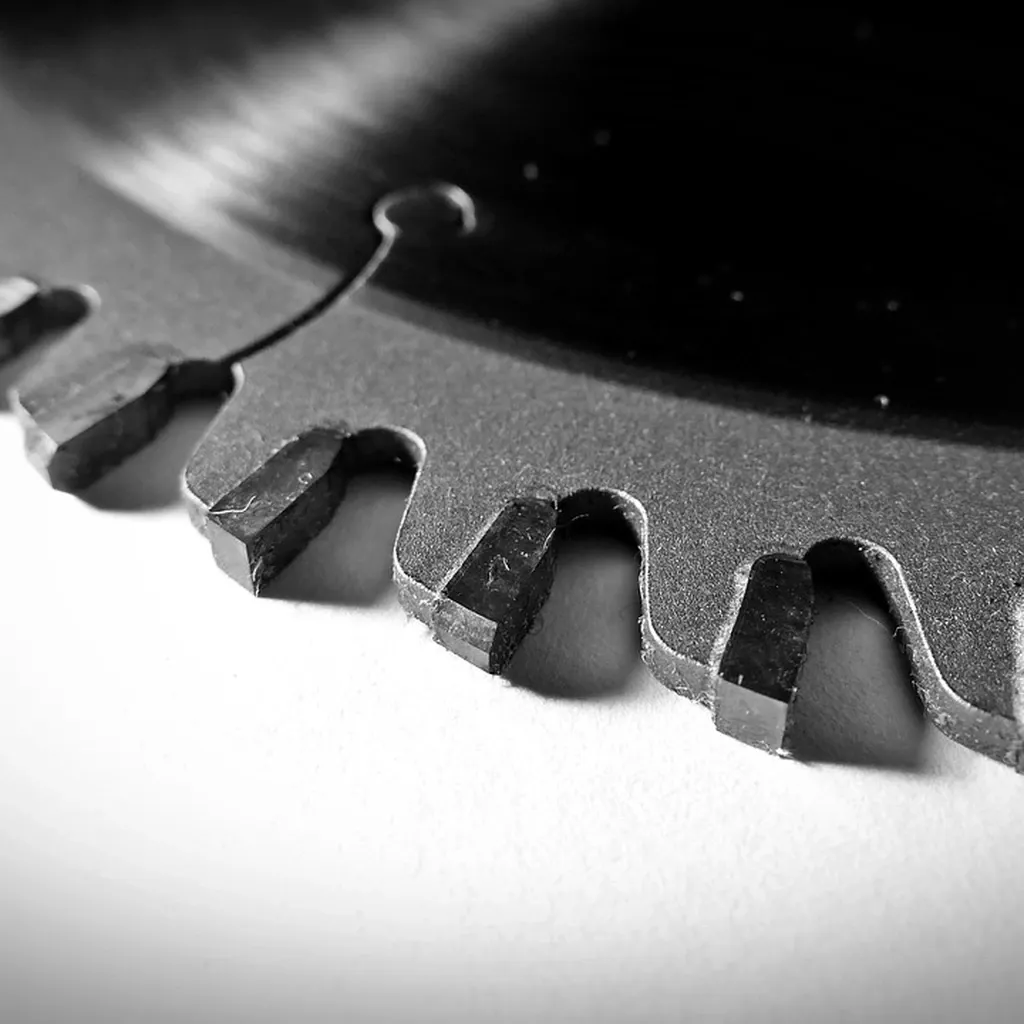
Ryoba. Two toothed edges on one blade: rip teeth for cutting along the grain, crosscut teeth for cutting across it. You flip the saw to change function. It is the broadest single purchase, and the trade-off is that the unused edge is exposed while you cut, so it needs care in a crowded space.
Dozuki. A thin blade with a folded spine along the back that keeps it rigid. The spine is what makes fine joinery cuts repeatable, and it is also a hard limit: the saw can only cut as deep as the blade is wide below that spine. Check that measurement against the thickest stock you plan to cut, because it is the specification beginners discover too late.
Kataba. One toothed edge, no spine, no depth limit. Less rigid than a dozuki, so it wanders more easily in a fine cut, but it will pass through material a dozuki cannot reach.
| Ryoba | Dozuki | Kataba | |
|---|---|---|---|
| Toothed edges | Two, rip and crosscut | One, fine crosscut | One |
| Spine | None | Folded spine along the back | None |
| Depth of cut | Limited only by blade width | Limited to the blade below the spine | Not limited |
| Stiffness in the cut | Moderate | Highest | Lowest |
| Suits | General work, one-saw kits | Joinery, boxes, frames | Deeper cuts in thicker stock |
| Watch out for | The exposed second edge | The depth limit | Wander on a fine line |
If most of your work is small boxes and frames, a dozuki's depth limit may never bother you. If you are cutting shelf stock, it will.
The Four Specifications That Actually Decide
Blade length. Quoted in millimeters. Longer blades cut faster because each stroke does more work, and they need more clear space to swing. In a room where the stock is on a kitchen table against a wall, a long blade is a genuine problem rather than a theoretical one.
Tooth pitch. More teeth per unit length gives a smoother, slower cut in thinner material; fewer, larger teeth cut faster and rougher and suit thicker stock. Makers publish this figure and they do not all use the same unit, so compare the number and the unit together rather than the number alone.
Kerf and set. Set is the slight sideways splay of the teeth that makes the kerf wider than the blade so the blade does not bind. Less set means a finer cut and a saw more likely to jam if your stroke is not straight.
Sharpenable or replaceable. This is the one that changes the ownership cost.
Impulse-Hardened Teeth Cannot Be Sharpened
Most Japanese saws sold today have impulse-hardened teeth: the tips are hardened well beyond the hardness of a sharpening file. Gyokucho, which introduced the replaceable-blade Japanese saw, states in its own product documentation that the hardened tooth is harder than a file, so the blade cannot be resharpened and is replaced when it is dull.
That is a real trade-off, not a defect. A replaceable-blade saw stays sharp for its whole life with no sharpening skill required, which suits someone starting out. A traditionally hardened saw, Japanese or Western, can be filed back to sharp indefinitely by someone who has learned to do it.
What to check before buying: whether replacement blades for that specific saw are actually sold where you live. A saw whose blades cannot be bought locally is a consumable with no refill. This is the same question the minimal tool kit guide raises about cordless battery platforms, and it is answered the same way, by looking at availability before capability.
Cutting Safely With a Saw That Pulls Toward You
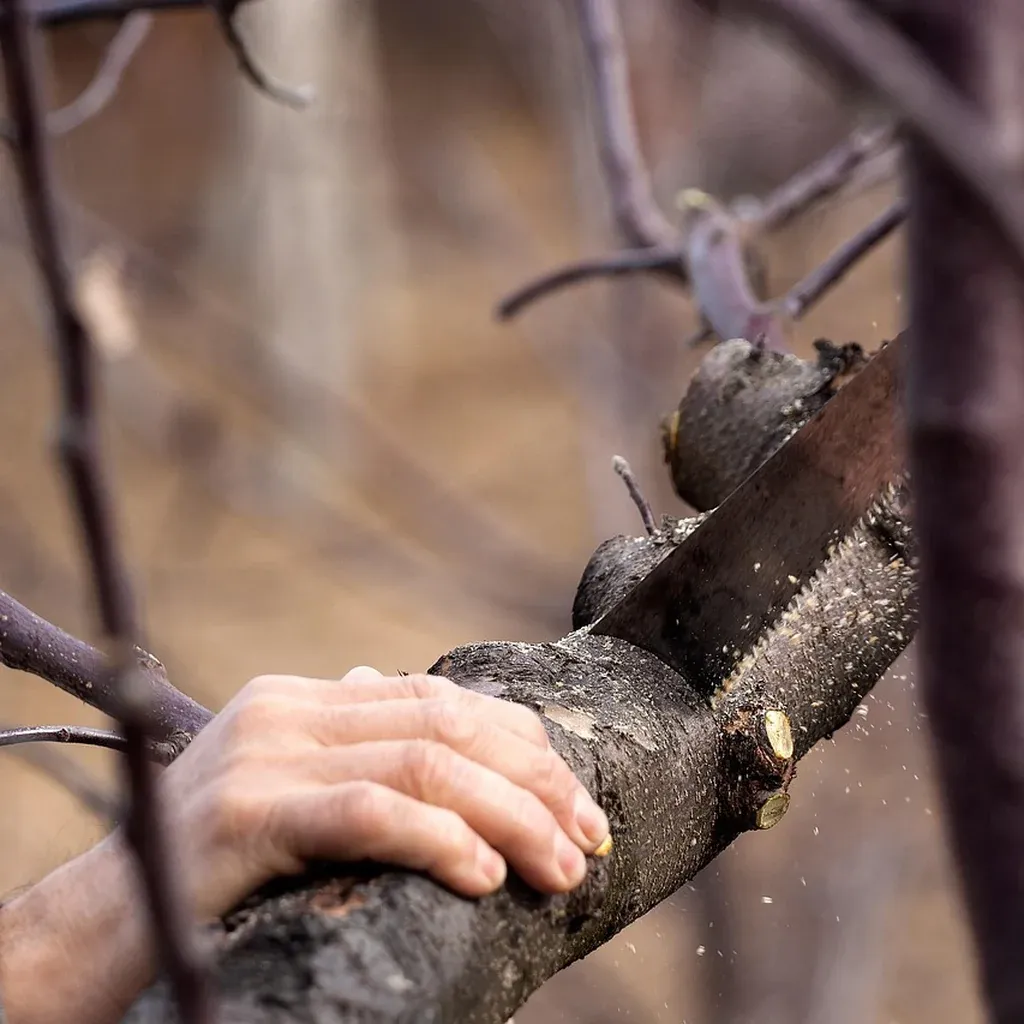
A hand saw does not have the injury potential of a powered saw, but the failure modes are different rather than absent.
The workpiece has to be held. A board that shifts mid-cut is what makes a blade jump out of the kerf, and a jumping blade travels toward the hand that is holding the wood. A clamp, a bench hook or a vise removes that. The options for a home with no bench are in woodworking without a workbench, and if you are cutting on furniture you own, the protection question is covered in cutting wood without damaging the table.
Start the cut with your knuckle, not your fingertip. Use the flat of a thumb knuckle against the blade's side as a guide for the first few strokes, so nothing soft is at the tooth line. A bench hook with a stop is safer still, because it takes the hand out of the cut entirely.
Let the saw do it. Pull with light pressure and return without force. Pushing hard buckles the blade, and a buckled blade skates off the line.
Where a Pull Saw Is the Wrong Tool
Say it plainly: a hand saw is not the tool for breaking down a full sheet of plywood, and it is not the tool for ripping a long board to width. Both are hours of work, both drift, and both end with a cut edge you will have to correct anyway.
Those cuts belong on a different machine or in different hands. Most home centers and lumber yards will cut sheet goods down to rough size on their own panel saw, which also solves the problem of getting a full sheet home. For the trade-offs between the powered options, the circular saw and table saw comparison covers which one earns its space first.
Where a pull saw wins outright is noise. It makes almost none, produces chips rather than the fine airborne dust a powered tool throws, and it can be used at an hour when a power saw would end your tenancy. That is not a small advantage in an apartment, as the guide to woodworking around roommates and neighbors sets out in detail.
The Short Version
- Three shapes: ryoba (two edges, both grain directions), dozuki (spine, fine cuts, limited depth), kataba (one edge, no depth limit).
- A dozuki cuts only as deep as the blade below its spine. Measure that against your stock.
- Four specifications decide behavior: blade length, tooth pitch and its unit, kerf and set, and whether the blade is replaceable.
- Impulse-hardened teeth cannot be filed. Check that replacement blades are sold near you.
- Hold the work. A shifting board is what makes a blade jump.
- Do not rip long boards or break down sheets by hand. Have the yard cut them.
Frequently Asked Questions
Which Japanese saw should someone buy first? A ryoba if you want one saw for general work, because it covers rip and crosscut geometry in a single blade. A dozuki if your projects are small boxes, frames and joinery, and if the depth of cut below its spine covers your stock thickness.
Do I need both a rip edge and a crosscut edge? For furniture-scale work, yes, eventually. Rip teeth are shaped to chisel along the fibers and crosscut teeth to sever them, and using the wrong one is slow and rough rather than dangerous. A ryoba is the cheapest way to own both.
Can I sharpen a Japanese pull saw? Usually not. Impulse-hardened teeth are harder than a file, and the maker's own instructions say to replace the blade rather than sharpen it. Traditionally hardened saws exist and can be filed, but they are a smaller part of what is sold and they need sharpening skill you would have to learn first.
Is a pull saw accurate enough to replace a power saw? For joinery and short crosscuts on small stock, yes, with practice. For long rips and full sheets, no. The limit is not the saw's accuracy over 100 mm, it is your ability to hold a line over a meter.
Will a pull saw work on plywood and MDF? It will cut both, and both will dull it faster than solid wood because of the glue content. Support the sheet fully and expect tear-out on the face the teeth exit, which is the underside on a pull stroke.