Wood Chisel Buying Guide for New Woodworkers
Steel, hardness, widths, handle construction and the sharpening cost nobody puts in the price. How to judge chisels for yourself, with no picks.


Four things decide whether a chisel serves you, and the brand on the handle is not one of them: the steel and the hardness it was taken to, the blade widths you will actually reach for, the shape of the side bevels, and how the handle is joined to the blade. A fifth thing decides whether it works at all, and it is the one that is never in the price: a chisel is only as good as the last time it was sharpened, so the sharpening setup is part of the purchase and not an accessory to it.
This page names no winner and quotes no price. It gives you the specifications, what each one changes at the workbench, and how to read a maker's own published figures, so you can judge whatever is in front of you.
Why This Page Has No Picks
Being straight about it: nobody here has used the chisels you are about to look at, so nothing on this page is a review. No set is crowned, no price appears, and no brand is ranked against another. Prices move, models get discontinued, and a roundup written today is wrong within a year.
What does not go stale is the specification. A blade width and a Rockwell number will mean the same thing in ten years, and understanding them lets you judge a chisel that has not been made yet. Brands appear below only where we are quoting a document that brand published itself.
What Actually Separates the Best Chisels for Beginners From the Rest
Start with the type, because three different tools get sold under the word chisel.
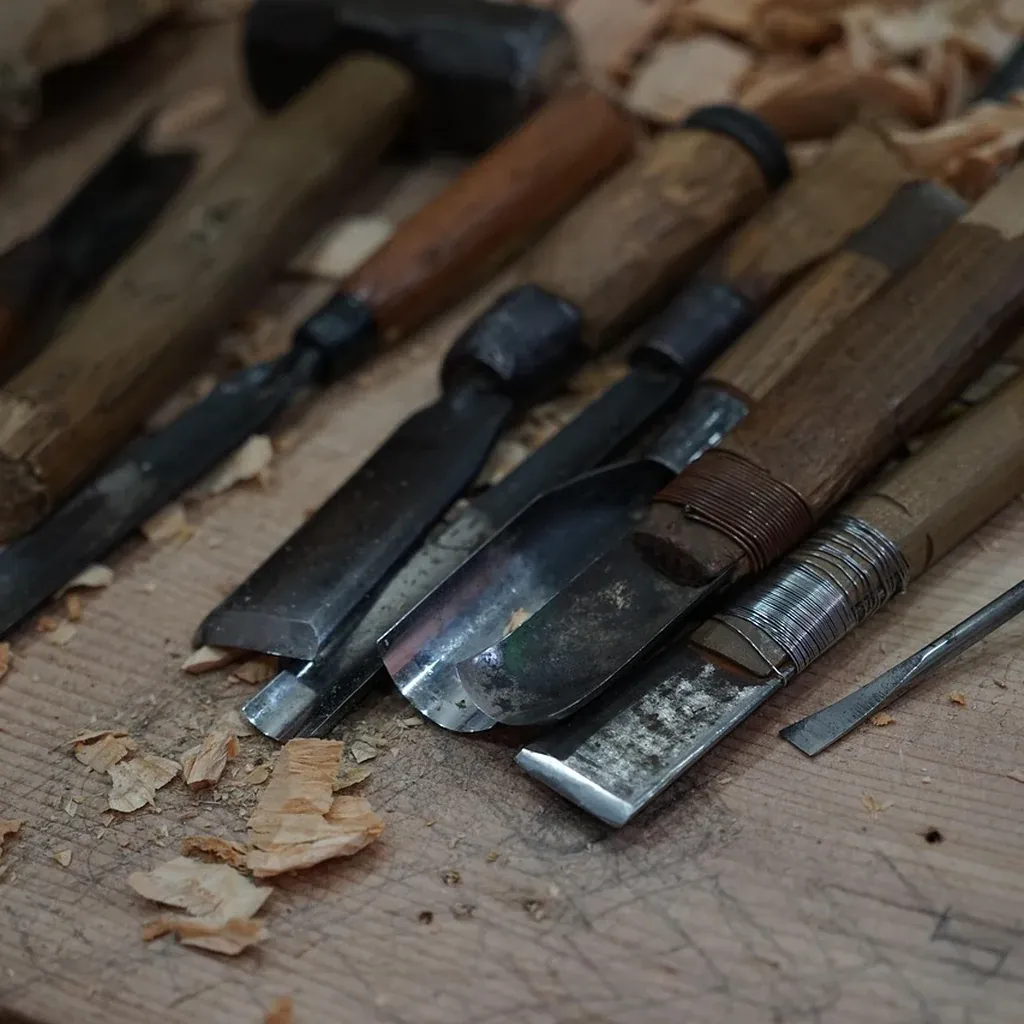
A bevel edge bench chisel has the sides of the blade ground away at an angle, which lets the blade reach into an acute corner such as the inside of a dovetail. This is the general-purpose chisel and it is what a beginner is looking for.
A mortise chisel is thick, square in section and built to be levered against the walls of a deep hole. It is a specialist tool for one joint.
A paring chisel is long, thin and never struck with a mallet. It is for shaving to a line by hand.
If you buy one type, buy bevel edge bench chisels. The other two are answers to problems you do not have yet.
Blade Widths: Which Sizes Get Used
Sets are sold in wildly different counts, and the count is a marketing decision more than a woodworking one. Lie-Nielsen publishes twelve widths for its bevel edge socket chisels, from 1/8 inch up to 1-1/2 inch (Lie-Nielsen Toolworks, bevel edge chisels page, read September 8, 2026). Nobody starting out needs twelve.
The useful way to think about it is that a chisel width is chosen against the work, not against a set. The width you want is the one that fits inside the cut you are making, or that spans it in one pass. Small joinery and hinge work pull you toward the narrow end. Cleaning up a wide glue joint or paring a shoulder pulls you toward the wide end.
For a first purchase, a small number of widths spread across that range does more than a large set clustered in the middle. Whatever you buy, expect two or three of them to do most of the work and the rest to sit in the roll for months. That is normal, and it is a reason to buy fewer and better rather than more.
Steel and Hardness, and What Rockwell Actually Means
This is where the specifications get quoted at you and where most guides go quiet.
Rockwell hardness is a depth measurement, not a strength rating. In the test, an indenter is pressed into the surface under a small preliminary force, the depth is zeroed, a larger total force is applied and then removed, and the hardness number is calculated from the permanent difference in depth. A higher number means the material resisted penetration more, so it is harder. The C scale, written HRC, uses a 120 degree diamond cone with a 150 kgf total force and is the scale used for hardened and tool steels. The test is defined by ISO 6508 and ASTM E18 (ZwickRoell, Rockwell hardness test reference, read September 8, 2026).
That matters because hardness is a trade, not a score. Harder steel holds an edge longer and chips more readily; softer steel dulls sooner and is easier to bring back. Neither is better in the abstract. Which one suits you depends on how much you cut and how good your sharpening is.
Three steels come up constantly in chisel listings:
- O1 is a plain oil-hardening tool steel. It is generally the easiest of the three to sharpen and it dulls sooner.
- A2 is an air-hardening tool steel with more wear resistance and a longer edge life, at the cost of taking a little more work to sharpen.
- PM-V11 is a proprietary powder-metallurgy alloy developed and sold by Lee Valley. It is marketed on the claim that it holds an edge longer than A2 without being harder to sharpen, and you will find that claim repeated widely, but we could not read Lee Valley's own account of the testing behind it, so treat the comparison as the seller's position rather than an established figure.
For a published example of what a maker actually commits to, Lie-Nielsen states its bevel edge chisels are made from A2 or O1 tool steel, hardened to Rockwell 60 to 62, cryogenically treated and double tempered (Lie-Nielsen Toolworks, read September 8, 2026). A chisel listing that gives you neither a steel nor a hardness figure is not necessarily bad, but it is telling you less than one that does, and that is worth something when you cannot handle the tool before buying.
The Bevel Angle Is Set by You, Not by the Box
Makers grind chisels to a primary angle and expect you to maintain it. Lie-Nielsen publishes 30 degrees as its ground bevel and advises a higher secondary bevel of around 35 degrees depending on the wood and the work, with lighter cuts and higher secondary bevels for very hard woods such as oak, hard maple and dense exotics (Lie-Nielsen Toolworks, read September 8, 2026).
Read what that implies. A lower angle cuts more easily and is more fragile. A higher angle survives harder wood and takes more push. A secondary bevel is a small facet honed at a steeper angle right at the edge, and its practical purpose is that you only have to abrade a sliver of steel to get sharp again instead of the whole primary bevel.
If you have never sharpened anything, that single sentence is the most useful one on this page, because it turns sharpening from a twenty minute job into a two minute one.
The Cost Nobody Puts in the Price
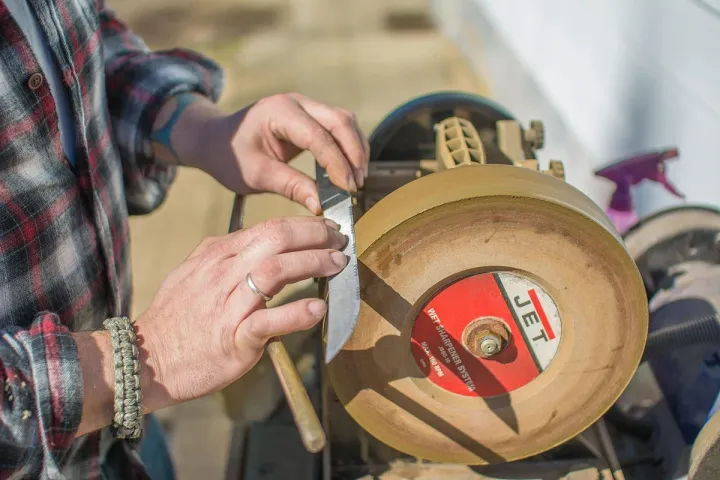
A chisel is a consumable edge attached to a permanent handle. Buying the chisel and not the means to sharpen it is like buying a printer and no ink, and it is the most common way a beginner concludes that chisels are hard.
What that means in practice: budget for an abrasive that can flatten the back and reset a bevel, something finer to hone with, and a way of holding a consistent angle, whether that is a jig or a practiced hand. Some chisels arrive with the back lapped and ready; many do not, and flattening the back of a new chisel is a one-time job that can take longer than everything else you do that day.
None of this needs a shop. Sharpening is a tabletop activity, it is silent, it makes no dust worth worrying about, and it is one of the few woodworking tasks that is genuinely at home in a rented kitchen. That is part of why the hand tool route works in a flat, and it is covered further in the hand tool starter kit guide.
Handles, Sockets and Tangs
The joint between blade and handle decides whether a chisel survives being hit.
A socket chisel has a tapered cone at the top of the blade into which a matching handle seats. A tang chisel has a spike that goes into the handle, usually with a ferrule to stop the wood splitting. Both work. A socket handle is easy to replace and is less likely to split; a tang chisel is generally simpler and lighter.
The other question is whether the chisel is meant to be struck at all, and with what. Wooden handles are struck with a wooden or dead-blow mallet, not a steel hammer. Impact-resistant plastic handles usually carry a steel striking cap and tolerate rougher treatment. Paring chisels are not struck by anything.
Getting this wrong is not just cosmetic. A split handle under a mallet blow is how a hand ends up in front of an edge.
Using Them Without Getting Hurt

A chisel is a blade you drive with your body weight, and it is the hand tool most likely to cut a beginner.
Both hands stay behind the edge, always. The single most common chisel injury comes from the workpiece moving, the chisel skating off the cut and travelling into the hand that was holding the work. Clamp the work instead of holding it. If you have no bench, the work-holding options for a home without one are set out in woodworking without a workbench, and clamping is not optional here the way it might be for sanding.
Cut away from your body and away from your holding hand. Take thin cuts and let the bevel do the steering rather than forcing a thick one.
A dull chisel is more dangerous than a sharp one, because it needs more force to make it cut and it deflects rather than entering the wood. Working with dull edges shows up repeatedly in the list of common beginner woodworking mistakes, and this is the tool where it does the most damage.
Wear eye protection. Chips leave a chisel fast, and struck steel occasionally sheds a fragment. Look for the ANSI/ISEA Z87.1 marking, shown on the frame as Z87+ for the high velocity impact rating.
When a Chisel Earns Its Place in a Small Kit
Chisels are not a first purchase for most people building in a flat. They become worth owning the first time a project asks you to remove wood in a place a saw or a drill cannot reach: a hinge recess, a joint that needs paring to fit, a corner a router bit left round.
That is the same logic that governs the whole buying order in the minimal tool kit: a tool gets bought when a real project has already been held up by not owning it, not because a list said so. A first box or a first shelf rarely reaches that point, but a wooden box with real joinery will get you there quickly.
The Short Version
- Buy bevel edge bench chisels. Mortise and paring chisels solve problems you do not have yet.
- A few widths spread across the range beat a big set. Two or three will do most of the work.
- Rockwell is a depth measurement on a defined test, and harder steel means longer edge life and more chipping, not simply better.
- O1 sharpens easiest, A2 lasts longer, PM-V11 is a proprietary powder-metallurgy alloy whose advantage rests on its seller's own claim.
- The bevel angle is yours to maintain. A steeper secondary bevel makes routine sharpening quick.
- Budget for sharpening at the same time as the chisel, including flattening the back of a new one.
- Match the handle to how you will strike it, and never a steel hammer on a bare wooden handle.
- Clamp the work, both hands behind the edge, thin cuts, Z87+ eye protection.
Frequently Asked Questions
How many chisels do I need to start? Fewer than most sets contain. A small spread of widths across the narrow to medium range covers ordinary work, and you add sizes when a specific joint demands one. A large set bought up front mostly buys widths you will not reach for.
Do expensive chisels cut better than cheap ones? Not on day one, and that is the honest answer. A sharp inexpensive chisel outcuts a dull expensive one every time. What price usually buys is edge life, flatter backs out of the box, better side-bevel geometry near the edge, and handles that survive being struck. Those matter more as you use the tool more.
What does Rockwell 60 mean on a chisel? It is a hardness figure from the Rockwell C scale, a standardized test defined by ISO 6508 and ASTM E18 in which a diamond cone is pressed into the steel and hardness is calculated from the permanent indentation depth. A higher number means harder steel, which generally holds an edge longer and is more prone to chipping.
Do I have to sharpen a brand new chisel? Usually yes, at least on the back. Some makers state that the back is lapped and the edge is ready to use; many do not, and an unflattened back means the edge cannot be brought fully sharp no matter what you do to the bevel. Check what the maker actually says before assuming.
Can I use chisels in an apartment? This is one of the few woodworking tools that suits a flat well. Chiselling is quiet compared with any power tool, it produces shavings rather than airborne dust, and sharpening happens at a table. The real constraint is holding the work securely without a bench, not the noise.