Buying Used Woodworking Tools: Used, Refurb or New?
Which woodworking tools are safe bets secondhand, which to buy new, how to inspect each type, and the recall check most buyers skip.


Buying used woodworking tools makes the most sense for simple hand tools such as planes, saws, squares and clamps, where the condition is visible and most faults can be fixed. It makes the least sense for battery tools and anything with a blade guard or a safety mechanism you cannot inspect. Refurbished, meaning factory-reconditioned with a warranty, sits in between. This page is about woodworking hand and power tools for a home with no workshop, not mechanic's tools.
The rule of thumb: buy used where you can see everything that matters, and buy new where the part that matters is hidden.
Why the Answer Changes by Tool Type
Most guides on this topic list places to shop. The places matter less than the tool, because the risk in a used tool sits in a different place for each type.
- A hand plane is cast iron and steel. You can see cracks, rust and a missing part, and a dull blade can be sharpened.
- A corded power tool has a motor, a switch and a cord. You can test the switch and inspect the cord, but you cannot see the bearings or the windings.
- A battery tool has a battery whose condition you cannot judge by looking, and a platform that decides which chargers and packs will fit.
So the question is not "used or new?" It is "what could be wrong with this tool that I cannot see?"
Used, Refurbished and New, Compared
| Used (private or secondhand) | Refurbished (factory or authorized) | New | |
|---|---|---|---|
| Who checked it | Nobody, or the seller | The maker or an authorized center, per their program | The factory |
| Warranty | Usually none | Usually a limited one; check the terms | Full warranty |
| Best for | Hand tools, clamps, measuring tools | Corded and battery power tools | Safety gear, blades, first battery |
| Main risk | Hidden faults, recalled models | Shorter warranty, cosmetic wear | Paying for capability you do not need |
Read the refurbished warranty terms before you buy. "Refurbished" has no single meaning across sellers. A factory program and a reseller's label can be very different things.
Safe Bets Secondhand
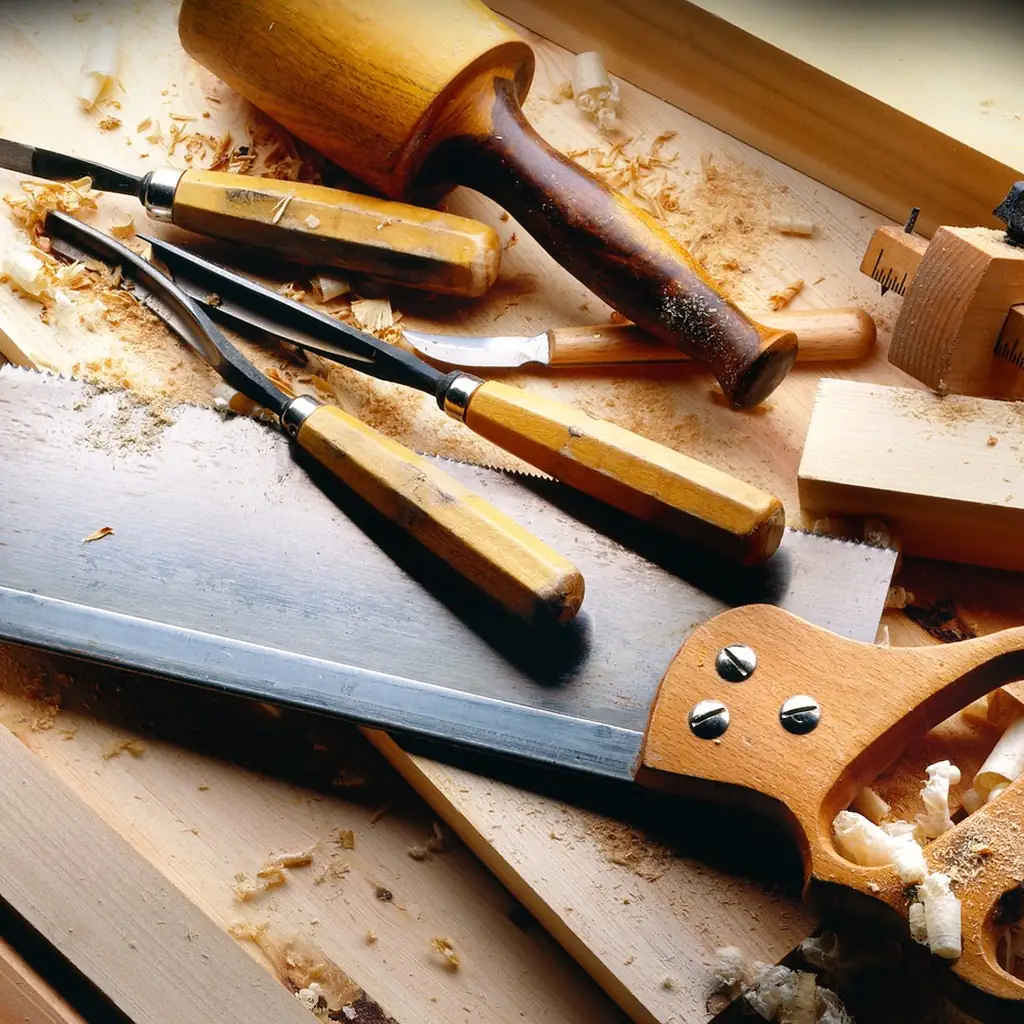
These are the tools where buying used usually works well, because the condition is visible and repairable.
Hand planes. Check the sole and body for cracks, especially around the mouth and the sides. A crack in cast iron is not a repair job for a beginner. Surface rust and a dull blade are normal and fixable. Make sure every part is there: the blade, the chip breaker, the lever cap and the adjuster.
Hand saws. Look down the blade for a kink or a bend. A gentle curve can sometimes be corrected, but a sharp kink usually cannot. Dull teeth can be sharpened by a saw sharpening service. Check that the handle is sound and the screws hold it tight.
Chisels. Check for a chipped or cracked blade, a loose or split handle and a badly rounded back. Pitting right at the cutting edge means grinding past it, which takes time.
Squares, rules and marking gauges. Test a square by drawing a line along it, flipping it, and drawing again from the same point. If the two lines do not coincide, it is not square. A square that is not square is worth nothing, however nice it looks.
Clamps. Check that the threads run freely, the jaws are not bent and the pads are present. Clamps are among the safest secondhand buys, and the most common starter need, which the hand tool starter kit guide puts in context.
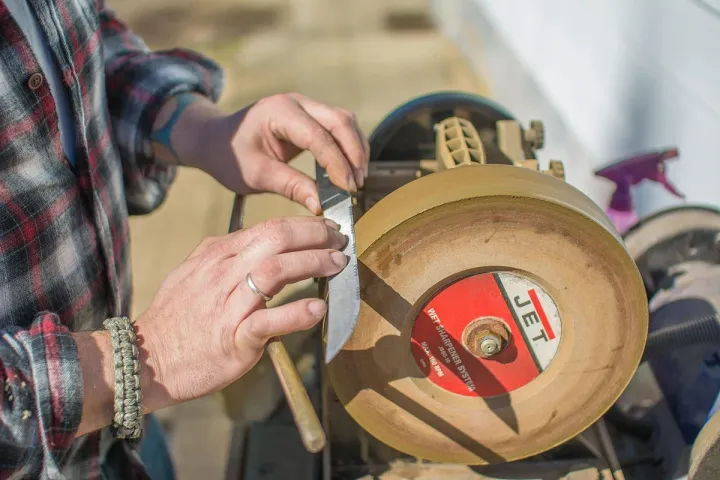
Restoring edges on older hand tools is where most of the work goes, and it is quiet work you can do at a table. A honing guide makes a consistent angle easier. Lie-Nielsen, for example, states that on its honing guide "the distance the blade projects from the front edge of the Honing Guide determines the honing angle" (Lie-Nielsen honing guide page, read September 11, 2026).
Tools to Buy New, or Refurbished With a Warranty
Battery tools, and especially batteries. You cannot judge a lithium-ion pack's condition by looking, and a damaged pack is a fire risk inside your home. A swollen, cracked or dented pack should not be bought or charged at all. If you buy a secondhand battery tool, budget for new packs and a charger from the same maker's platform.
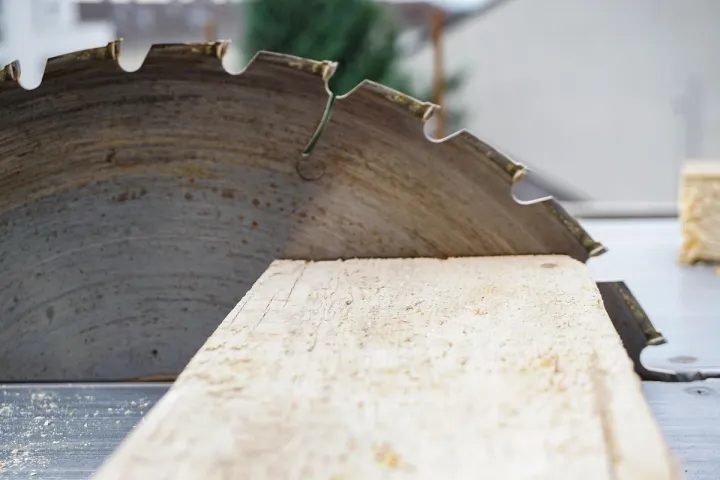
Anything with a guard, brake or safety system you cannot fully test. Saws are the obvious case. If the guard does not move freely and spring back, or parts are missing, walk away. Never buy a tool with the guard removed on the promise that it "works fine without it."
Blades, bits and abrasives. They wear out, and a used blade's condition is hard to judge. They are consumables and usually cheap enough to buy new.
Safety equipment. Hearing protection, eye protection and respirators should be new, so you know their condition and fit.
The Recall Check Most Buyers Skip
Before buying any used power tool, look up the model on the U.S. Consumer Product Safety Commission's recall database. The CPSC recalls page lets you search recalls with filters for product category, hazard type and date, and it directs anyone who finds an unsafe product to report it on SaferProducts.gov (read September 11, 2026).
What to do:
- Photograph the model number and date code on the tool's label before you pay.
- Search the brand and model on the CPSC recalls page.
- If it is recalled, read the remedy. Many recalls offer a repair, replacement or refund from the maker, which a secondhand buyer may still be able to claim. Check the recall notice for the details.
- If the label is missing or unreadable, treat that as a reason to pass.
A private seller may simply not know a tool was recalled. The check takes a couple of minutes.
How to Inspect a Used Power Tool in Person
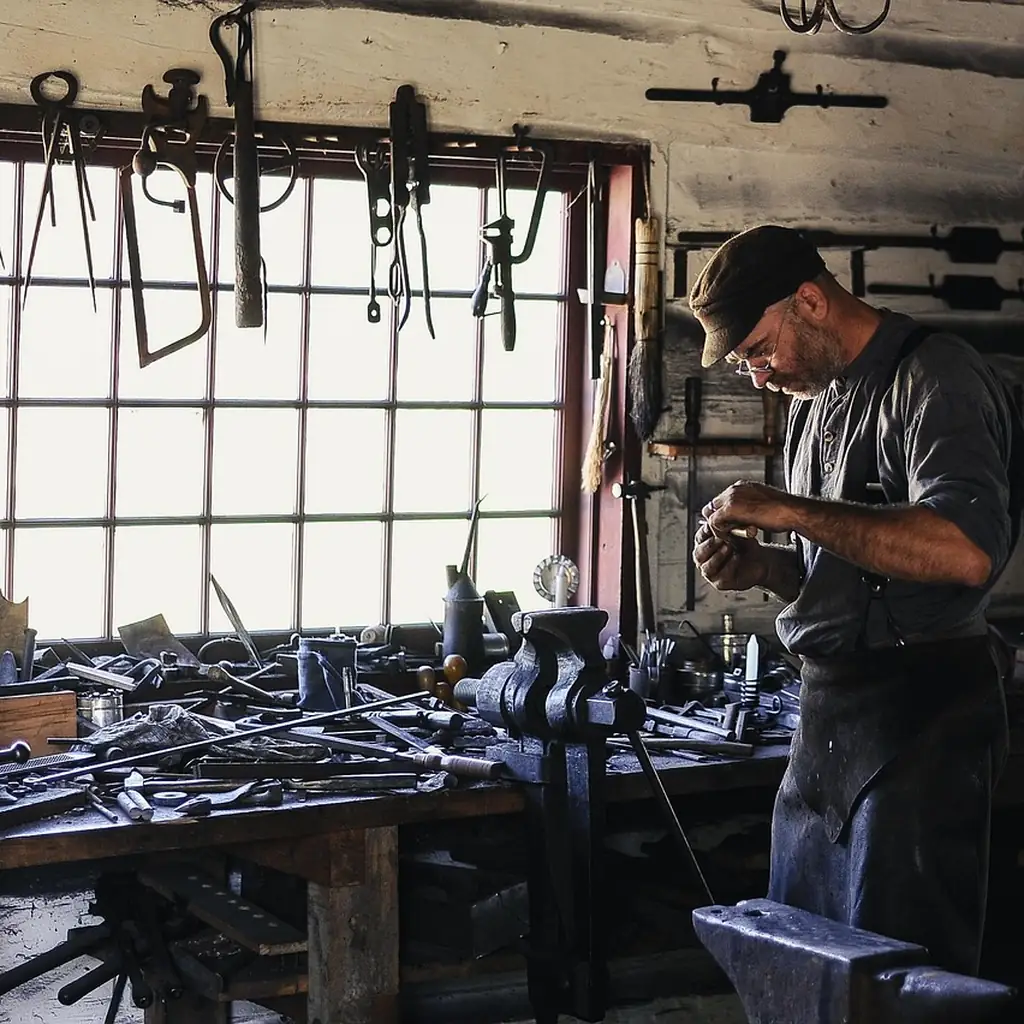
If you are buying a corded tool from a private seller, these checks cover what you can see:
- The cord: no cuts, exposed wire, taped repairs or a damaged plug. On a three-pin plug, the ground pin must be present.
- The switch: it turns on and off cleanly, and it does not stick on.
- The sound: run it briefly, if the seller agrees, and listen for grinding, rattling or a smell of burning.
- The guard and base: guards move freely and return on their own; the base or shoe is flat and not cracked.
- The label: model number readable, for the recall check.
If anything electrical looks repaired by hand, do not buy it. Opening a power tool to fix wiring is not a job to take on, and a tool someone else has opened is an unknown.
Where Buying Used Woodworking Tools Works, by Source
The source changes what you can check and what recourse you have.
- In person, locally: you can inspect and test before paying. This is the best option for hand tools and corded tools.
- Online marketplaces: you rely on photos. Ask for a photo of the model label and of any part that matters, such as a plane's sole or a saw's teeth.
- Thrift and reuse stores: stock varies a lot. Inspect everything as above.
- Estate sales and auctions: often good for hand tools, and often sold as-is with no returns.
- Factory-refurbished programs: fewer surprises, and a warranty, in exchange for less choice.
Buy for the Kit You Actually Need
The cheapest used tool is still expensive if it is the wrong tool. Before shopping, write down the next two or three projects and the tools they need. Then check that list against the woodworking tools you do not need as a beginner, because a bargain on a tool you will not use is not a saving.
The overall plan for a small starter kit is in the minimal woodworking tool kit, and the woodworking beginner checklist splits the list into buy-now and buy-later.
The Short Version
- Buy used where you can see everything that matters: planes, saws, chisels, squares, clamps.
- Buy new or refurbished where the important part is hidden: batteries, guards and safety systems.
- Test a square before buying it, by flipping it against a line.
- Check every used power tool against the CPSC recall database before paying.
- Never buy a tool with a guard removed or with home electrical repairs.
- Read refurbished warranty terms, because the word has no single meaning.
Frequently Asked Questions
Is it worth buying used hand planes? Often, yes, because a plane is mostly cast iron and steel and its faults are visible. The two things to reject are a cracked body or sole and missing parts. Rust and a dull blade are normal and can be dealt with.
Are used cordless tools a good deal? The tool may be fine, but the battery is the uncertain part and it is the part that matters most for safety and runtime. Treat a used battery tool as "tool only" and budget for new batteries and a charger from the same platform.
What does refurbished mean on a power tool? It depends on the seller. A maker's own reconditioning program usually includes inspection and a limited warranty. A reseller's "refurbished" label may mean much less. Read the warranty terms and who performed the work.
How do I check if a used tool has been recalled? Find the model number on the tool's label and search it on the CPSC recalls page. If a recall applies, the notice says what the maker offers, which may be a repair, a replacement or a refund.