Home Depot vs Lumber Yard for Small Projects
Buying two boards? Home Depot vs lumber yard for small projects, compared by what each sells: board sizes, grades, moisture, pricing units and cutting.

Short answer: if you are weighing Home Depot vs lumber yard for small projects that need only a few boards, the choice comes down to what you can work with at home. Home center softwood boards are graded and sized under the softwood lumber standard: already dressed smooth to a standard size, "dry" at up to 19% moisture, and at least one big chain says it can cut lumber in store. A hardwood lumber yard sells under hardwood grading rules: many more species, furniture stock usually dried to 6 to 8%, often random widths and long lengths, sometimes rough-sawn, and may be quoted by the board foot. If you have no planer and no truck, start at the home center for paint-grade and practice work. Go to a yard when you need a specific hardwood, furniture-dry stock, or better boards than the rack offers.
The rest of this guide compares the two on the things that actually change a small purchase, using the US Forest Service Wood Handbook's description of how lumber is graded and sized, plus what the two big chains publish about cutting.
What does each kind of store actually sell?
The Wood Handbook, Chapter 6 (USDA Forest Products Laboratory, 2021) describes two different worlds of lumber, and the two kinds of store mostly sit in different ones:
| Typical home center softwood boards | Typical hardwood lumber yard stock | |
|---|---|---|
| Grading rules | Softwood yard lumber under the American Softwood Lumber Standard (PS 20): Select and Common board grades, structural grades for 2x lumber | National Hardwood Lumber Association rules: FAS, F1F, Selects, No. 1 Common and lower |
| Sizes | Standard dressed sizes: a "1x6" is 3/4 by 5-1/2 inches when dry | Random widths; standard lengths 4 to 16 feet in 1-foot steps; standard rough thicknesses such as 1 inch (sold as 4/4) |
| Surface | Dressed (surfaced) to the standard size | Rough, or surfaced on two sides (a 4/4 board surfaces to 13/16 inch) |
| Moisture | "Dry" boards and dimension lumber: 19% or less | Hardwood for furniture and cabinets: usually dried to 6 to 8% |
| Priced by | Check the shelf tag | Ask whether it is per board foot, on rough or surfaced size |
The moisture row matters more than it looks. The Handbook defines dry softwood boards and dimension lumber as 19% moisture or less, and says hardwood lumber for furniture and cabinets "is usually dried to 6% to 8% moisture content." Indoor furniture settles around 8% in most of the US by the Handbook's Table 13-2, so softwood from a rack can have more drying, and more movement, ahead of it.
The Handbook also notes, in its section on retail yards, that "The wide range of grades and species covered in the grade rules may not be readily available in most retail outlets." That is the honest summary of the trade-off: the home center is convenient, the yard has range.
The small-quantity catch at a hardwood yard
Hardwood grades are built around how much clear wood can be cut from a board, and the rules set minimum board sizes. From the Handbook's Table 6-1:
| NHLA grade | Minimum width | Allowable lengths |
|---|---|---|
| FAS (the top grade) | 6 inches | 8 to 16 feet |
| Selects | 4 inches | 6 to 16 feet |
| No. 1 Common | 3 inches | 4 to 16 feet |
So the best-grade board a yard sells is, by definition, at least 6 inches wide and 8 feet long. If your project needs two 3-foot pieces, you are either buying more board than you need or asking the yard to sell a short length or cut one for you. Some yards sell shorts and offcuts and some will cut; this is a yard-by-yard policy, so ask before you drive there. A No. 1 Common board can be as short as 4 feet and is often fine for small parts, because the grade is about the yield of clear pieces, not the look of the whole board.
How do you compare prices when one sells by the piece and one by the board foot?
Convert both to board feet. Penn State Extension defines a board foot as a piece "1 inch thick, 12 inches wide, and 12 inches long," which is 144 cubic inches. The formula is thickness (inches) times width (inches) times length (feet), divided by 12.
The catch for home center boards is that their names are nominal. By the Handbook's standard sizes, an 8-foot "1x6" is really 3/4 by 5-1/2 inches. Our arithmetic:
| 8-foot board | Board feet by the name | Board feet of actual wood (3/4-inch S4S) |
|---|---|---|
| 1x4 (3-1/2 in wide) | 2.67 | 1.75 |
| 1x6 (5-1/2 in wide) | 4.00 | 2.75 |
| 1x8 (7-1/4 in wide) | 5.33 | 3.63 |
| 1x12 (11-1/4 in wide) | 8.00 | 5.63 |
So a home center board holds roughly two thirds of the wood its name implies. On the yard side, a 4/4 rough board is a full inch thick but loses wood when it is surfaced: a 6-inch by 8-foot rough board is 4 board feet, and at the Handbook's 13/16-inch surfaced thickness it holds about 3.25 board feet.
A worked example with made-up prices (to show the arithmetic only, not real prices): if a 1x6x8 costs $20 per piece, you are paying about $7.27 per board foot of actual wood ($20 divided by 2.75). If a yard charges $5 per board foot for 4/4 rough stock and figures the price on the rough size, a 6-inch by 8-foot board costs $20 and gives you about 3.25 board feet after surfacing, or about $6.15 per board foot of finished wood. Plug in the real prices on the day you shop; and at the yard, ask whether the board-foot price is figured on the rough or the surfaced size.
Can the store cut it to size for you?
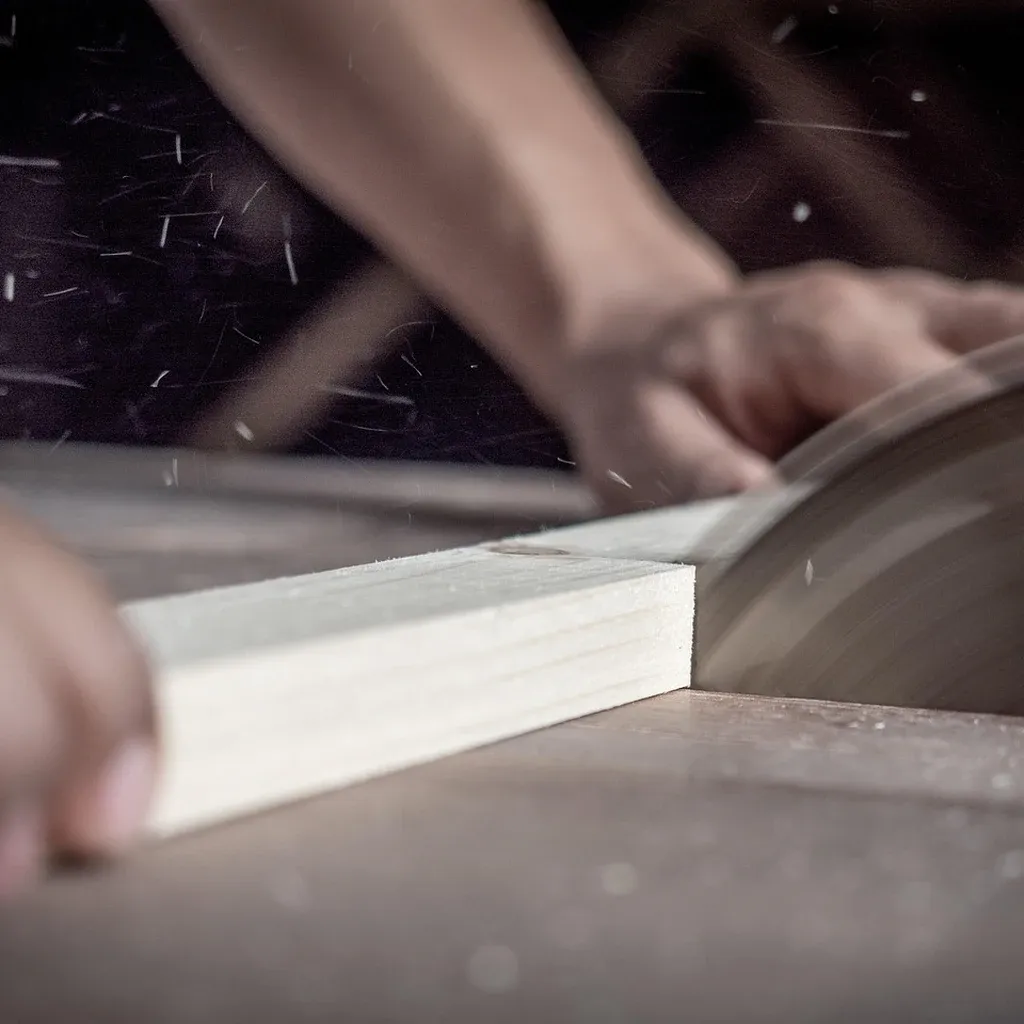
For a small apartment this can decide everything, because a full-length board or a 4 by 8 sheet may not fit in your car or your elevator.
- Home centers. Lowe's store services page says "We can cut lumber, mini-blinds, pipe, rope, chain and more." Home Depot has listed small plywood project panels online, such as a "3/4 in. x 2 ft. x 4 ft. PureBond Poplar Plywood Project Panel (Free Custom Cut Available)." We did not find a published, store-wide lumber cutting policy from either chain, so how many cuts, how precise, and any fees are questions for the person at your store's saw. Treat in-store cuts as transport cuts and leave extra length for your own final cut.
- Lumber yards. Yards differ: some sell rough stock, some surface or cut to order. If you do not own a planer, ask specifically for boards surfaced on four sides (S4S).
If you do bring a full sheet home, our guide to cutting a plywood sheet alone covers breaking it down safely without a helper.
Home Depot vs lumber yard for small projects: which should you choose?
This is our decision guide, based on the differences above:
| Your situation | Better first stop | Why |
|---|---|---|
| Painted shelf, box or practice project; you have hand tools but no planer | Home center | Boards come dressed to standard sizes, ready to use; cutting for transport may be available |
| You need a specific hardwood (cherry, walnut, maple) for a visible piece | Lumber yard | The grade rules cover far more species than retail shelves carry |
| You want stock already near indoor moisture | Lumber yard (furniture hardwood) | Furniture hardwood is usually dried to 6 to 8%, versus a 19% ceiling for "dry" softwood |
| You need only two short pieces | Home center, or a yard that sells shorts | NHLA top-grade boards start at 8 feet long |
| You have no car or a small car | Home center with cutting, or delivery | Long random-length boards are hard to transport |
| You want to pick the straightest, best-grained board | Either, but check every board | Shape and grain vary board to board at both |
Whichever you choose, check each board before you buy it, and let it settle indoors before cutting. Our beginner checklist lists what else to bring home, and the first weekend projects are sized for a few home center boards. When the wood gets home, storing it in a small apartment keeps it flat while it settles.
FAQ
Is lumber yard wood better than Home Depot wood?
Not automatically. A yard can offer more species, higher hardwood grades and stock dried for furniture, but every grade allows defects, and boards vary at both. The advantage of a good yard is choice; you still have to pick well.
Why is a 2x4 not 2 inches by 4 inches?
The names are nominal sizes. Under the American Softwood Lumber Standard sizes in the Wood Handbook, a dry 2x4 is 1-1/2 by 3-1/2 inches and a dry 1x6 is 3/4 by 5-1/2 inches.
Will a lumber yard sell me just one or two boards?
Policies differ from yard to yard, and hardwood top grades come in long lengths. Call ahead and ask whether they sell to walk-in customers, sell short pieces, and surface boards.
What does S4S mean?
Surfaced four sides: planed on both faces and both edges. The Handbook lists S1S, S2S and S4S among the surfacing combinations. S4S boards are ready to use without a planer.
Is buying by the board foot cheaper?
It can be, but you have to compare the same thing. Convert the home center's per-piece price to board feet of actual wood, and ask the yard whether its price is figured on rough or surfaced thickness.