How Much Wood to Buy for a Project (Without Waste)
Work out how much wood to buy for a project from your cut list: actual board widths, kerf and end trim, whole lengths, and extra for a hardwood grade.

Short answer: to work out how much wood to buy for a project, start from your cut list, not from a percentage. Check that each part fits the board's actual width (a "1x4" is only 3-1/2 inches wide), add the saw kerf for each cut and an inch at each board end for trimming, round up to a length the store sells, and then add extra only for what the grade allows: a No. 1 Common hardwood board is only guaranteed to yield about two thirds clear wood, so buy about 1.5 times the clear wood you need. For a small project, that usually means one or two boards, not a percentage of a pile.
Many waste calculators and forum answers give a flat percentage allowance. That works for big projects. For a first project of a few parts, the real waste comes from three specific places, and you can count each one.
Where waste comes from on a small project
- The nominal width trap. Board names are not their sizes. The US Forest Service's Wood Handbook, Chapter 6 explains that "Lumber length is recorded in actual dimensions, whereas width and thickness are traditionally recorded in" nominal dimensions, which are larger than the real ones. By its standard dry sizes, a 1x4 is 3-1/2 inches wide, a 1x6 is 5-1/2 and a 1x8 is 7-1/4. If a part is 4 inches wide, a 1x4 cannot make it.
- Cuts and end trim. Every saw cut turns a strip of wood into dust (the kerf), and board ends are often split, checked or not square, so you trim them off.
- Defects you cut around. Knots, splits and wild grain in the middle of a board. Hardwood grading rules put a number on this: a minimum share of clear wood per board.
How much wood to buy for a project: a worked example
Here is the method applied to the cut list in our published beginner wooden box guide: two long sides 10 by 4 inches, two short sides 6 by 4 inches, and a base 10 by 6 inches. (That guide says the sizes are a starting design to adapt to your material, which is exactly what this step does.)
We used two assumptions you should replace with your own: a kerf allowance of 1/8 inch per cut (measure yours by making one cut in scrap and checking the slot), and 1 inch trimmed from each end of each board.
Step 1: Match each part to an actual board width.
| Part | Size needed | Narrowest board that is wide enough |
|---|---|---|
| Long sides (2) | 10 x 4 in | 1x6 (5-1/2 in), ripped to 4 in |
| Short sides (2) | 6 x 4 in | 1x6 (5-1/2 in), ripped to 4 in |
| Base (1) | 10 x 6 in | 1x8 (7-1/4 in), ripped to 6 in |
Alternative: make the walls 3-1/2 inches tall so a 1x4 works with no rip cut at all, and make the base 5-1/2 inches wide so it comes from a 1x6. Changing the design to the board you can buy is often the cheapest way to avoid waste.
Step 2: Add up the length along one board.
| Board | Parts laid end to end | Kerfs | End trim | Total length needed |
|---|---|---|---|---|
| 1x6 for the four walls | 10 + 10 + 6 + 6 = 32 in | 3 x 1/8 in | 2 in | about 34-3/8 in (2.9 ft) |
| 1x8 for the base | 10 in | none | 2 in | 12 in (1 ft) |
| Or one 1x8 for all five parts | 42 in | 4 x 1/8 in | 2 in | about 44-1/2 in (3.7 ft) |
Step 3: Round up to a length you can buy. The Handbook notes that softwood lumber is made in 1-foot length multiples, but "In practice, 610-mm (2-ft) multiples (in even numbers) are common for most construction lumber." So the realistic buy for this box is one 4-foot 1x8, or a 4-foot 1x6 plus a short 1x8 if your store sells shorter pieces. Either way the leftover is a useful offcut, not waste.
Step 4: Add a defect allowance only if the board needs it. For a clear softwood board you have already checked in the store, there is little to add on a project this small: pick a board with clear wood where your parts will go. For hardwood, use the grade.
How much extra to buy for hardwood, by grade
Hardwood grades are defined by how much of a board can be cut into clear pieces. The Handbook says FAS, the top grade, "includes pieces that will allow at least 83-1/3% of their surface measure to be cut into clear face material." In its Table 6-1, No. 1 Common boards of 3 square feet or more must yield at least 66-2/3% clear-face cuttings (smaller boards must yield more). Turning those minimums into a buying multiplier is our arithmetic:
| Hardwood grade | Minimum clear-face yield | Buy at least this much per unit of clear wood you need |
|---|---|---|
| FAS | 83-1/3% | 1.2 times |
| No. 1 Common | 66-2/3% (boards of 3 sq ft or more) | 1.5 times |
These are minimums the board must meet, measured as clear cuttings of set minimum sizes. Your actual yield can be better, and it depends on whether your part sizes match where the clear areas fall. Short parts like box sides fit between knots more easily than a long table rail does, so No. 1 Common is often a good, cheaper choice for small projects.
Board feet, if you are buying hardwood
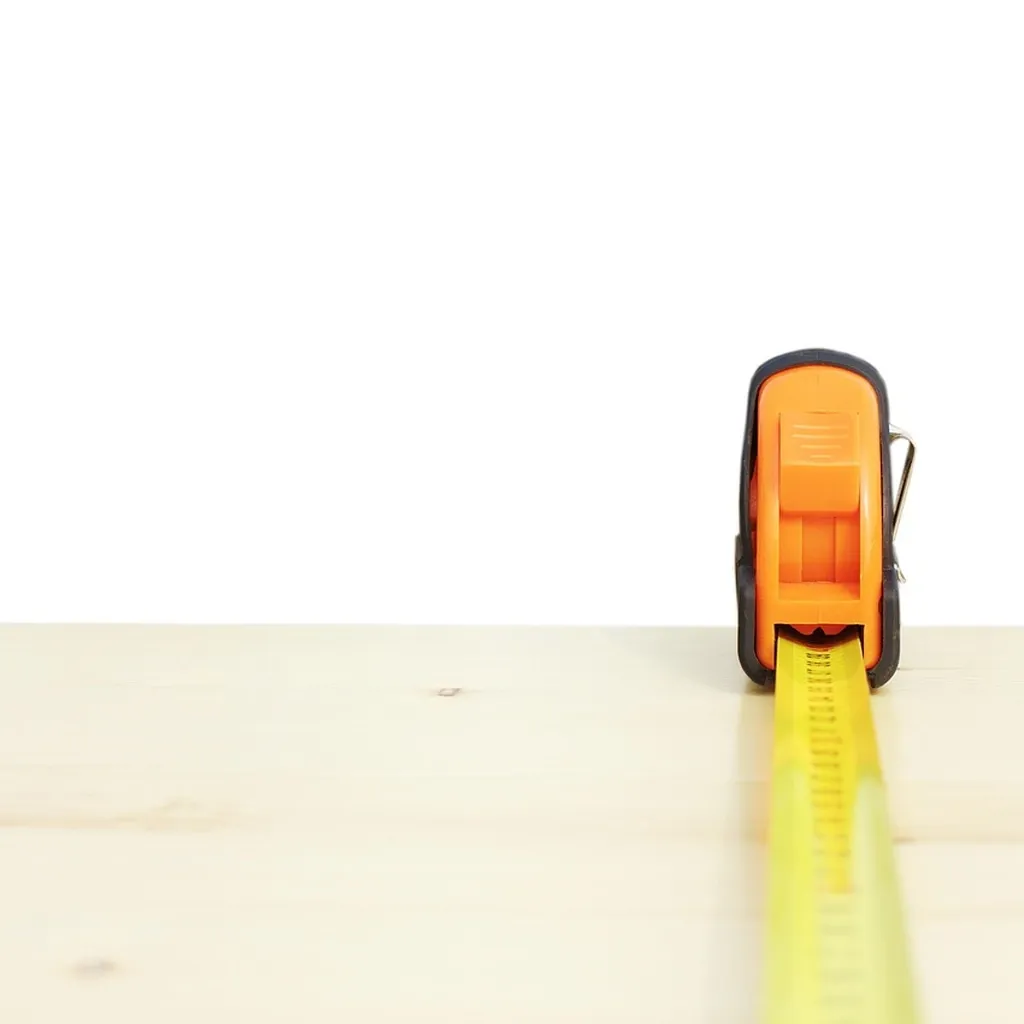
Hardwood is usually priced by the board foot: thickness in inches times width in inches times length in feet, divided by 12. Penn State Extension defines one board foot as a piece "1 inch thick, 12 inches wide, and 12 inches long." For the box above, the parts add up to about 1.3 board feet at a full inch thick (our arithmetic: the four walls are 128 square inches and the base 60, so 188 square inches, divided by 144). Multiply by 1.5 for No. 1 Common and you would look for about 2 board feet of 4/4 stock, which is one 6-inch-wide board 4 feet long.
A simple checklist before you go to the store
- Write the cut list with actual sizes, and note which board width each part needs.
- Lay the parts end to end on paper for each board width; add a kerf per cut and an inch at each end.
- Round up to a length the store sells. If you have no car, ask the store to cut the board into pieces that fit, leaving extra length for your own final cut.
- For hardwood, multiply the clear wood you need by the grade multiplier above.
- Buy one extra short piece if a part is critical to fit, such as a drawer front. Running short on a project of two boards usually means another trip.
Our beginner checklist covers what else to bring home, and the guide to measuring and marking wood helps you lay the cut list out on the board itself. If space is tight at home, plan where the offcuts will live with our guide to storing wood in a small apartment.
FAQ
What waste percentage should I add for woodworking?
On small projects, count it instead: board width, kerfs, end trim and whole lengths. For hardwood, use the grade's minimum yield; No. 1 Common boards of 3 square feet or more must yield at least two thirds clear wood, so buy about 1.5 times what you need.
Why does my 1x4 measure 3-1/2 inches?
Width and thickness are sold by nominal size. Under the standard dry sizes in the Wood Handbook, a 1x4 is 3/4 by 3-1/2 inches, a 1x6 is 3/4 by 5-1/2 inches and a 1x8 is 3/4 by 7-1/4 inches. Length, by contrast, is the actual length.
How much should I allow for saw kerf?
Measure it. Make one cut in scrap and check the width of the slot. Kerf differs from saw to saw, and it adds up when you make many cuts from one board.
Is it better to buy one long board or several short ones?
One long board usually leaves less waste per part and lets you choose where the clear wood goes, but it is harder to carry. If transport is the problem, have the store cut it, leaving extra length on every piece.