Minimal Woodworking Tools List: One Per Operation
Every starter list disagrees because they count tools. Count operations instead: measure, hold, cut, join, smooth, finish. Four to six items covers it.

You need one tool per operation, not one tool per name on somebody's list. There are six operations in almost any woodworking project: measure and mark, hold the work, cut it, make holes and drive fasteners, smooth it, and finish it. A first project needs one adequate tool for each operation it actually performs, which in practice comes to about four to six items, and several of those are not tools at all.
That is why published starter lists disagree so wildly. They are counting objects. Count operations instead and the number stops moving.
Why the Lists Never Agree
Search this question and you will be told twelve tools, or twenty, or three. Every one of those numbers is defensible, because each is answering a different unstated question.
A twenty-tool hand tool list is describing a complete traditional workflow, from rough board to finished furniture, with no machines anywhere. A three-power-tool list assumes you buy lumber already flat, straight and close to size. A twelve-tool list is usually a shop-equipping list written by someone with a garage.
None of them is wrong and none of them is about you. What decides your number is not the hobby, it is which operations your specific project performs and how much of the work you have already bought away by choosing your materials.
This page is the counting method. The buying order, meaning which single tool to pick up first and what to add second, is a separate question answered in the minimal tool kit.
The Unit of a Tool Kit Is an Operation
Here are the six, with the honest note that some of them can be answered without buying anything.
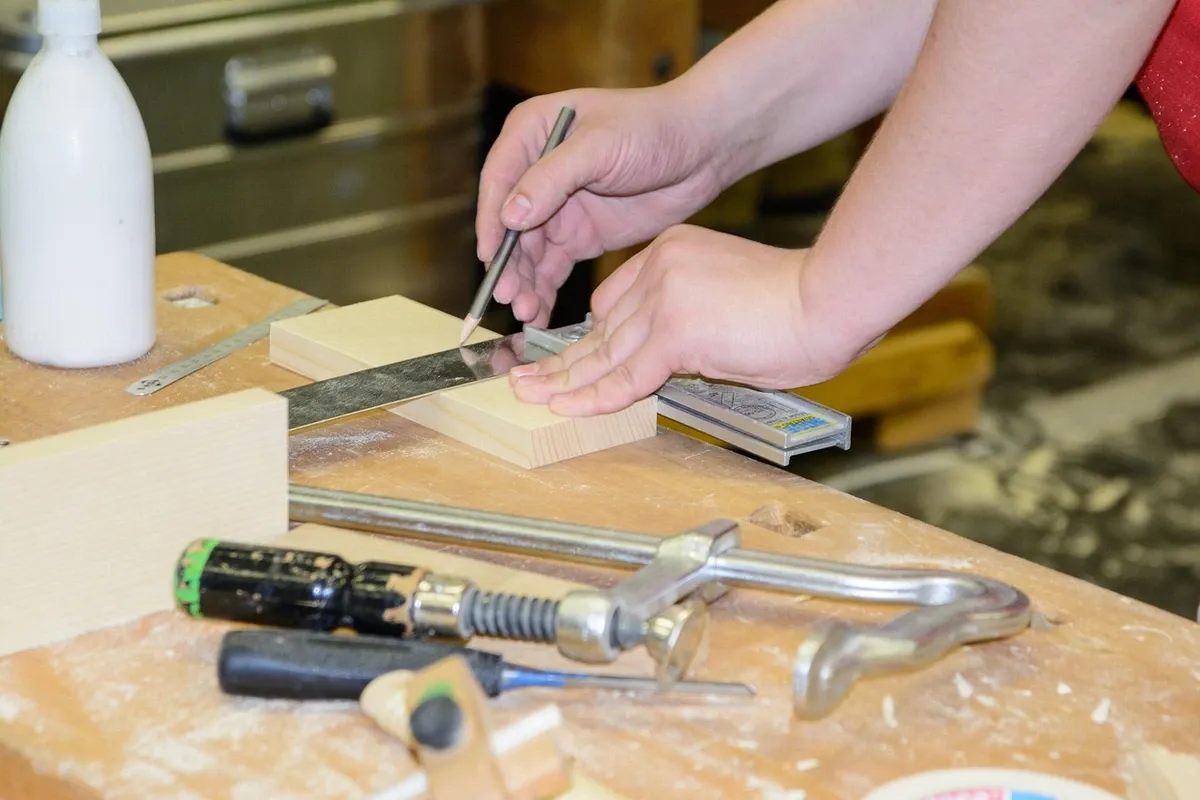
1. Measure and mark. Deciding where the wood ends before you cut it. This operation is always required. It is also the cheapest, quietest and smallest group of tools in woodworking, and it is the one beginners skimp on hardest.
2. Hold. Keeping the workpiece still while you do something violent to it. Always required, and in a home with no bench this is a real problem rather than an afterthought. Clamps answer it.
3. Cut. Reducing a board to a size and a shape. Always required unless you buy parts cut to length, which is a legitimate option and one that shops will do for you.
4. Make holes and join. Pilot holes, screws, dowels, glue. Required for anything with more than one part.
5. Smooth. Getting the surface ready to be finished, and removing the sharp arrises that make a piece unpleasant to touch. Frequently answered with sandpaper and a block, which is not a tool purchase.
6. Finish. Applying oil, wax, paint or varnish. Answered with a rag or a brush.
Count the operations your project actually needs, then buy the cheapest adequate answer to each one. Notice how many of those answers are consumables, borrowed, or free.
The Minimal Woodworking Tools List, Applied to One Real Project
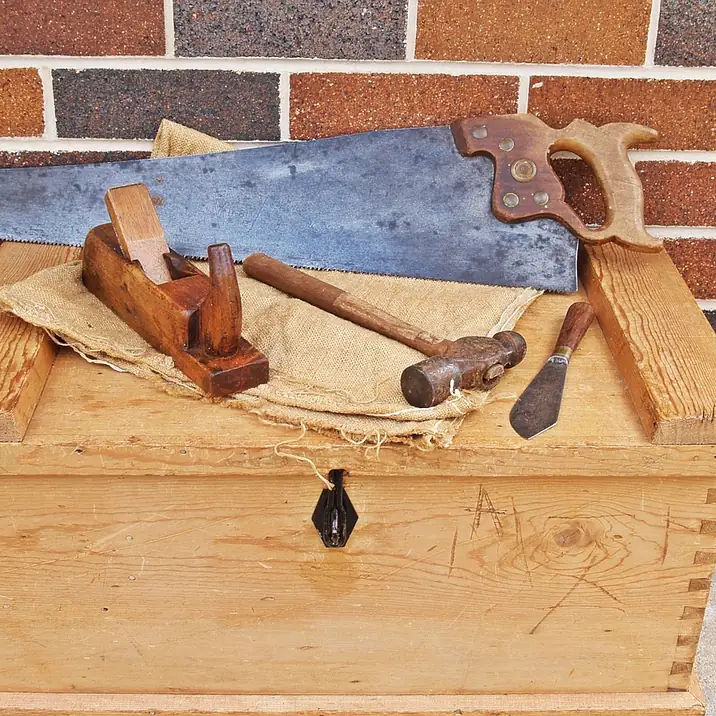
Take something small and useful, the kind of thing in first weekend woodworking projects.
Measure and mark: a combination square and a pencil. Two items, both tiny.
Hold: two clamps and the kitchen table. The clamps are doing the job a bench and a vise would do in a workshop, which is exactly why they are not optional here.
Cut: a hand saw, or a circular saw with a straight guide if you have already decided you want power. If the boards are bought at their finished length, this operation may not happen at all on the first project.
Make holes and join: a drill, plus screws and glue. This is the operation that most often justifies a power tool for a beginner, because driving screws by hand into anything harder than pine is genuinely miserable.
Smooth: sandpaper and a flat block of scrap. No purchase beyond the paper.
Finish: a rag and a can. No purchase beyond the finish.
Total tool purchases: four to six. A square, a pencil, two clamps, a saw, a drill. Everything else on that project is a consumable or something you already own. That is the whole list for a real first build, and it fits in one drawer.
The Tools That Get Bought and Then Sit There
The reason people end up with fifteen tools and four finished projects is that lists are aspirational. They describe a workflow you might one day have, and you buy for that instead of for Saturday.
The reliable test for a purchase: does a project you are actually building, this month, currently stop because you do not own this? If the answer is no, the money is better spent on wood, because wood is what turns into skill.
The specific tools that most often get bought early and used rarely, and the reasoning behind each, are set out in the guide to woodworking tools you do not need as a beginner. It is worth reading before rather than after.
The corollary is the rule for adding the seventh tool: buy it the second time a real project has been held up by not having it. Once is bad luck and a workaround. Twice is a pattern, and a pattern is worth money.
Two Filters a Shop List Never Applies
Every general tool list judges a tool on capability and price. If you work at home, and especially if you rent, there are two more filters, and they change the answer.
Filter one: noise, which is really a filter on time. In a shared building the relevant question is not how loud a tool is but how many hours of the week you are allowed to use it. A tool you can only run for three hours on a Saturday afternoon does less work per year than a quieter tool you can pick up any evening. Hand tools score enormously well on this filter, which is the strongest practical argument for the hand-tool route. The realistic figures and the neighbor conversation are covered in how loud woodworking tools actually are.
Filter two: storage volume, which is really a filter on whether you keep the hobby. A tool that has nowhere to live gets left out, resented, and eventually the hobby gets blamed. Before buying, decide where the tool sleeps. If you cannot answer that, you cannot afford it regardless of price. The strategies that work in a flat are in small apartment woodworking storage.
Run both filters over any list of essentials and it shortens quickly.
Safety Gear Is Tool Zero, Not an Add-On
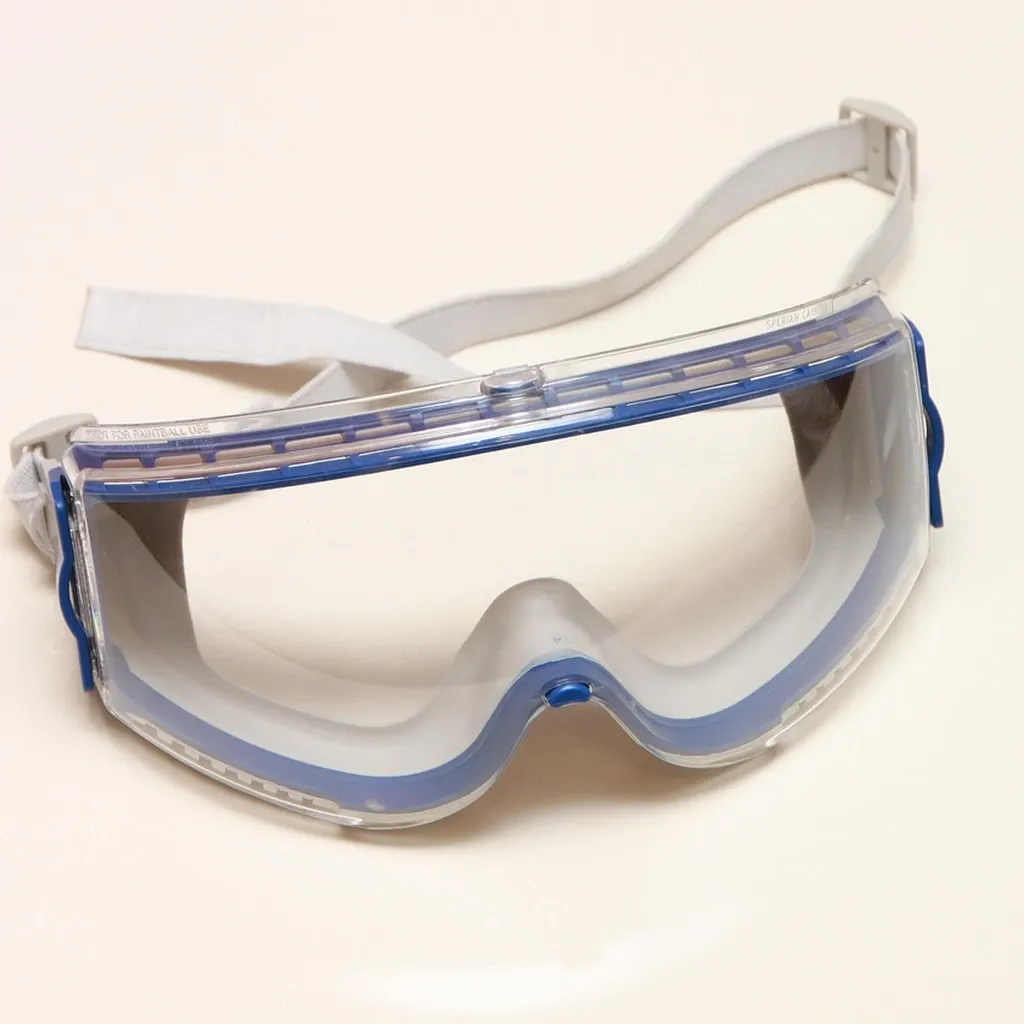
This belongs in the count, not in a footnote, because it is the one purchase that has to happen before the first tool is switched on.
Eye protection marked to ANSI/ISEA Z87.1, shown on the frame as Z87+ for the high velocity impact rating. Chips and broken bits travel toward your face and there is no version of this you can improvise.
Hearing protection. NIOSH sets a recommended exposure limit of 85 A-weighted decibels averaged over an eight hour workday, and recommends halving the allowed exposure time for every 3 dBA increase above that (NIOSH, occupational noise exposure guidance, read September 8, 2026). Power tools routinely sit above that level, and the loss is cumulative and permanent rather than something you notice on the day.
Dust control. Fine wood dust in an enclosed living space is a genuine exposure issue rather than a housekeeping one, and it is worse in a flat than in a garage because the air you are contaminating is the air you sleep in. Sanding and cutting indoors need a plan, not just a dustpan.
A clamp. Yes, again. The single largest category of beginner injury comes from a workpiece that moved.
Together those cost less than any power tool on any list, and they are the only items on this page that are non-negotiable.
When to Stop Reading Lists Entirely
At some point the list stops being useful, and it is earlier than you think. It is the moment you have completed one project.
After one real build you know which operation frustrated you, and that is information no article can give you. Maybe cutting straight was the bottleneck, in which case a guide or a different saw is the next purchase. Maybe holding the work was, in which case it is more clamps or a better surface. Maybe sanding took longer than everything else combined, in which case a sander earns its place.
Your second tool purchase should be diagnosed, not shopped.
The Short Version
- Count operations, not tools. Measure and mark, hold, cut, make holes and join, smooth, finish.
- A realistic first kit is four to six purchased items, because several operations are answered with consumables.
- Lists disagree because they assume different materials and different workflows, not because one is right.
- Buy the seventh tool the second time a real project stalls without it.
- Apply the noise filter and the storage filter that shop-based lists never apply.
- Safety gear and a clamp come before the first power tool, not after.
- Stop reading lists after your first finished project and diagnose your own bottleneck instead.
Frequently Asked Questions
How many tools do I need to start woodworking? Around four to six purchased items for a realistic first project: something to mark with, something to check square with, clamps to hold the work, a saw, and usually a drill. Smoothing and finishing are answered with consumables rather than tools. The number rises only when your projects demand operations your current kit cannot perform.
Can I start woodworking with only hand tools? Yes, and in a shared building it is often the easier route, because the constraint is usually available hours rather than raw capability. A hand-tool kit is quieter, needs no outlet, produces shavings rather than airborne dust and stores in a drawer. The trade is that it asks more of your technique and requires a sharpening setup.
Do I need a workbench to start? No, but you do need work-holding, which is what a bench actually provides. Clamps and a stable surface cover it for small projects. The moment you start planing by hand, the requirement changes, because planing needs mass and a low height that a dining table cannot give you.
What should I buy first, a saw or a drill? It depends on how you buy your wood. If a store cuts your boards to length, a drill covers assembly and you can start immediately. If you are cutting your own parts, you need a way to cut before anything else is useful.
Is it cheaper to buy a big starter kit or individual tools? A kit looks cheaper per item and is usually more expensive per item you actually use, because kits pad their count with things that suit a catalog rather than your project. Buying individually against real projects wastes less money and, just as importantly in a small home, wastes less space.