How to Cut Wood Straight Without a Table Saw
How to cut wood straight without a table saw using a circular saw, a guide, or a pull saw, with honest accuracy limits for small spaces and renters.


You can cut wood straight without a table saw by pairing a modest tool with a guide and a good layout line. A circular saw run against a clamped straight edge, a track saw, or a Japanese pull saw used in a bench hook will all hold a clean, square cut. The tool matters less than the guide, the clamping, and the line you mark. That combination, not the machine, is what keeps the cut straight.
The honest part first: none of these turns a $40 setup into a $600 cabinet saw. What changes between methods is speed, repeatability, noise, and dust, not whether the cut can be straight. For a shelf, a bookcase, or a renter's flat-pack rebuild, a guided circular saw or a pull saw is genuinely enough.
Why You Can Cut Wood Straight Without a Table Saw
A table saw is fast and repeatable because the fence holds the board at a fixed distance from a spinning blade. You are not buying "straight" when you buy the saw. You are buying a reference edge that never moves. You can borrow that same idea for far less money by giving any saw a straight edge to follow. Deciding this early also shapes your kit, and it is worth thinking through whether a circular saw or a table saw belongs in your space first, especially if floor area and noise are limited.
Here is how the common no-table-saw methods actually compare, so you can pick by your real constraint rather than by a spec sheet.
| Method | Realistic accuracy | Cost tier | Noise | Dust | Best for |
|---|---|---|---|---|---|
| Circular saw + clamped straight edge | Very good with care | Budget to mid | High | High | Breaking down sheets, long rips |
| Track saw | Best of these | Premium | High | High (with collection, lower) | Repeat cuts, splinter-free plywood |
| Japanese pull saw + bench hook | Good for crosscuts | Budget | Low | Low | Renters, small parts, quiet work |
| Jigsaw + guide | Fair, not for fine work | Budget | Medium | Medium | Curves and rough cuts, not finish edges |
Method 1: A Circular Saw and a Straight Edge
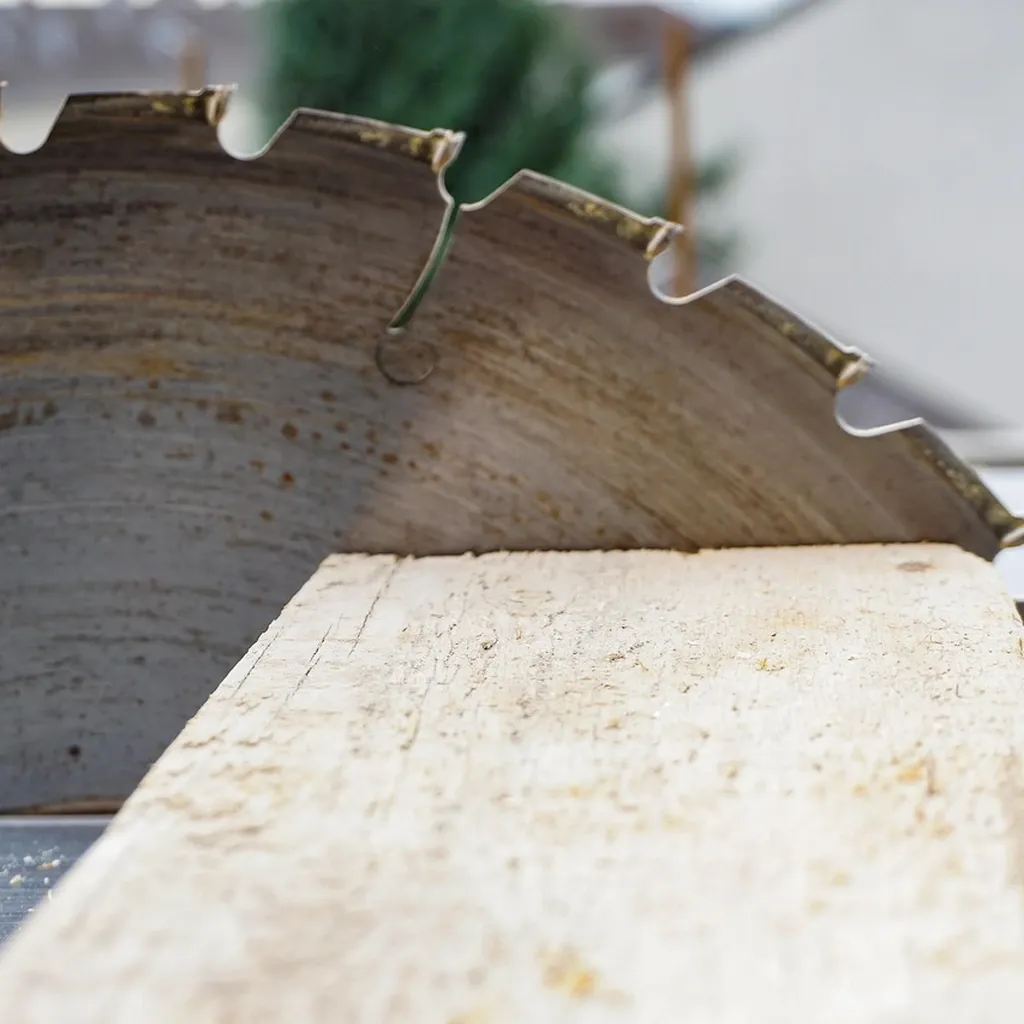
This is the workhorse for anyone without a table saw. On its own, a circular saw wanders because you are steering it freehand. Clamp a straight edge to the workpiece, run the saw's baseplate against it, and the cut becomes as straight as the edge you followed. A factory-edged strip of plywood, a level, or a dedicated guide rail all work.
A shop-made guide costs almost nothing: glue and screw a straight strip to a wider base, then run your saw down the strip once to trim the base to your exact blade offset. After that, you line the base's cut edge up with your mark and the guide is self-aligning.
If you would rather buy the accuracy, a commercial edge guide gives you a repeatable measured setup. Kreg's own product page for its Rip-Cut circular saw guide (read 2026-09-12) lists a maximum cut width of 24 inches (610 mm), and its longer Accu-Cut is listed at a 50-inch cutting capacity for breaking down full sheets. Numbers like those matter because a guide is only useful up to the width it can actually reach.
Method 2: A Track Saw for the Cleanest Cut
A track saw is a circular saw redesigned to ride on its own rail, with the rail's rubber edge splitting the fibers so both sides of the cut come out clean. It is the closest a portable tool gets to table-saw edge quality on plywood and long boards. The trade-off is price: it sits firmly in the premium tier, and for a first tool it is more than most beginners need.
Where it earns the money is repeat work and finish-visible edges, such as cabinet sides or shelving that will not be trimmed again. If you only cut a few boards a month, the guided circular saw above gets you most of the way there for a fraction of the cost.
Method 3: A Japanese Pull Saw and a Bench Hook
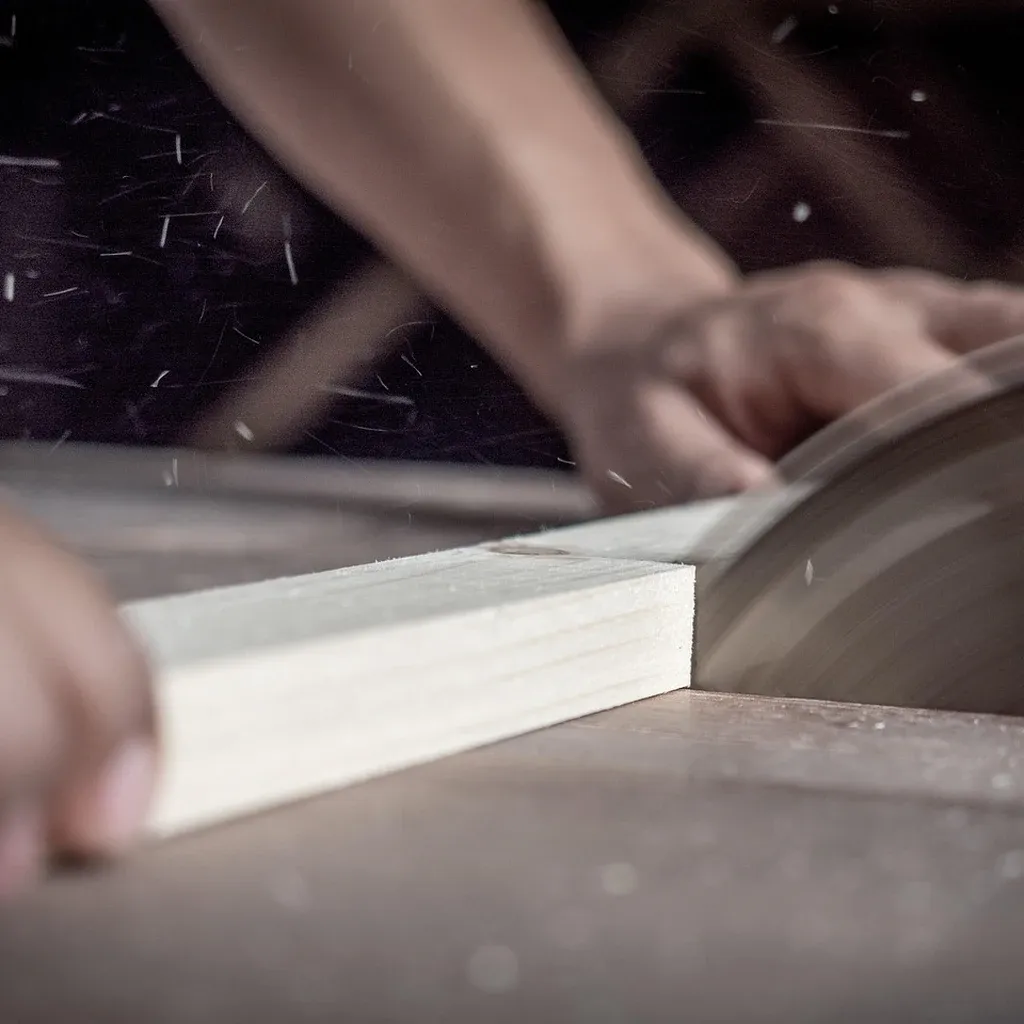
For renters and anyone working in a bedroom or on a balcony, a hand saw is the quiet, low-dust, no-deposit-risk answer. A Japanese pull saw cuts on the pull stroke, which keeps the thin blade in tension so it tracks straight instead of buckling the way a pushed Western saw can. Paired with a bench hook, a simple wooden jig that hooks over your table edge and holds the board square to the blade, you get accurate 90-degree crosscuts with no machinery, no power cord, and almost no cleanup. A miter box does the same job with fixed angle slots if you want to guarantee the angle.
The limit is honest: hand-sawing long rips down a full sheet is slow and tiring, and it is easy to drift on a long cut. This method shines on crosscuts and smaller parts. If you are choosing one, it helps to know what to look for in a Japanese pull saw for beginners before you spend, because tooth count and blade type change what the saw is good at.
Method 4: Where a Jigsaw Fits (and Where It Doesn't)
A jigsaw is worth naming mainly to set expectations. With a guide it can follow a line, but its thin reciprocating blade flexes and bevels under load, so the cut face is rarely square enough for a finish edge. Use it for curves and rough breakdown, not for the straight, clean edges this article is about. Reaching for it as a straight-cut tool is the most common way beginners end up disappointed.
The Four Habits That Actually Keep a Cut Straight
The method matters less than the technique around it. These four apply to every tool above.
- Mark with a knife, not just a pencil. A pencil line has width, which leaves room to drift. A marking knife severs the surface fibers and leaves a tiny trench the blade or saw teeth drop into, so the cut starts exactly where you want it. Use a combination or speed square to set the line square.
- Clamp the work down. A board that shifts mid-cut cannot come out straight, and a moving workpiece near a spinning blade is also a safety problem. Clamp to a stable surface such as sawhorses or a portable workbench built for small spaces so the piece stays put and your hands stay clear.
- Let the guide do the steering. Your job is to feed the saw and hold it against the guide, not to aim it. Fighting the guide reintroduces the wander you set it up to remove.
- Do not force a hand saw. Downward pressure warps the blade and pushes the cut off line. Hold the handle lightly and use long, full strokes; the teeth cut on their own.
Safety: State the Hazard, Not a Vague Warning
Cutting wood raises three specific hazards, and the protection is not optional just because the tool is small.
Your ears. Circular saws and track saws are loud. The U.S. National Institute for Occupational Safety and Health (NIOSH) sets a recommended exposure limit of 85 A-weighted decibels averaged over an eight-hour day (NIOSH, read 2026-09-12), and recommends hearing protection at or above that level. A field rule from NIOSH: if you have to raise your voice to be heard by someone an arm's length away, it is loud enough to protect against. Power saws routinely clear that bar, so wear plugs or muffs. This is also why the quiet pull-saw method is worth considering in shared walls.
Your lungs and nose. Wood dust is not just a mess. The International Agency for Research on Cancer classifies wood dust as a Group 1 carcinogen, and OSHA states that excessive exposure irritates the eyes, nose, and throat and can impair lung function (OSHA Wood Dust overview, read 2026-09-12). Sanding and cutting are what put fine particles in the air. Capture dust at the source where you can, ventilate, and wear a fitted respirator for fine work. In a flat this matters even more, and it is worth planning how to contain sawdust in a small apartment before you start rather than after.
Your eyes. Every method here throws chips. Wear safety glasses rated to a recognized standard, every cut, including the quick one.
What None of This Can Do
Here is the section the store blogs skip. A guided circular saw and a pull saw give you straight, square cuts, but they do not give you the effortless repeatability of a table saw with a fence and a miter gauge. Cutting twenty identical narrow strips is slow and fiddly without a fence. Very thin rips, where the offcut is narrower than your guide can straddle, are awkward and can be unsafe with a circular saw. Precision joinery held to a hair, such as tight-fitting dovetails or drawer parts, asks for more control than a handheld cut usually delivers on the first try.
A realistic target for a careful guided cut is around 1/32 inch of accuracy, which is fine for a shelf, a cabinet carcass, or a workbench, and not fine enough for a visible dovetail. Knowing that boundary up front is what keeps the project honest. You are not being sold a shortcut; you are choosing the accuracy your project actually needs and paying for nothing more.
FAQ
What is the cheapest way to cut wood straight without a table saw? A circular saw you may already own, plus a clamped straight edge or a shop-made guide built from scrap, is the lowest-cost route. The only real spend is the saw and a couple of clamps.
How straight can a circular saw cut really be? With a guide, a knife line, and clamped work, it is straight enough for shelving, cabinets, and furniture carcasses, roughly in the 1/32 inch range with care. It will not match a well-tuned table saw for effortless repeat rips.
Is a track saw worth it over a circular saw and a guide? For frequent, finish-visible cuts on plywood, yes, because the splinter-free edge saves cleanup and rework. For occasional cuts, a guided circular saw gets most of the result for far less money.
Can I cut wood straight quietly in an apartment? Yes. A Japanese pull saw in a bench hook or miter box makes accurate crosscuts with very little noise or dust, which suits renters worried about neighbors and deposits.
Do I need hearing and dust protection for small jobs? Yes. NIOSH flags noise at or above 85 dBA as hazardous and power saws exceed that, and IARC classifies wood dust as a carcinogen. Protect ears, eyes, and lungs on every cut, not just long sessions.