Portable Workbenches for Small Spaces: What to Look For
What to check before buying a portable workbench for a small space, stability, work-holding, folded footprint, and published weight capacity.

A portable workbench earns its place in a small apartment on four criteria, not a brand name. It has to stay stable under real cutting and clamping force, give you actual work-holding rather than just a flat top, fold down to a footprint that fits a closet or slides under a bed, and carry a weight capacity the manufacturer actually publishes rather than one you're guessing at. Judge any bench, whatever it's called, against those four before you look at anything else. This article names the categories and the checks, not a ranked shopping list, because the right choice depends on your specific closet, your specific projects, and specs that change between model years.
Why this isn't a ranked list
Search "best portable workbench for small spaces" and you'll find roundups pushing a handful of the same folding models, each with a star rating and a "top pick" badge. That's useful if you want someone else's shortcut, but it skips the part that actually determines whether a bench works in your apartment: what you can verify yourself, in the store or from a spec sheet, before you commit closet space to it. This guide covers the product categories available and the checks that apply to every one of them, so you can evaluate whatever's actually in stock or on sale when you're ready to buy, not a list that goes stale the moment a model gets discontinued.
Criterion 1: stability under real work
A workbench that wobbles isn't a workbench, it's a table with delusions. Stability comes from a combination of leg geometry (wider stances resist tipping better than narrow ones), locking mechanisms that actually engage rather than just click into place, and the rigidity of the top itself. A thin folding top can flex under a hand plane or a firm clamp, even if the legs are rock solid underneath it. When you're evaluating a bench in person, push down hard on one corner and rock it side to side the way you would while sawing. If it shifts, that's the bench telling you what it'll do mid-cut, not just in the showroom.
Criterion 2: work-holding, not just a flat surface
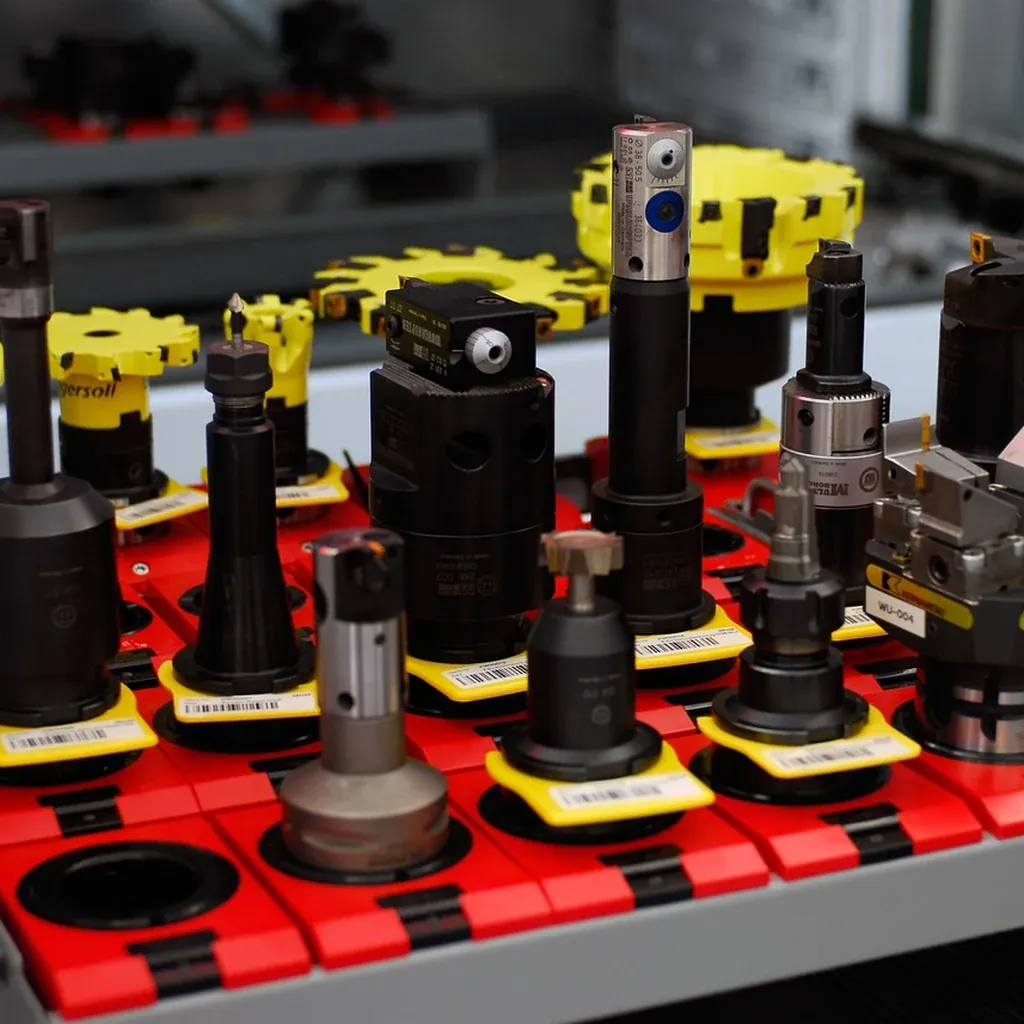
A flat folding surface without any way to hold a board still isn't solving the actual problem, it's just moving the "how do I hold this steady" question to a different table. Look for one of three work-holding systems: a built-in clamping mechanism (some folding benches use two independent jaw sections that squeeze a workpiece between them), pre-drilled holes for bench dogs and hold-downs, or at minimum a surface designed to accept standard bar or F-clamps without the clamp jaw slipping off a rounded edge. If a bench has none of these, you're buying a folding table, and that's a fair choice for some projects, just don't expect it to do a vise's job.
Criterion 3: footprint folded, not just footprint open
Every listing publishes the open dimensions, how much floor space the bench takes up while you're using it. Far fewer publish the folded thickness, and that's usually the number that actually decides whether the bench lives in your apartment at all. A bench that folds to 6 inches thick slides under most beds or behind a door. One that folds to 14 inches doesn't fit in a shallow closet no matter how compact its open footprint looks in a photo. Before buying, find the folded dimensions specifically, not just the open working size, and measure your actual storage spot with a tape measure rather than eyeballing it.
Criterion 4: weight capacity, as the manufacturer actually publishes it
Weight capacity numbers on folding benches usually split into two separate ratings that get conflated in marketing copy: a top-surface or working load (how much weight the flat top holds while you're standing on it or leaning into a cut) and a sawhorse-mode load (the rating when the same unit is used in pairs to support a sheet of material). As one example of how these differ, a widely sold folding bench line publishes roughly 300 pounds for its top-surface rating and a separate, much higher figure, up to around 1,000 pounds, for sawhorse mode. Those are two different use cases, not one number restated. Read the spec sheet for both ratings, not just whichever one the headline features, and treat any published figure as the manufacturer's own claim rather than an independently verified test result.
The categories worth knowing
Folding portable workbenches. The closest substitute to a real bench: a hinged top on folding legs, sometimes with integrated clamping jaws. Best stability-to-storage ratio of the three categories, and usually the category with genuine work-holding built in.
Sawhorse-style folding supports. Two individual folding units, used in pairs, topped with a scrap board or sheet material you supply. Lower cost of entry per unit, no built-in work-holding at all, and the pair takes up two separate storage spots rather than one folded unit.
Portable clamp-and-vise systems. Not a full bench, a standalone clamping unit that mounts to an existing table or a small stand. The smallest folded footprint of the three, but it depends entirely on having some other flat surface to set it on, so it solves work-holding without solving "what do I put this on."
If none of these fit your space at all, the guide to cheap workbench alternatives covers the no-purchase options, sawhorses with a scrap top, or a protected kitchen table, that cost nothing beyond what you already own.
The number nobody puts on the spec sheet: how it actually performs at your height
Here's what the review roundups consistently skip, because it can't be reduced to a single spec: working height changes how usable a bench feels far more than most buyers expect going in. A bench sized for a 6-foot woodworker forces someone 5-foot-4 to hunch over every cut, and a folding bench's height usually isn't adjustable the way a shop-built bench can be shimmed or trimmed. If you can, stand at the bench in the store or a showroom before buying, hands flat on the top, and check whether your elbows sit at a comfortable working angle. A bench that's perfect on every spec sheet number and wrong for your height will still get pushed into a corner and ignored within a month.
Testing stability before you commit
Most retailers that sell folding workbenches also accept returns within a set window, and that window is the real test lab you have access to. Set the bench up at home, clamp a scrap board to it, and run the kind of cut or plane pass you actually do most often. Check for flex in the top, movement in the legs, and whether the folding mechanism stays locked under load rather than creeping loose. A bench that passes this test in your own apartment, on your own project, tells you more than any star rating.
How this fits into your wider small-space setup

A portable workbench solves the surface question, but it doesn't answer where you'll actually set up to build in the first place. The guide to how much space you need for woodworking covers the realistic footprint question one level up from bench selection, and the roadmap for starting without a garage is the place to start if you're still deciding whether a portable bench is even the right first purchase versus the no-workbench clamping techniques that work with no bench at all.
FAQ
What's the single most important feature in a portable workbench for a small space? Stability under real work matters most, since a bench that wobbles under a saw or a firm clamp is unsafe regardless of how compact it folds. Check stability first, in person, before comparing footprint or price.
Do I need a workbench with a built-in vise or clamping jaws? Not strictly, but you need some form of work-holding, a built-in clamp system, pre-drilled dog holes, or at minimum clamp-friendly edges. Without one of these, plan on pairing the bench with separate clamps, which this site's no-workbench clamping guide covers in full.
How much weight should a portable workbench hold? There's no single correct number, since it depends on your projects, but check both the top-surface rating and the sawhorse-mode rating separately, and confirm the figure is the manufacturer's own published spec rather than a reviewer's estimate.
Can a portable workbench fully replace sawhorses? For many small projects, yes, especially benches with built-in clamping. For cutting large sheet goods, a sawhorse pair still has an advantage: two independent supports spaced to fit under a full sheet, which a single folded bench can't always replicate.
Is a folding workbench sturdy enough for hand-plane or chisel work? Some are, but check specifically for top rigidity, not just leg stability, since planing and chiseling put lateral force into the surface itself. A bench that feels solid when you push down on it can still flex sideways under a plane pass, so test that motion specifically if that's your main use.