How to Cut Small Pieces of Wood Safely (No Table Saw)
How to cut small pieces of wood safely without a table saw: the cut-long-first rule, which tool to use by piece size, and when to stop and switch.

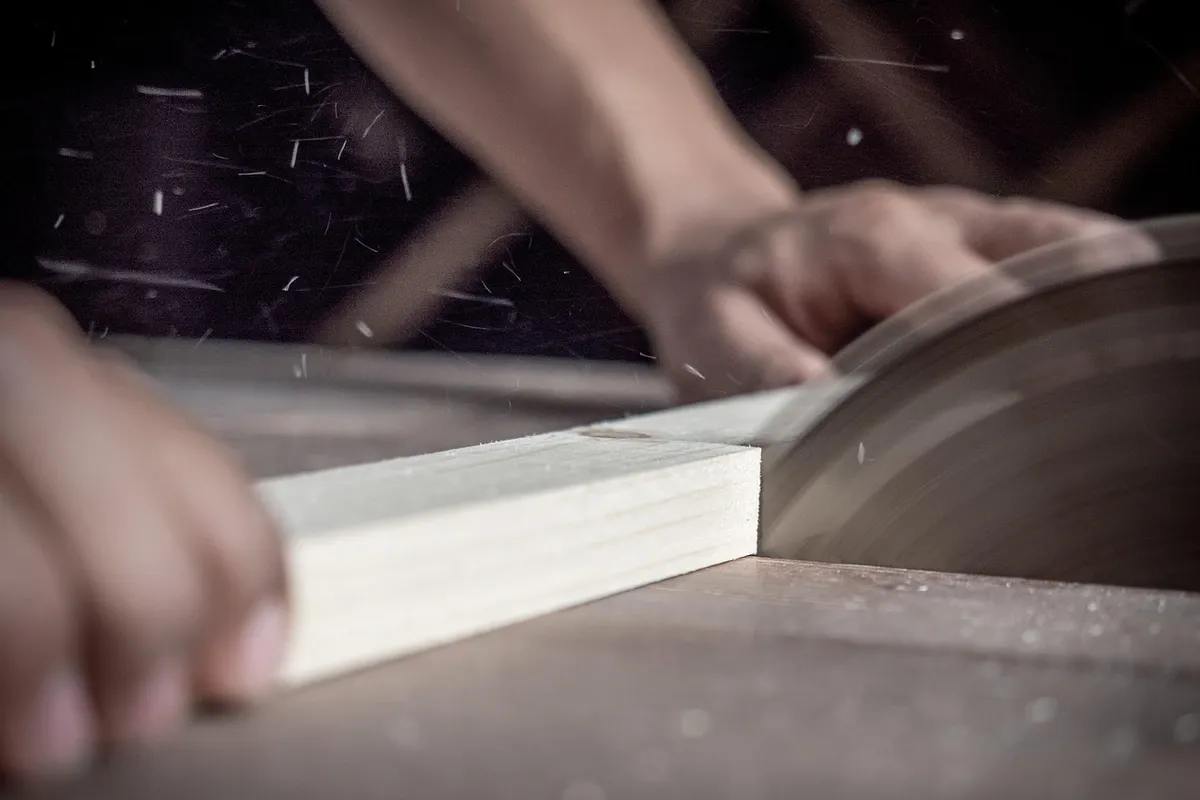
Short answer: the way to cut small pieces of wood safely is to avoid holding a small piece near a blade at all. Cut the small part off the end of a longer board, so your hands stay on the long end. When a piece is already short, clamp it or hold it in a jig and switch to a hand saw, which moves only when you move it. Keep power saws, especially circular saws, for work big enough to clamp with your hands well away from the cut. If you cannot clamp it and keep your fingers clear, stop and change the method.
Small parts are where fingers get hurt, and not because the cut is hard. It is because the size of the piece pulls your hand toward the blade. This guide covers how to plan around that, which tool fits which size of piece, and the stop conditions that tell you to switch.
Why small pieces are riskier than big ones
A big board gives you somewhere to put your hands. A small block does not. OSHA's woodworking eTool page on point of operation hazards (read on September 27, 2026) says employees can be injured if their hands get too close to the blade, "particularly when working on small pieces of stock," and that accidents can occur when stock unexpectedly moves or when a worker's hand slips. Its fix is push sticks or other hand tools so hands stay away from the point of operation.
That guidance is written for shop machines, but the two failure modes are exactly the same at a kitchen table:
- The piece moves. A short block has little weight and little contact with the surface. The saw grabs it, spins it or lifts it.
- Your hand slips. You are pressing hard on something small, so when it moves, your hand keeps going toward the blade.
Everything below is about removing one or both of those.
Rule one: cut small parts from long boards
The single most useful habit is also the least exciting. Do not cut a board into short blanks and then cut the blanks into small parts. Do it the other way round.
- Mark every small part on the end of a board that is long enough to hold safely.
- Make all the shaping cuts (angles, notches, the first edges) while the part is still attached.
- Make the separating cut last, with your hand and clamp on the long side.
If you need a triangle, cut the first angle on the board's end, then the second angle, which frees the triangle. If you need ten identical blocks, cut them one at a time off the end of a strip, re-clamping each time, rather than cutting the strip in half and working with shorter and shorter stock.
The cost is some waste at the end of the board. That offcut is the price of your fingers staying on the safe side of the cut. When the remaining board gets too short to clamp comfortably, stop using it for small parts and start a fresh piece.
How to cut small pieces of wood safely by tool
Different tools fail in different ways on small stock. This table sorts the common no-shop options by how forgiving they are.
| Tool | Good for small pieces? | Main risk on small stock | Condition for using it |
|---|---|---|---|
| Hand saw (pull saw or backsaw) | Yes, the default choice | Hand slipping near the teeth | Piece in a bench hook, miter box or clamp |
| Coping saw | Yes, for very small or curved parts | Blade snapping, piece spinning | Piece clamped, cut close to the clamp |
| Jigsaw | Only if clamped firmly | Piece vibrating or lifting with the blade | Clamp on both sides, hands on the saw only |
| Circular saw | Generally no | Piece caught by the blade, kickback | Only cut small parts off a long, clamped board |
| Utility knife | Only very thin stock | Knife slipping toward the holding hand | Straightedge clamped down, cut away from your body |
Hand saws: the right tool for most small cuts
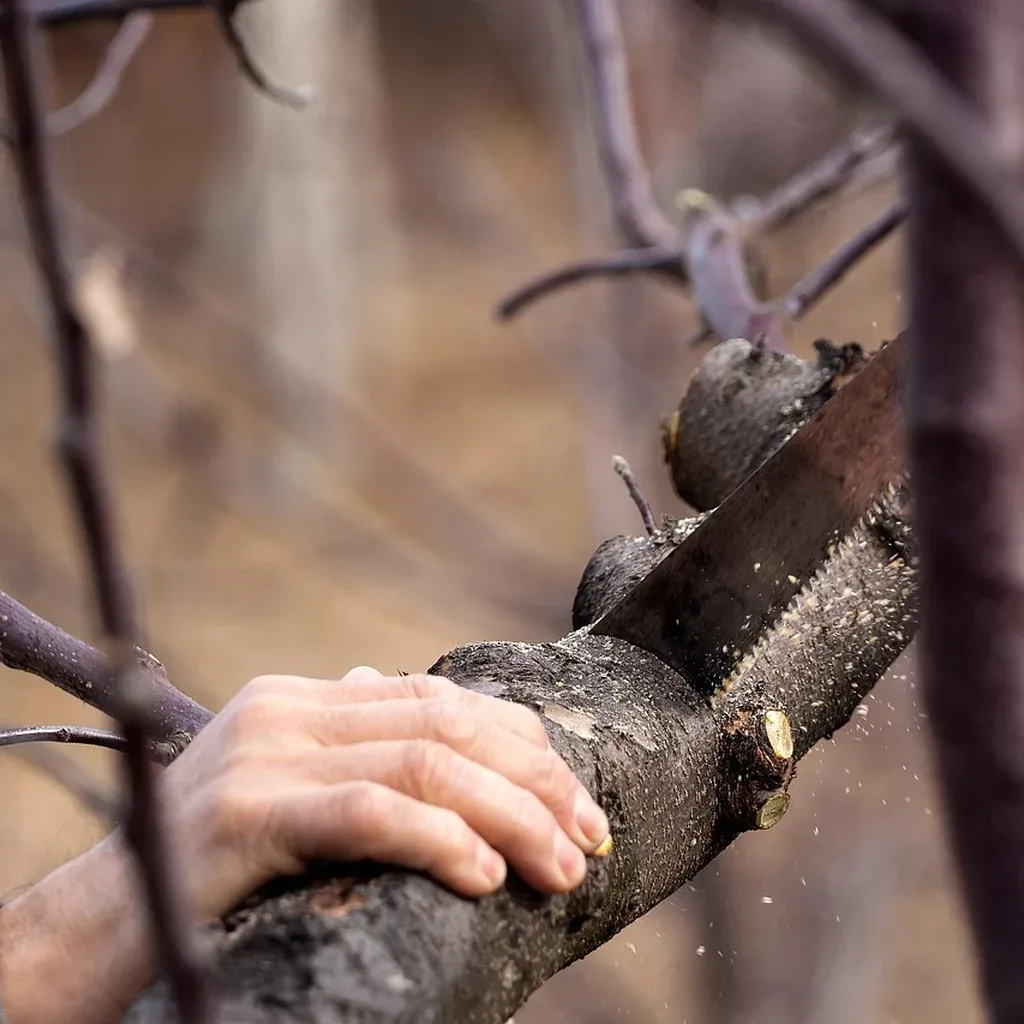
A hand saw is slower, and that is its advantage here. It stops the instant you stop. It cannot throw the piece. The risk is your holding hand, so the answer is to hold the piece with something other than your fingers near the cut line.
A bench hook is the classic solution. It is a flat board with one strip fixed across the underside of one end (to hook over the edge of your table) and another across the top of the other end (to push the work against). You press the piece against the top strip and saw beside it. Your hand is on the far side of the piece, and the hook stops everything sliding. A miter box does the same job for square and 45 degree cuts.
A Japanese-style pull saw cuts on the pull stroke, which many beginners find easier to control on small parts because the blade is pulled straight rather than pushed. Our guide to choosing a Japanese pull saw covers what to look for.
Coping saws for tiny and curved parts
For very small pieces or tight curves, clamp the piece so the cut line is close to the clamp jaw, and saw with the frame. The work vibrates less when the cut is near the clamp. Blades are thin and snap, so wear eye protection.
Jigsaws: only with the piece clamped
A jigsaw's blade moves up and down, and on a light piece it tends to lift and chatter the work with it. Never hold a small piece with your hand while cutting it with a jigsaw. Clamp it to the bench on the waste side and the keep side, keep both hands on the saw where your manual shows them, and wait for the blade to stop fully before lifting the saw away. If the piece is too small to clamp with the blade path clear of the clamp, it is too small for the jigsaw.
Circular saws: cut the small part off, never cut the small part
A circular saw should not be used on a piece you would have to hold near the blade. If you need small parts and only own a circular saw, use it for the long rip or crosscut that produces a strip, then finish with a hand saw. If you are deciding what to use in place of a table saw altogether, our article on compact table saw alternatives for small spaces covers the trade-offs.
Utility knives for thin stock only
For thin craft wood and veneer, scoring with a sharp utility knife along a clamped straightedge, then snapping, avoids a saw altogether. Cut several light passes rather than one hard one, keep your holding hand behind the straightedge, and cut away from your body.
Clamping small pieces when you have no vise
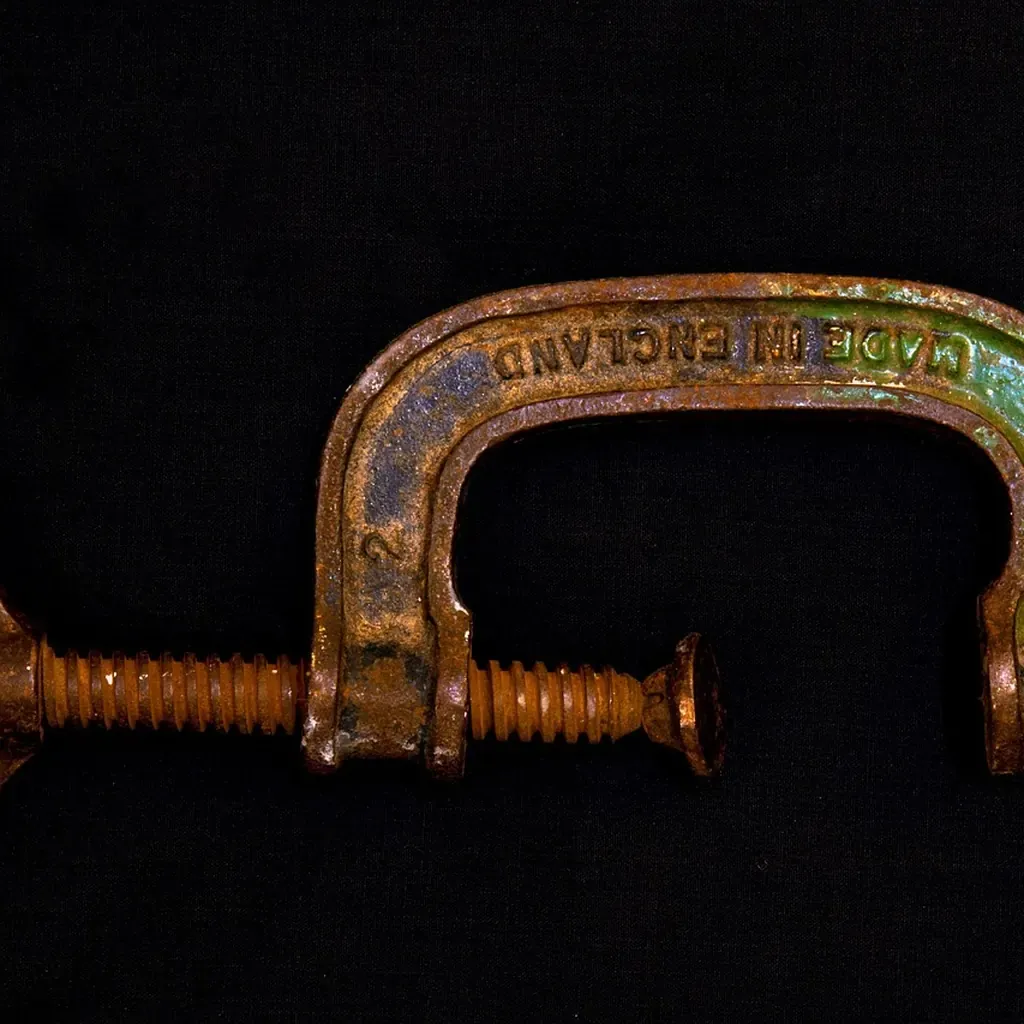
Clamping is what turns a risky small cut into a controlled one. The University of Chicago's environmental health and safety guidance on hand and portable power tools (read on September 27, 2026) says to secure work with clamps or a vise, freeing both hands to operate the tool, and that safety guards shall never be removed when a tool is being used.
Without a vise, a few setups work at a table:
- Two clamps and a scrap. Clamp a scrap board to the table, then clamp your small piece to the scrap with the cut line hanging just past the edge.
- Bridge clamping. Lay a stick across the small piece and a spacer of the same thickness, then clamp the stick down. The clamp pressure lands on the piece without the clamp body sitting in the saw path.
- Double-sided tape to a larger board. For very small parts, tape the piece to a bigger carrier board and clamp the carrier. Your hands hold the carrier, not the part.
Our guide to which clamps a beginner actually needs covers the types that fit these setups.
A useful distance rule, borrowed from shop safety
Canada's workplace safety agency, CCOHS, gives a clear guideline in its push stick guidance (read on September 27, 2026): always use a push stick for pieces less than 30 cm (1 ft) in length or for the last 30 cm of a longer cut. That is written for table saws and other shop machines, but it is a sensible way to think at home too. If the piece is under about a foot long, assume your hand does not belong within reach of a powered blade, and hold the work with a clamp, jig or carrier board instead.
Stop conditions: when to change the method
Stop and change tools or setup if any of these are true:
- You would need to hold the piece with your fingers within a hand's width of the blade.
- The piece rocks, spins or lifts when you start the cut.
- The clamp has to sit in the path of the saw.
- You are using a power saw and cannot keep both hands on it.
- The offcut will be trapped between the blade and a fence, stop or clamp.
None of those is a signal to try harder. They mean the piece is too small for the current method.
Protection, noise and dust for small cuts
Wear safety glasses for every cut, including hand saw and knife work, because small parts and thin blades both break unexpectedly. Wear hearing protection when you use a jigsaw or circular saw. Dust from small cuts is minor with a hand saw, heavier with a jigsaw, so use a dust mask with power tools indoors. A hand saw also keeps noise low, which matters if you are working around apartment quiet hours.
Small pieces make good first projects precisely because they suit hand tools. Our one-evening wood coaster project is a good place to practice the cut-long-first habit.
FAQ
What is the safest saw for cutting small pieces of wood?
A hand saw, used with a bench hook, miter box or clamp. It only moves when you move it and cannot throw the piece. A coping saw suits very small or curved parts.
Can I hold a small piece of wood with my hand while cutting?
With a hand saw and a bench hook, your hand pushes the piece against a stop well away from the teeth. With any power saw, do not hold a small piece by hand; clamp it or fix it to a larger carrier board.
How do you cut small pieces of wood with a jigsaw?
Only when the piece is firmly clamped with the blade path clear of the clamp. If it is too small to clamp that way, use a hand saw or coping saw instead.
How do you cut lots of identical small blocks without a table saw?
Rip a long strip first, then cut blocks off the end one at a time, re-clamping the strip for each cut, and stop when the strip gets too short to hold safely.
What is a bench hook?
A flat board with a strip fixed under one end to hook over your table edge and a strip on top of the other end to push the work against. It holds small pieces steady for hand sawing.