Compact Table Saw Alternatives for Small Spaces
What a table saw actually does, broken into four jobs, and which small-space tool covers each one. Rip, crosscut, sheet goods and repeat cuts.

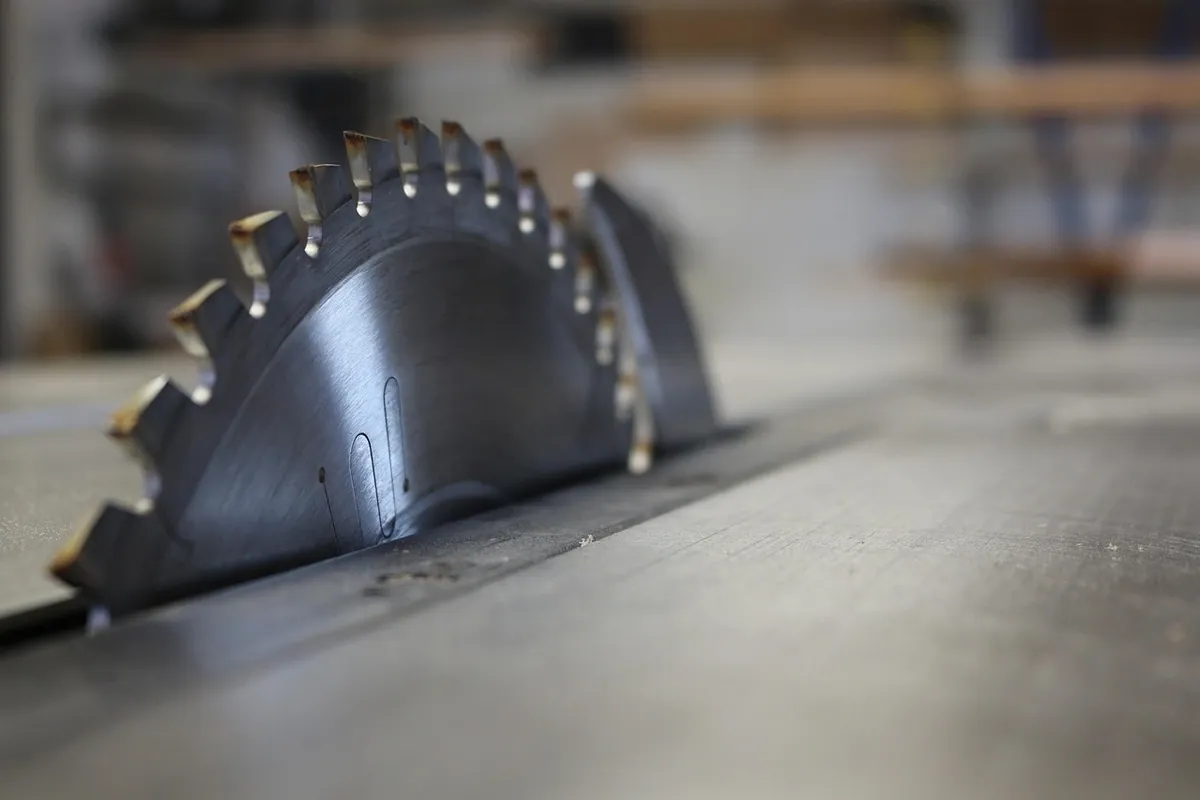
The best compact table saw alternative for a small space is not one tool. A table saw does four separate jobs, and in a small home each job goes to a different tool: a track saw or a guided circular saw for sheet goods, a guided circular saw or hand saw for crosscuts, a lumber yard's panel saw or a thinner stock choice for ripping, and a simple jig for repeat cuts. Work out which of the four jobs your projects actually need, and buy only for those.
This page names no winning model and quotes no price. It gives you the job-by-job reasoning, so you can judge whatever tool you find.
Why This Page Has No Picks
Nobody here has tested these tools, so nothing below is a review. Brands appear only where we are citing a specification the maker published itself. What does not change when a model is discontinued is the reasoning: what a table saw does, which of those jobs you need, and what each substitute costs you in accuracy, space and noise.
What a Table Saw Actually Does for You
Most "table saw alternative" lists compare tools against each other. It is more useful to compare them against the jobs, because a table saw is really four capabilities in one cabinet.
- Ripping: cutting a board along its length to a set width, repeatably, against a fence.
- Crosscutting: cutting a board square across its width.
- Breaking down sheet goods: cutting plywood or MDF panels into parts.
- Repeat cuts: making six parts the same size without measuring six times.
A compact table saw does all four in one footprint, and that is its real appeal. It also brings the table saw's hazards and noise into a room where you live. The question for a small space is whether you need all four jobs, or only one or two.
The Four Jobs, and What Covers Each in a Small Space
| Job | Small-space substitute | What you give up | What you gain |
|---|---|---|---|
| Sheet goods | Track saw, or circular saw on a straightedge | Speed on many narrow strips | Flat storage, the panel stays still |
| Crosscuts | Guided circular saw, or a hand saw with a square | Speed, some repeatability | Quiet option with a hand saw |
| Ripping | Buy stock at the width you need, or have the yard cut it | Freedom to rip any width at home | No long, fast rip in your living room |
| Repeat cuts | A stop block or a marked jig | Setup time per project | Accuracy without a fence |
Sheet Goods: The Job Where a Table Saw Is Weakest Anyway
A full sheet of plywood on a compact table saw is awkward even in a garage, because you are pushing a large, heavy panel past a small table. A guided saw reverses that: the panel stays still on a support and the saw moves across it.
That is the reason track saws come up so often in small-shop discussions. As one published example, DeWalt lists its DCS520ST1 track saw kit with a 6-1/2 inch blade, a cutting depth of 2-1/8 inches at 90 degrees and 1-5/8 inches at 45 degrees, a 59 inch track, and a depth scale that accounts for the track's thickness (DeWalt product page, read September 11, 2026). Those figures are more than enough for the 3/4 inch sheet stock most furniture uses. They also show the trade: the rail has to live somewhere, and a long rail is a long object.
A circular saw clamped to a straightedge does the same job with more setup and more room for error. If you are choosing between those two first, the circular saw vs table saw comparison covers why the circular saw is usually the first purchase.
Crosscuts: The Job You Can Do Quietly

Crosscuts on narrow boards are the easiest job to move away from power entirely. A good hand saw, a combination square and a knife line will cut a board square to within what most shelves and boxes need. It is slower, and it is the only option on this page that a neighbor will not hear.
For wider panels, a guided circular saw or track saw covers crosscuts too. Protect the surface underneath: cutting on a kitchen table or floor without a sacrificial layer is a common way to lose a deposit, and cutting wood without damaging your table covers the support setups that work.
Ripping: The Job to Avoid Doing at Home
Long rips are where a table saw is most useful and where a small space makes the job hardest. A rip runs the full length of a board, so a 6 foot board needs about 6 feet of clear space in front of the blade and 6 feet behind it. That is more room than many living rooms have.
The honest alternatives:
- Buy stock at the width you need. Many projects can be designed around standard board widths, which removes most rips entirely.
- Have the lumber yard or home center cut it. Many offer panel cutting on their own saws. Ask before assuming, since policies and accuracy vary.
- Use a guided circular saw or track saw for occasional rips, accepting that narrow strips are harder to support than on a table.
Space is the real constraint here, and how much space you need for woodworking works through the clearances with real measurements.
Repeat Cuts: A Jig Instead of a Fence
A fence makes the tenth cut match the first. Without one, you get the same result with a stop block clamped at a set distance, or a plywood template you mark from. It adds a few minutes of setup per project and it costs almost nothing. Work-holding matters more than the saw here, and woodworking without a workbench covers clamping when you have no bench to clamp to.
What About a Band Saw or a Jigsaw?
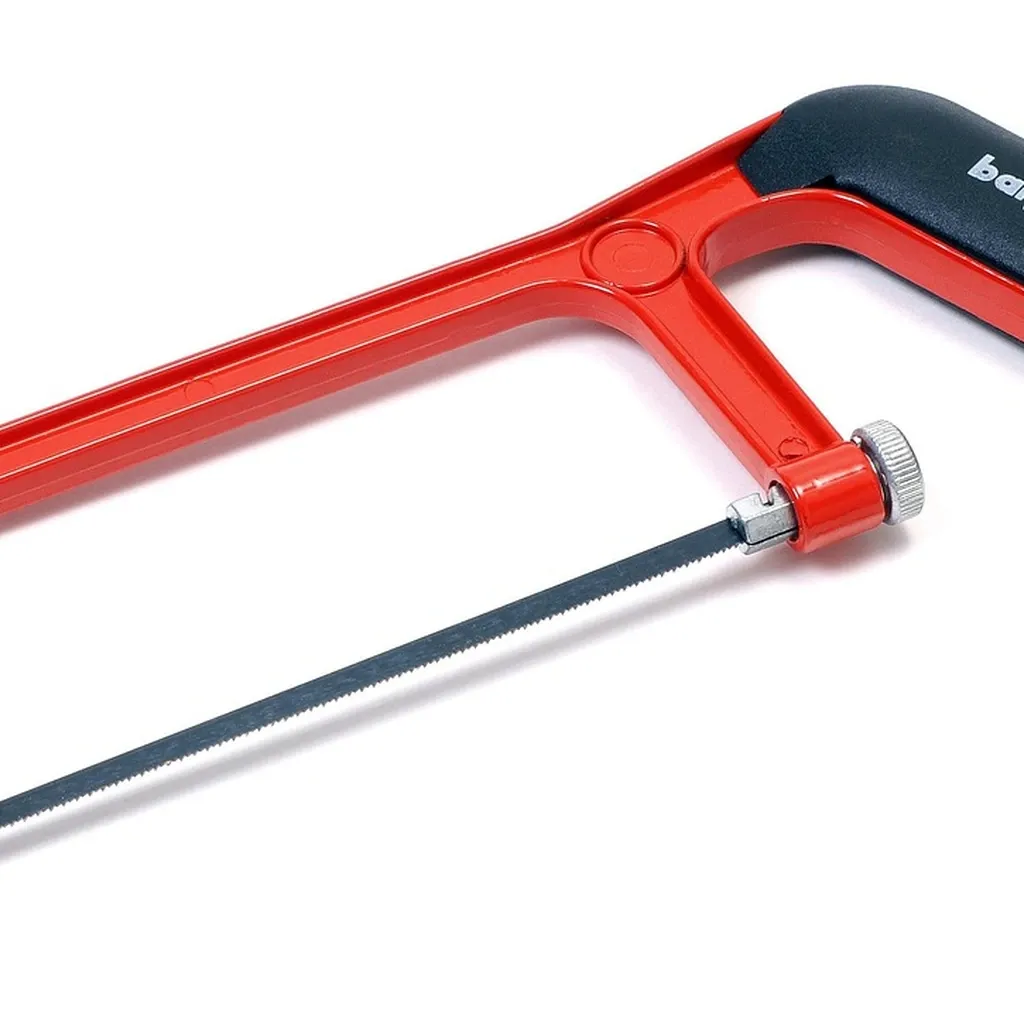
Both appear on most alternative lists, and both earn a place in some small shops. Neither replaces the table saw's main job.
- A jigsaw cuts curves and rough shapes well. It does not cut a long, straight, square edge reliably, because its blade flexes. Treat it as a curve tool, not a straight-line tool.
- A benchtop band saw can rip narrow stock and resaw thin boards, and it is quieter than a spinning circular blade. It still takes floor or bench space, and its fence and table are small. It suits someone who works mostly in small parts.
Neither is wrong. They answer different jobs from the four above.
What It Costs You in Accuracy
This is the part store blogs tend to leave out. A table saw with a well-set fence is repeatable once it is set up. Every substitute above moves some of that accuracy from the machine to you.
- A track saw keeps most of it on long straight cuts, because the rail is the reference.
- A circular saw on a straightedge depends on how well you clamp the guide and how steadily you push.
- A hand saw depends on your marking and your practice, and it improves with both.
For boxes, shelves and small furniture, those tolerances are normally fine. For tight joinery that has to close with no gap, you will spend more time on test pieces.
Noise and Safety Do Not Disappear
Every saw here is loud, and a blade is a blade. NIOSH sets its recommended exposure limit for occupational noise at 85 dBA averaged over an eight hour workday (CDC/NIOSH noise page, read September 11, 2026). A circular or track saw cutting wood is well above that level while it runs, and the tool-by-tool figures are in how loud woodworking tools really are. Wear hearing protection and eye protection from the first cut.
Before you use any saw, read the maker's manual in full. The safety points that apply to every one of these tools:
- Unplug the tool or remove the battery before changing a blade or adjusting depth.
- Clamp the work. Never hold a panel with one hand and cut with the other.
- Support both sides of the cut so the offcut cannot drop and pinch the blade, which is a cause of kickback.
- Leave every guard in place and working. Never wedge, tape or remove a guard to make a cut easier. If a cut seems to need that, the setup is wrong.
- Set the blade depth only slightly deeper than the material, as the manual directs.
If a cut makes you uneasy, that is information. Have the yard make it instead.
How to Choose a Compact Table Saw Alternative for Your Space
Answer three questions, in order:
- Which of the four jobs do your next three projects need? Write them down. Most beginner projects need crosscuts and some sheet goods, and few need many rips.
- Where will the tool and any rail be stored? Measure the cupboard, not the room.
- What noise hours apply where you live? A hand saw has no limit. A power saw has whatever the lease, the building and the neighbors allow.
If the answer to question one is "sheet goods, often," a guided saw is the strongest single substitute. If it is "mostly small parts," a hand saw and a jig may be all you need for a long time.
The Short Version
- A table saw is four jobs: ripping, crosscutting, sheet goods and repeat cuts.
- Sheet goods go to a guided saw, where the panel stays still and the saw moves.
- Crosscuts can go to a hand saw, the one silent option.
- Rips are the job to design around, or to have the yard cut.
- Repeat cuts need a stop block or jig, not a fence.
- Accuracy moves from the machine to you with every substitute.
- Noise and blade safety stay the same. Read the manual and keep guards in place.
Frequently Asked Questions
Can a track saw replace a table saw? For breaking down sheet goods and making long straight cuts, it covers most of the job, and many small-shop woodworkers use it that way. It is weaker on narrow, repeated rips and on small parts, where a table saw's fence is hard to match.
Is a compact or benchtop table saw a good idea in an apartment? It depends on space, noise rules and your comfort with a table saw's hazards. It still needs clear room in front of and behind the blade for rips, and it is loud. Many small-space woodworkers find that a guided saw plus yard cutting covers what they need without one.
What is the quietest way to cut wood in a small space? Hand saws. A crosscut or pull saw with a knife line is slower than any power tool, and it is the only option that does not produce saw noise that carries through walls.
Do I need a table saw to start woodworking? No. Many beginner projects can be built from standard board widths with crosscuts only. Buying for the jobs your projects need, rather than for a full shop, is the cheaper and smaller path.