How to Cut Wood Without Damaging Your Table
How to cut wood without damaging your table: a sacrificial surface, padded clamping, blade-depth control, and the cuts a kitchen table should never take.


A kitchen table can be protected from cutting damage with a sacrificial layer, a scrap board or a cheap sheet of plywood or hardboard, placed under the workpiece, clamps padded with scrap wood or cloth so they don't mar the finish, and careful blade-depth control so a saw cuts only through the workpiece and the sacrificial layer, never into the table itself. Some tasks, especially heavy ripping or large sheet goods, shouldn't be attempted on a table at all, covered honestly below.
Why the kitchen table is tempting, and where it actually goes wrong
For a lot of apartment and rental woodworkers, the kitchen table is the only genuinely flat, sturdy surface available, and that makes it an obvious default, part of the wider question the roadmap for starting without a garage covers about where to physically work at all. The fear that comes with it is real, not paranoid: this is furniture that's shared, often rented or borrowed, and sometimes worth more than the project being built on it. It's the actual fear this article is written to answer, not a generic "protect your surface" tip. That fear of damaging shared or rented furniture is exactly the framing the renter-focused project guide is built around across this site's other projects.
The damage that actually happens tends to be one of four things: a surface scratch from a shifting board or a dragged clamp, a dent from concentrated pressure under a clamp jaw, an inaccurate or genuinely dangerous cut caused by the table wobbling mid-cut, and a saw blade cutting all the way through the workpiece into the tabletop underneath. Every technique below exists to prevent one of these specifically, not to offer vague caution.
Building a sacrificial surface
The core technique here is simple: put something disposable between the workpiece and the table, sized to the actual job, and let the blade cut into that instead of the tabletop. A scrap board, an offcut of plywood, or a cheap sheet of hardboard all work, as long as it's flat, doesn't rock under the workpiece, and covers the full area a cut could possibly reach.
Size the sacrificial layer generously rather than exactly to the workpiece. A blade that wanders even slightly past the edge of a too-small sacrificial board is cutting straight into the table, which defeats the entire point of using one. For a longer cut, extend the sacrificial layer the full length of the pass, not just under the section being cut at any one moment.
Clamping without marring the table
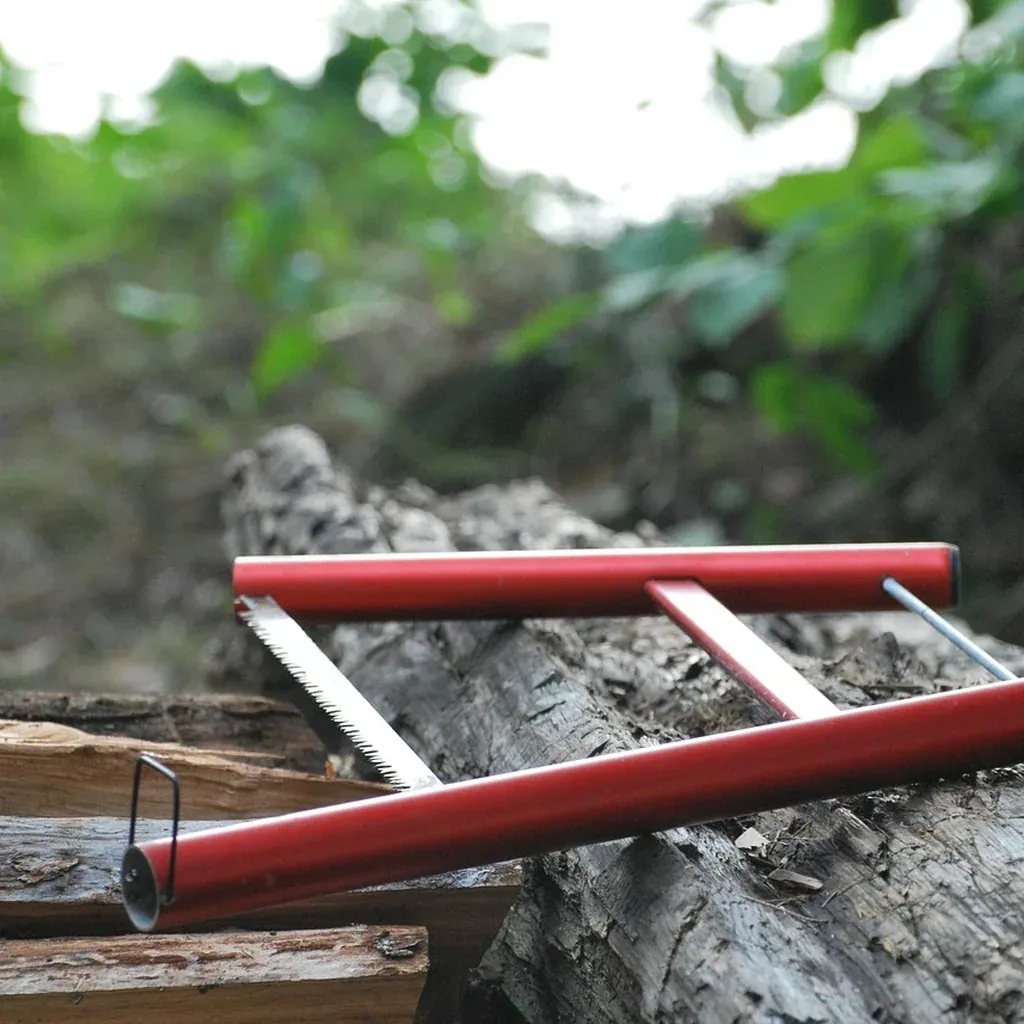
Clamping a workpiece to the table itself, or to a sacrificial board resting on it, is often necessary for a stable, accurate cut, but a bare clamp jaw against a finished surface is one of the more common ways a kitchen table gets marked. Pad every clamp jaw that touches the table or the workpiece's visible face with scrap wood or folded cloth; it costs a few seconds and removes most of the risk.
Where you clamp matters as much as how. A table's edge, where the apron or legs provide real support underneath, holds a clamp's pressure far better than the unsupported center of the tabletop, which can flex or even crack under enough force. Working near a supported edge whenever the project allows it is both safer for the table and more stable for the cut. This article covers clamp padding and placement specifically for protecting a table's surface; for the fuller hierarchy of clamping and work-holding options when you don't have a bench at all, the guide to woodworking without a workbench covers that in depth and is worth reading before your first cut on any unfamiliar surface.
Cutting technique that protects the table
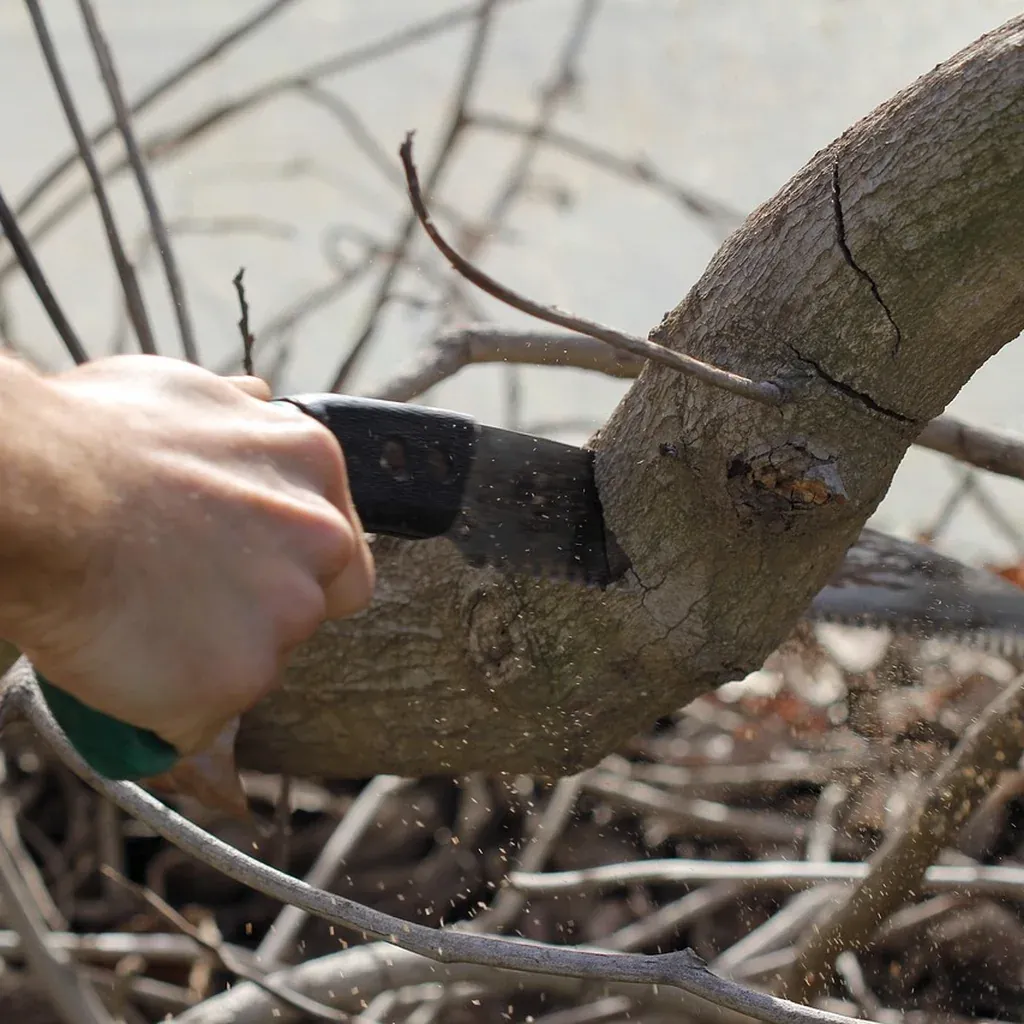
[SAFETY] Two things protect the table during the actual cut: blade-depth control and setup stability, and neither is optional.
Set a saw's cutting depth to roughly match the workpiece thickness plus a small margin, not the saw's maximum depth. This is general, widely documented saw-safety practice, not specific to this article, and it's the single biggest factor in whether a blade stops at the sacrificial layer or keeps going into whatever's underneath. A hand saw naturally self-limits in a way a power saw doesn't, which is one more reason the hand-tool path is the safer default on an unfamiliar surface; where a circular saw or jigsaw is used instead, its added risk on a table that isn't fully stable is real and shouldn't be glossed over, since a spinning blade meeting an unexpected shift in the workpiece is a genuinely dangerous moment, not just a cosmetic risk to the table.
If the setup starts to shift, rock, or feel unstable mid-cut, stop. Don't push through a cut on a surface that's moving under you; reclamp, slow down, or move the work to a more stable location before continuing. A wobbling table that produces an inaccurate cut is an annoyance. A wobbling table under a moving blade is a real injury risk, and the fix in both cases is the same: stop and fix the setup before the cut, not during it.
What NOT to try on a kitchen table
This is a real boundary, not a token disclaimer. Some tasks genuinely don't belong on a kitchen table, no matter how well it's protected.
- Heavy ripping cuts. A long rip cut needs sustained, even pressure and a stable path the full length of the board; a table isn't built for that kind of repeated lateral force and can flex or shift partway through.
- Large sheet goods handled alone. A full sheet of plywood is heavy, awkward, and typically bigger than the table itself; supporting it, cutting it accurately, and controlling the offcut all at once on a kitchen table is a stability problem that padding and clamps don't solve.
- Anything needing full-body stability the table can't provide. Tasks that require you to lean into the cut, brace against the workpiece with your body weight, or apply force from multiple directions at once ask more of the table's structure than it's built to give, and that instability becomes a safety issue, not just an accuracy one.
If a project needs any of these, the table isn't the wrong surface out of caution, it's the wrong surface, period, and that's genuinely useful information before you start rather than after something goes wrong. The apartment workshop setup guide covers choosing a workspace more broadly, including a kitchen table as one option among several, if the table keeps hitting this boundary for the projects you actually want to build.
When the table is simply the wrong surface, and what to use instead
Recognizing this early saves both the table and the project. When a job is outside what a kitchen table can safely support, the guide to cheap workbench alternatives covers what to use instead: a flat-pack portable surface, sawhorses with a scrap or door-blank top, or the floor with its own sacrificial layer, each with an honest look at what it gives up compared to a real bench. That article picks up exactly where this one draws its boundary.
What could go wrong, and the safer fix
A scratch on the finish. Often repairable with a matching touch-up product or, for a deeper scratch, a light refinish of that section; whether it's fully invisible afterward depends on the finish and the depth of the mark, and that's worth being honest about rather than promising a perfect fix.
A dent from clamp pressure. Shallow dents in solid wood can sometimes be raised with steam and a damp cloth under low heat, a technique that works on the wood fibers themselves, but this isn't guaranteed to fully restore a deep dent, and it doesn't apply to veneered or laminate surfaces at all.
A mark or cut from a blade going too deep. This is the one failure mode on this list that's genuinely difficult to fully repair. A cut line into a finished tabletop usually means a visible repair or refinishing that section at best; this is exactly why blade-depth control above is treated as the non-negotiable step, not an optional refinement.
None of these are guaranteed outcomes if the sacrificial layer, padded clamps, and depth control above are actually used. They're listed here so the real stakes are clear before the first cut, not discovered after.
FAQ
What's the single most important thing to protect a kitchen table while cutting? A sacrificial layer under the workpiece, sized generously and checked for flatness, combined with a saw depth set to just past the workpiece's thickness. Together they stop the two most damaging failure modes: a blade cutting through, and pressure concentrating directly on the tabletop.
Will clamps definitely damage my table? Not if the jaws are padded with scrap wood or cloth and placed near a supported edge rather than the unsupported center. Unpadded clamps on a bare finish are the actual risk, not clamping itself.
Can I use a circular saw on a kitchen table? It's possible with a stable setup, but the added risk is real: a shifting workpiece under a spinning blade is more dangerous than the same shift under a hand saw. If the table isn't rock-solid, a hand saw is the safer default until it is.
What should I never try cutting on a kitchen table? Heavy rip cuts, large sheet goods handled alone, and anything that needs full-body stability to control safely. These are tasks the table's structure genuinely can't support, not just things that risk a scratch.
How do I know when to stop using the table for a project? When the required cut falls into the "what not to try" list above, or when the table itself feels unstable during setup, before the saw even touches the wood. At that point, a proper alternative surface is worth setting up rather than pushing forward on a table that isn't up to the job.