Corded vs Cordless Tools in a Small Apartment
The answer is per tool, not per shop. Sustained load, storage volume, charging in your home, and the noise figure that is already in the manual.

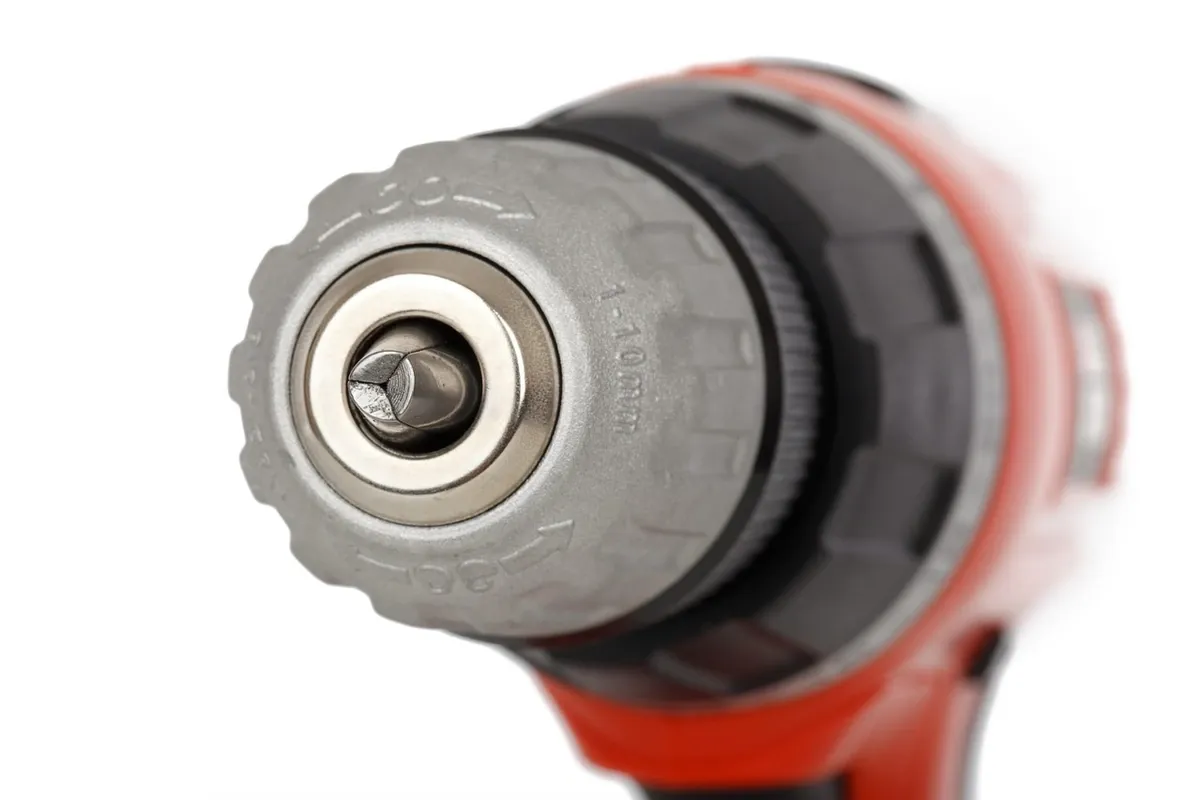
There is no single answer, and anyone giving you one is answering a different question. The choice is made per tool, and it turns on how long the tool runs under load. Tools used in short bursts and moved constantly, such as a drill or a driver, suit a battery. Tools that run continuously against resistance, such as a sander, a router or a vacuum, suit a cord. In a flat, though, the deciding factor is usually none of that: it is storage volume, where a battery charges, and how many hours a week you are allowed to make the noise.
This page ranks nothing and quotes no price. It sets out what actually differs between the two, including a specification most beginners never realize is published.
Why This Page Has No Picks
Nobody here has used the tools you are about to compare, so nothing below is a review. No brand is crowned, no model is set against another and no price appears. Brands and standards are named only where we are citing a document they published themselves.
What survives is the reasoning. Cell chemistry will change, platforms will come and go, and the question of whether a tool can run for twenty minutes without stopping will still be decided the same way.
The Real Difference Is Sustained Load, Not Power
The corded-versus-cordless argument is almost always framed as power, and that framing is thirty years old.
The honest version is about duty cycle. A cordless tool draws from a pack with a finite amount of energy in it, and both the pack and the tool heat up as they work. A corded tool draws continuously from the wall and its cooling is designed around running continuously.
So the question to ask about any given tool is: how long does it spend actually cutting, per hour of work?
Short bursts, constant repositioning. A drill spends most of its life being carried, aimed and set down. Seconds of load, minutes of idle. This is exactly what a battery is good at, and it is why the cordless drill became the default first power tool. The specifications that matter for that tool are covered in the cordless drill buying guide.
Long continuous runs against resistance. A random orbital sander on a tabletop runs for many minutes without stopping. A router removes material continuously. A shop vacuum runs the entire session. On these, a battery is being asked to do the thing batteries are worst at, and you will either buy several packs or spend the session waiting on a charger.
In between. A circular saw or a jigsaw cuts for seconds at a time but under heavy load. Either technology works, and the decision usually comes down to where you are cutting.
Noise: The Number Is Already in the Manual
This is the part that nobody tells beginners, and in a shared building it is the most useful thing on this page.
Power tools sold in Europe carry declared noise emission values, measured to a standard test, printed in the manual. As a published example, Bosch's manual for one of its table saws states noise values determined according to EN 62841-3-1, with an A-weighted sound pressure level of 111 dB(A) and a sound power level of 124 dB(A), an uncertainty of K = 3 dB, and the instruction "Wear hearing protection!" (Bosch Professional, GTS 10 J online manual, read September 8, 2026).
Three things follow.
You can compare tools on noise before you buy, by reading the declared values in the manuals, which manufacturers publish online. That is a far better basis than a forum opinion. Note that the values are declared under a standardized test, so treat them as a comparison basis rather than a prediction of what your living room will measure.
Sound pressure and sound power are different figures and are not interchangeable. Sound power describes the total acoustic energy the machine emits; sound pressure is what is measured at a defined position near the operator. A page that quotes one as the other is not reading the manual.
The uncertainty figure is part of the specification. A K of 3 dB is not a rounding error; on a logarithmic scale it is meaningful, which is why comparing two tools whose declared values differ by 1 dB is comparing nothing.
For context on why any of this matters, NIOSH sets a recommended exposure limit of 85 A-weighted decibels averaged over an eight hour workday, and recommends halving the permitted exposure duration for every 3 dBA above that (NIOSH, occupational noise exposure guidance, read September 8, 2026). Those are occupational figures rather than a rule for your flat, but the direction is unambiguous: hearing loss is cumulative, and the tools above are well above that level.
None of this changes much between corded and cordless, which is the honest finding. A cordless circular saw is not meaningfully quieter than a corded one, because the noise is the blade in the wood, not the motor. Where cordless does help is that a battery tool can be carried outdoors or to a landing, and the whole neighbor problem is covered properly in woodworking as a hobby with roommates and neighbors and in how loud woodworking tools actually are.
Batteries Live in Your Home, Which Is a Real Consideration
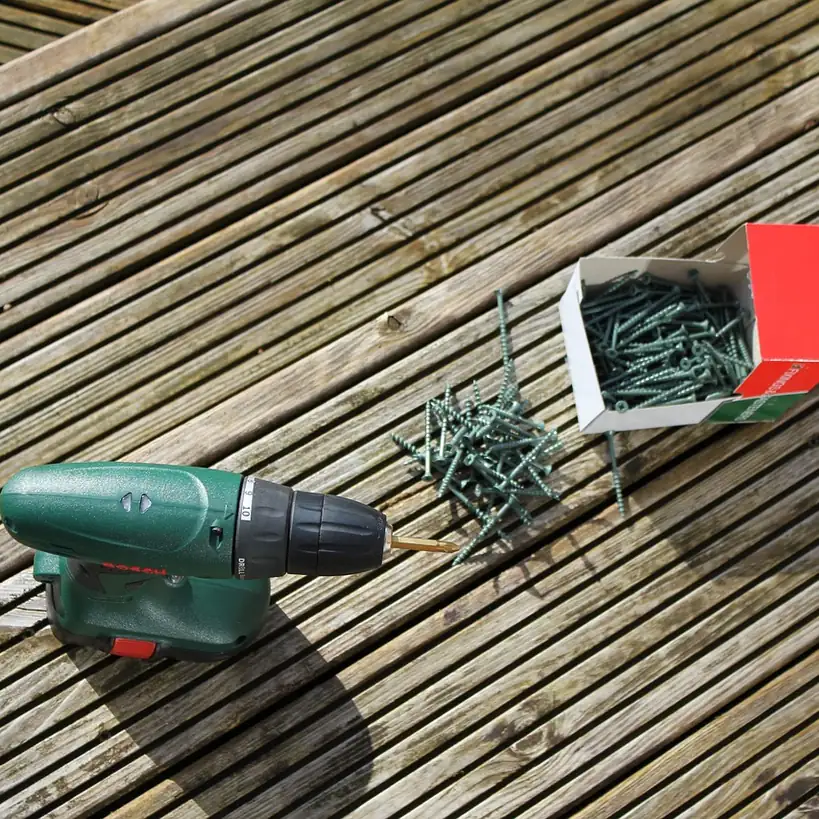
In a garage, a charger sits on a shelf and nobody thinks about it. In a one-bedroom flat it sits on your kitchen counter or beside your bed, and that deserves a moment's thought rather than a shrug.
Lithium-ion tool batteries and their chargers are covered by published safety standards. UL Solutions names UL 2595 for battery-powered appliances, IEC/UL 62841-1 for motor-operated hand-held tools, IEC/UL 60335-2-29 for battery chargers, IEC 63370 for lithium-ion battery and charging system safety, and UN 38.3 for transport testing, and describes the hazards these address as including thermal runaway and electrical safety during charging (UL Solutions, power tool battery testing and certification, read September 8, 2026).
What that means in practice, and none of it is exotic:
- Use the charger the manufacturer supplied or specifies, not a generic one, and use packs from the tool's own platform.
- Follow the manual on charging temperature. Manufacturers publish a permitted ambient temperature range for charging, and it is narrower than people assume. A battery brought in from a cold balcony should come up to room temperature before it goes on the charger.
- Charge on a hard, clear, non-combustible surface, not on a sofa, a bed, or a pile of sawdust and rags.
- Do not charge unattended overnight if you can avoid it, and do not leave a pack on a charger indefinitely as a storage method.
- Retire a pack that is swollen, damaged, or has been dropped hard. Do not open it, do not try to revive it, and take it to a battery recycling point rather than putting it in household waste.
A corded tool has none of this. It also has none of the convenience. Both are true and it is fair to weigh them.
The Cord Problem, Which Is Worse in a Small Room
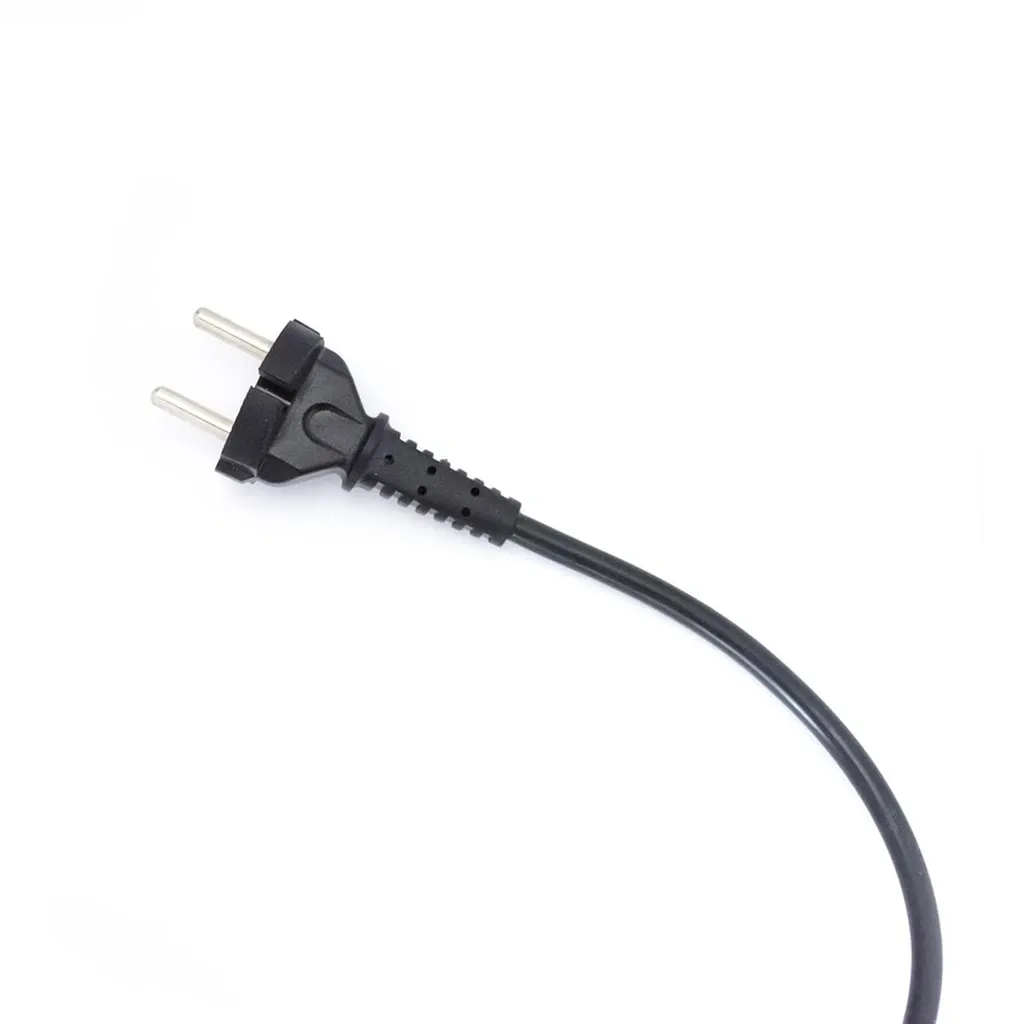
The argument for cordless is usually stated as convenience. In a flat it is closer to a safety argument.
A cord in a small room is a trip hazard by geometry. There is no route from the outlet to the work that does not cross where you stand, and you are standing while operating something with a blade in it.
Extension cords are the specific hazard, not the tool. Run them fully unwound, not coiled, because a coiled cord under load holds its own heat. Never run one under a rug or a door. Match the cord to the tool rather than using the thinnest one to hand: a thin, long cord causes a voltage drop that makes a motor run hot, and the tool is what fails, not the cord.
Know what circuit you are on. In a rented flat you often do not, and a heavy tool plus a heater plus a kettle on one circuit is how you meet your consumer unit. If a breaker trips repeatedly, stop and treat it as information rather than an inconvenience. Anything beyond plugging a tool into an existing socket, including adding an outlet, changing a fitting or opening a panel, is work for a licensed electrician and it stops being a reader's job at that point.
Never defeat a guard, an interlock or an earth pin to make a tool fit a socket or a workflow. If a plug does not fit, the answer is the right adapter or the right tool, never the removal of the third pin.
That said, the workspace itself decides a lot here. If your work happens at a set-up station rather than roaming, a cord matters far less, and setting up such a station is the subject of the apartment woodworking workshop setup guide.
Storage Volume, the Deciding Factor Nobody Lists
Here is the comparison in the terms a renter actually experiences.
A cordless tool is a system. One tool, two batteries, one charger, and a case big enough for all of it. That is four objects and a box for what a shop list calls one tool.
A corded tool is one object and a cord. It stores flatter, it is lighter to lift onto a shelf because there is no pack on it, and it does not degrade while it sits in a cupboard for six months.
That last point is worth stating plainly: a lithium-ion pack ages whether or not you use it. For a hobbyist who builds something twice a season, the packs are ageing faster than they are being used, and replacements are a recurring cost that a corded tool does not have. This is a genuine argument for cords in a low-usage, low-storage home, and it is almost never made because most tool coverage is written for people who use tools daily.
The counter-argument is equally real. One battery platform shared across a drill, a sander and a vacuum means one charger and one set of packs, and that is more space-efficient than three tools with three cords once you own more than a couple of tools.
Corded vs Cordless Woodworking Tools, Tool by Tool
Drill or driver: cordless, in almost every home case. Short bursts, constant repositioning, and it removes one cord from the smallest room in the comparison.
Random orbital sander: lean corded, because it runs continuously and because it usually needs to be tethered to a vacuum for dust anyway, which cancels the cordless advantage. If you already have a battery platform and short sessions, cordless is fine.
Circular saw or jigsaw: either. Cordless is easier if you cut on a balcony, in a corridor or outdoors, which for a renter is often where cutting happens. Corded is the cheaper way to get the same capability if you cut in one place.
Router: corded, unless you are already deep into a platform. Continuous heavy load, and battery runtime is genuinely limiting.
Vacuum or dust extractor: corded. It runs for the whole session and it is the tool where a battery is least justified.
Anything used outdoors or on a balcony: cordless, because there may be no safe outlet and running a cord through a door or a window is a hazard rather than a solution. Whether working out there is a good idea at all is a separate question, covered in is woodworking on a balcony safe.
The Short Version
- Decide per tool, not per shop. The question is duty cycle: seconds of load or minutes of load.
- Cordless for short bursts and roaming, corded for continuous load and for anything already tethered to a vacuum.
- Noise is barely affected by the power source, because the noise is the blade in the wood.
- Declared noise values are published in manuals to a standardized test, so you can compare before buying.
- Batteries charge in your living space. Manufacturer's charger, published temperature range, clear hard surface, no swollen packs.
- Cords are a trip and heat hazard in a small room, and anything beyond plugging into an existing socket is electrician work.
- A cordless tool is four objects; a corded tool is one. Storage is a real cost in a flat.
- Lithium-ion packs age on the shelf, which matters for a hobbyist who builds occasionally.
Frequently Asked Questions
Are cordless tools quieter than corded ones? Not meaningfully, for the tools that matter. Most of the noise from a saw or a sander is the cutting or abrading action, not the motor, so the power source barely changes it. What cordless does give you is the option to move the noisy work somewhere better, such as outdoors, which changes who hears it.
Are cordless tools powerful enough for beginner woodworking? For a drill, a jigsaw and a circular saw doing small-project work, yes. The limitation shows up on sustained load rather than on peak capability, so the practical constraint is runtime and heat rather than whether the tool can make the cut.
Where can I find how loud a tool is before I buy it? In the manufacturer's own manual. Tools sold in Europe carry declared noise emission values measured to the EN 62841 test series, usually given as an A-weighted sound pressure level and a sound power level, with an uncertainty value. Manufacturers publish these manuals online, and it is a much better comparison basis than a product description.
Is it safe to charge tool batteries in an apartment? It is normal, and it deserves basic care. Use the charger the manufacturer specifies, charge within the ambient temperature range the manual gives, use a hard clear surface away from anything combustible, and stop using any pack that is swollen or damaged. Recycle dead packs at a battery collection point rather than in household waste.
Should my first power tool be corded or cordless? Cordless, if it is a drill, which it usually is. That single tool is the strongest case for a battery: short bursts, constant movement, and no cord in a small room. Save the corded argument for the second and third purchases, where continuous running actually comes up.