Do You Need a Router as a Beginner? (And What For)
What a router actually does that other tools cannot, why bit rotation and feed direction decide whether it is safe, and when to postpone buying one.

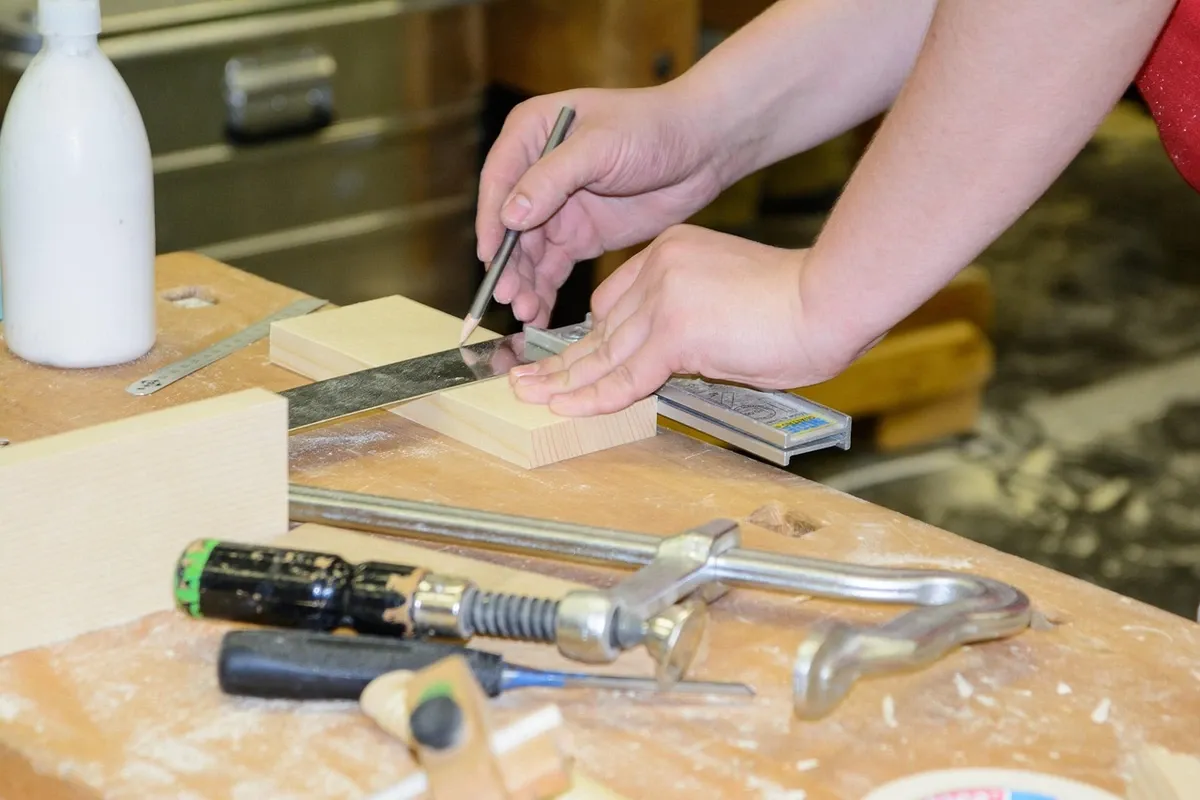
No, not as an early purchase. A router is the tool that shapes edges, cuts grooves and copies parts from a template, and almost everything it does on a first project can be done another way, more slowly. What it does that nothing else does is repeat a shape exactly, many times. Buy it when repetition, not decoration, is the thing you are struggling with.
It is also the loudest and dustiest tool most home woodworkers own, which changes the answer again if you work indoors.
What a Router Actually Does
A router spins a cutting bit at high speed and moves it through wood along an edge, a template or a fence. Four families of job cover almost all beginner use:
Edge profiles. Round-overs, chamfers and beads that soften an edge. A block plane or a sanding block does the same job on one or two edges, and does it silently.
Grooves, dados and rabbets. The slots a shelf sits in and the rebate a back panel drops into. A hand saw and a chisel will cut these, and so will repeated shallow passes with a circular saw against a guide.
Template and flush-trim work. A bearing-guided bit follows a pattern, so part five is identical to part one. This is the job with no hand-tool substitute worth the time.
Joinery details. Hinge mortises, stopped grooves, inlay recesses. A chisel does them one at a time and well; a router does them the same every time.
If your projects are single objects rather than sets, most of that list has a cheaper answer, which is the argument the guide to tools you do not need as a beginner makes about the category as a whole.
Bit Rotation and Feed Direction, Which Decide Everything
This is the part that has to be understood before the tool is switched on, because getting it wrong is not a quality problem, it is a control problem.
With a handheld router sitting base-down on the work, the bit turns clockwise seen from above. The bit is therefore always trying to walk itself sideways. Your job is to feed it so the cutting edge pushes into the wood and the router's own force presses it against the edge you are following, rather than away from it.
The convention that follows: on the outside edge of a workpiece, move the router counterclockwise around the piece, which means left to right as you face the edge you are cutting. Inside a cut-out or a frame opening, reverse it and move clockwise.
If the router feels as though it is fighting you and wants to skate along the edge on its own, stop and check which way you are traveling. That feeling is the warning, and it arrives before the mistake does.
Climb Cutting, and Why Not To
Feeding the router the other way, in the same direction as the bit's rotation, is called a climb cut. The bit grabs the wood and pulls the machine along the edge by itself, faster than you intended, in a direction you are not braced for.
It is used deliberately by experienced hands, in very light passes, on figured grain that would tear out otherwise. It is not a technique to learn from an article, and it is not a technique for a first router. A handheld climb cut on a full-depth pass can pull the tool clean off the workpiece.
Two habits remove most of the risk before it arises. Take shallow passes and sneak up on the final depth rather than hogging it in one go, because a bit taking a small bite has far less to grab with. And keep both hands on the machine, which means the workpiece must be clamped, since you have no hand left to hold it.
The Specifications Worth Reading Before You Buy
Collet size. The collet is the sleeve that grips the bit's shank. Compact and trim routers usually take 1/4 inch shanks only; larger routers take 1/2 inch as well. Half-inch shanks are stiffer and are what bigger bits are sold on, so the collet decides which half of the bit catalog you can use.
Fixed base or plunge. A fixed base sets a depth and holds it, which is simpler and steadier for edge work. A plunge base lets you start a cut in the middle of a panel, which is what stopped grooves and mortises need.
Variable speed, and why it is a safety specification. A large-diameter bit has a much higher rim speed than a small one at the same motor RPM, and bits are not built to survive unlimited rim speed. Bit makers publish a maximum RPM by diameter; Amana Tool publishes one of these charts, and the limit for a given bit is on the bit or its packaging. Read it and set the router accordingly. Some large bits are marked for table-mounted use only and must never be used in a handheld router.
Soft start. A big router that reaches full speed instantly twists in your hands on startup. Electronic soft start removes that jolt.
The Small-Space Case Against Owning One Yet
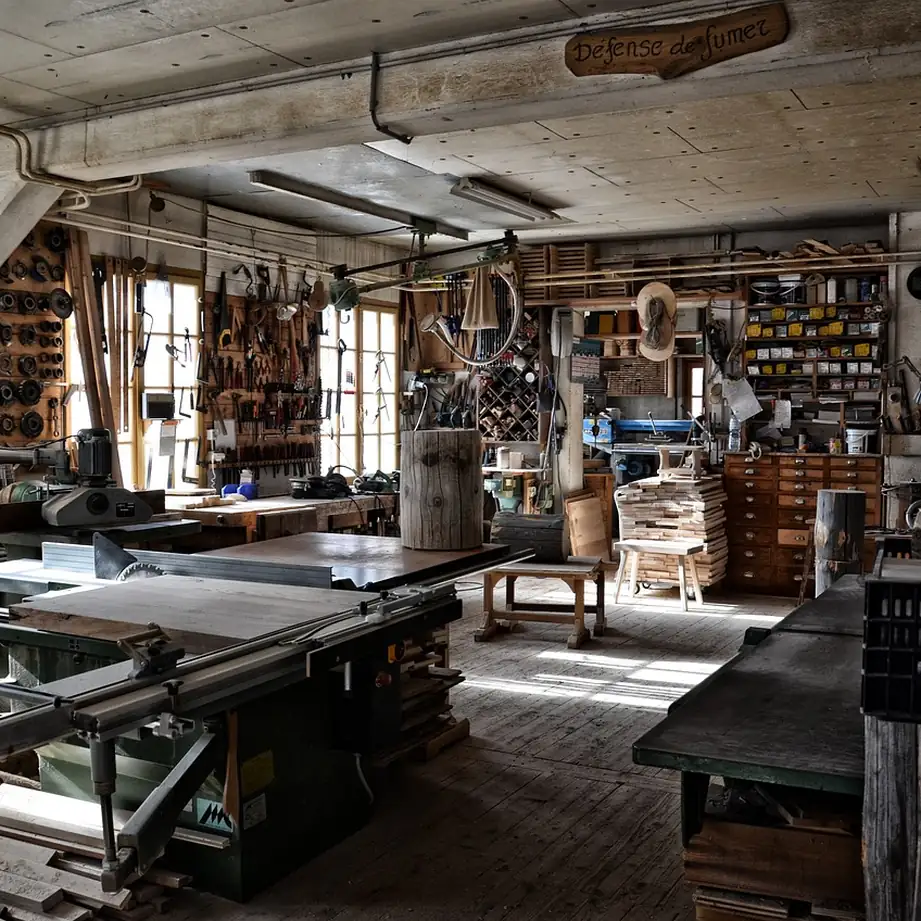
Three constraints, and in an apartment they usually decide it.
Noise. NIOSH measurements taken in a woodshop put a handheld router at roughly 92 to 94 dBA, louder than the table saw and miter saw measured alongside it. NIOSH recommends a limit of 85 dBA averaged over eight hours with a 3 decibel exchange rate, which halves the safe time for every 3 dBA increase, so a router uses a full day's allowance in about an hour of running. The full arithmetic is in how loud woodworking tools really are, and the practical consequences for shared walls are in the guide to keeping a woodworking hobby alongside roommates and neighbors.
Dust. A router does not make chips, it makes a fine airborne dust that hangs in the air and travels through a flat. IARC classifies wood dust as carcinogenic to humans, Group 1, on the evidence for nasal and sinus cancer in people occupationally exposed to it. A dust port connected to a vacuum, and a respirator rather than a nuisance mask, are the minimum indoors.
Space. Routing needs the workpiece clamped down with the profile edge overhanging, which means a work surface you can clamp to on at least one side. If that is your dining table, the router is not the next purchase; the surface is. The balcony option, and its own dust and neighbor problems, is covered in whether woodworking on a balcony is safe.
When It Stops Being Optional
There is a point where the workaround costs more than the tool. It usually arrives with one of these:
- You need six identical parts. Template routing is the only realistic way to make them match.
- You are fitting hinges. A router and a simple template cut a mortise to a repeatable depth in seconds, and depth is exactly what hand-chopped hinge mortises get wrong.
- You are building anything with housed shelves. Cutting flat-bottomed dados by hand is slow and the flatness is what holds the shelf level.
- You want a clean edge on plywood. A flush-trim bit against a straight template beats sanding an edge fair.
A trim router, the small one-hand class, is the version that fits this life: it takes 1/4 inch shanks, handles round-overs, small rabbets and flush trimming, stores in a drawer and is quieter than its full-size relative. It will not run large bits, and that limit is the point rather than a flaw. Where it sits in a buying order is set out in the minimal tool kit.
Stop Conditions Worth Writing Down
Small parts are not routed freehand. If the piece cannot be clamped without your hand entering the bit's path, do not hold it. Rout the profile on a long board and cut the small part off afterward, or use a router table with hold-downs so the machine is fixed and the wood is guided.
Large bits stay out of a handheld router. Panel-raising and other large-diameter bits are marked table-only by their makers for the reason above.
Never set the router down while the bit is spinning. Many routers coast for several seconds after the trigger is released, and a spinning bit against a benchtop takes the tool for a walk.
The Short Version
- A router is not an early purchase. Its unique value is repeating a shape, not decorating one edge.
- Rotation is clockwise seen from above. Feed counterclockwise around an outside edge, clockwise inside an opening.
- Climb cutting self-feeds and is not a beginner technique. Shallow passes, both hands, clamped work.
- The collet decides which bits you can buy; variable speed is a safety specification, and bit RPM limits come from the bit maker.
- It is the loudest and dustiest tool in the kit. NIOSH measured a woodshop router at 92 to 94 dBA, and IARC lists wood dust as a Group 1 carcinogen.
- Small parts and large bits belong on a router table, not in a handheld machine.
Frequently Asked Questions
What is the first thing a beginner uses a router for? Usually a round-over or chamfer on the edges of a finished piece, because it makes work look deliberate. That is also the job with the easiest alternative, a block plane and sandpaper, which is why the router rarely deserves to be an early purchase.
Trim router or full-size router first? A trim router, for anyone working in a small home. It handles edge profiles, flush trimming and light rabbets, it is easier to control one-handed on an edge, and it stores in a drawer. Buy the full-size machine when a bit you need does not come on a 1/4 inch shank.
Do I need a router table? Not to start, but it is what makes small pieces safe and repeat cuts consistent, because the machine is fixed and the wood moves. If your work drifts toward small parts, the table is the next purchase rather than a second router.
Is a router more dangerous than a circular saw? Different rather than greater. There is no kickback in the saw sense, but the bit is exposed, spins very fast and will pull the tool sideways if you feed the wrong way. The injuries come from unclamped work and from hands near an uncovered bit.
Can I cut dados without a router? Yes. Mark both walls, cut them with a hand saw to depth, and pare the waste out with a chisel. It is slow, it works, and it is silent, which in a shared building is sometimes the deciding factor.